China Mountain Travel China Mountain Travel
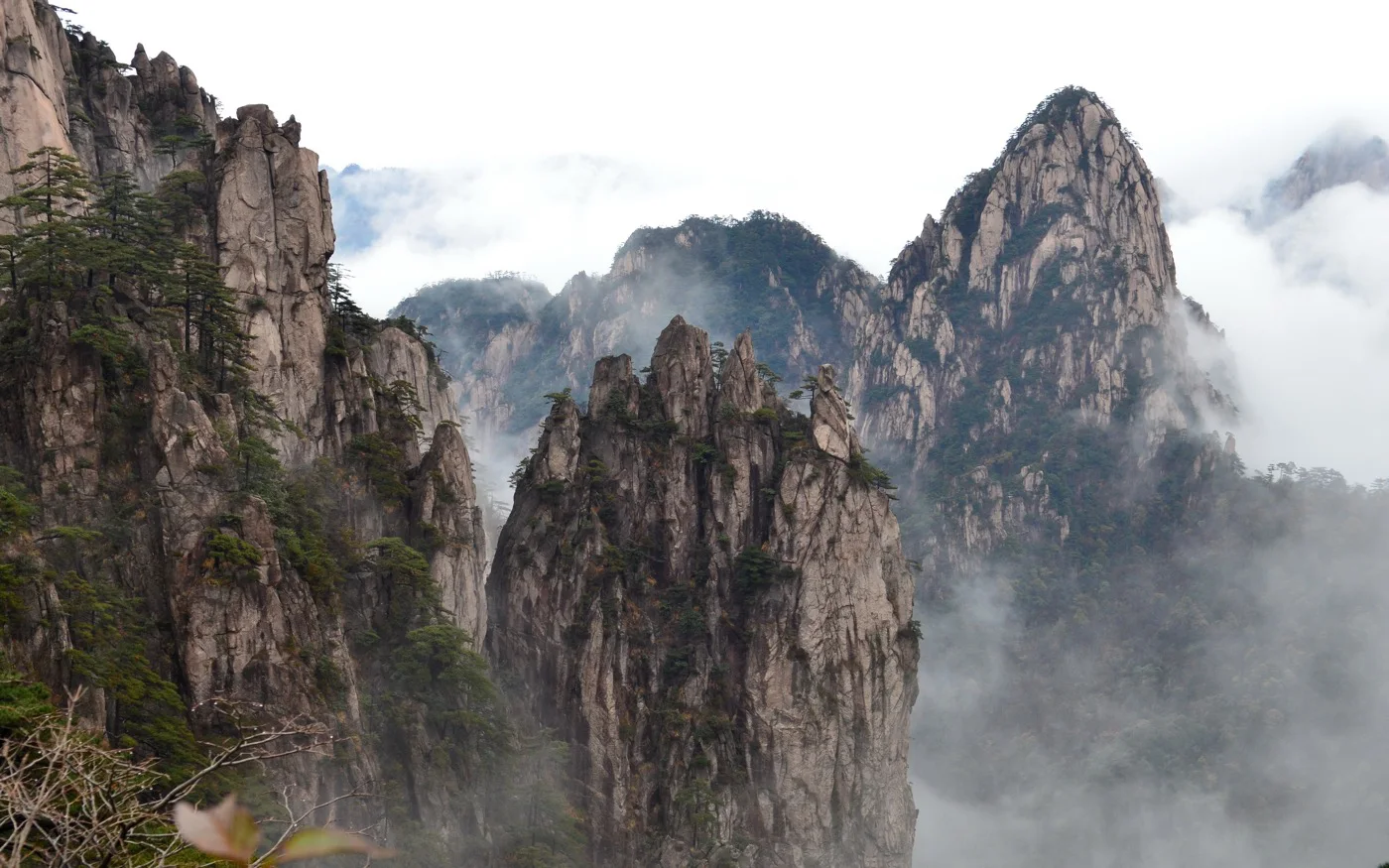
Pine trees and granite peaks in the Beihai area of Huangshan

China mountain planning

Famous Mountains in China Beyond the Five Great Mountains

The Five Great Mountains are China’s classic sacred mountain system, but they are not the only mountains worth traveling for. Compare cloud seas, Buddhist summits, Taoist palaces, literary retreats, waterfalls, snow scenery, and modern viral landscapes.

China’s mountain culture is not limited to the Five Great Mountains. Some destinations are famous for natural scenery, some for religion, and others for poetry, architecture, history, photography, or modern travel popularity.

This page helps foreign independent travelers choose between important mountains outside the traditional Five Great Mountains system. Use it as a starting point, then open the detailed guide before booking.

Quick comparison

Which famous Chinese mountain fits your trip?

MountainBest known forBest for Trip lengthDifficultyBest baseForeign visitor note
Huangshan / Yellow MountainGranite peaks, pine trees, cloud seas, sunriseIconic scenery, photography, cable-car-assisted hiking2-3 daysModerate with cable carsHuangshan / TangkouRoute choice, cable cars, and mountain hotels matter.
Mount Emei / EmeishanGolden Summit, Buddhist culture, clouds, monkeysChengdu side trips, Buddhism, Leshan combination1-3 daysEasy to moderate with transportChengdu / EmeishanPlan for long shuttle rides and monkey safety.
Wudang MountainTaoist palaces, Golden Summit, martial arts cultureTaoist architecture and slower cultural travel1-2 daysModerate with shuttle bus and cable carWudangshan / ShiyanThe internal transport system needs a little planning.
Lushan / Mount LuWaterfalls, cloud mist, Guling Town, retreat cultureRelaxed mountain-town stays, valleys, history2 daysEasy to moderate; harder at Sandie WaterfallJiujiang / Guling TownA softer alternative to summit-focused mountain trips.
Laojun MountainGolden Summit, snow scenery, Taoist imagery, viral photosVisual curiosity and modern mountain-tourism contextA full day if eligibleModerate with cable carsLuoyang / LuanchuanOrdinary foreign tourists are usually not allowed to enter.
Wuyi Mountain / Mount WuyiNine-Bend Stream, bamboo rafting, Danxia cliffs, rock teaTea culture, softer hiking, river scenery, Fujian itineraries2 daysEasy to moderate; Tianyou Peak has stairsWuyishan / Sangu ResortPlan around bamboo raft booking, the correct station, and scenic-area timing.
Mount Putuo / PutuoshanGuanyin pilgrimage, island temples, ferries, Buddhist atmosphereBuddhist culture, easy walking, island sacred travel near Ningbo or Shanghai1-2 daysEasy; mostly flat temple walkingZhujiajian / Putuoshan / NingboThe main challenge is ferries, weather, and passport-based ticketing rather than physical difficulty.
Zhangjiajie / Wulingyuan / Tianmen MountainSandstone pillars, Avatar-related scenery, Tianmen Mountain, Glass BridgeFirst-time China mountain trips, big viewpoints, and multi-area scenic planning2-4 daysEasy to moderate with shuttles, elevators, and cable carsWulingyuan / Zhangjiajie CityDo not treat it as one single park; Wulingyuan, Tianmen Mountain, and the Glass Bridge are separate areas.
Yandang Mountain / YandangshanSharp volcanic peaks, Lingfeng Night View, Lingyan, and Dalongqiu WaterfallUnusual rock formations, lighter scenic walking, and southeast Zhejiang routes1-2 daysEasy to moderate; scenic-area walking with transfers between zonesXianglingtou / Yueqing / WenzhouDo not treat it like one single summit climb; transport between scenic areas matters.

Why these mountains matter

Seven different ways to understand Chinese mountain travel

Huangshan

China’s mountain-painting ideal: pine, granite, mist, and cloud seas.

Mount Emei

A Buddhist sacred mountain shaped by Golden Summit and pilgrimage culture.

Wudang

Taoist architecture and martial-arts imagination in a living mountain landscape.

Lushan

A literary, historical, and summer-retreat mountain with a real town on the mountain.

Laojun Mountain

A modern viral landscape where snow and Taoist visual symbolism drive curiosity.

Wuyi Mountain

River bends, bamboo rafting, Danxia cliffs, and one of China’s most famous tea landscapes.

Mount Putuo

A sacred Buddhist island centered on Guanyin worship, ferries, and temple atmosphere.

Zhangjiajie

China’s best-known sandstone-pillar landscape, built around Wulingyuan, Tianmen Mountain, and a multi-area scenic structure.

Yandang Mountain

A southeast Zhejiang scenic-area cluster known for strange peaks, Lingfeng Night View, and cliff-and-waterfall scenery.

Huangshan: China’s classic cloud-and-pine mountain

Huangshan is one of the clearest visual expressions of the Chinese mountain ideal: granite peaks, sculptural pine trees, cloud seas, and changing light.

  • Choose it for classic scenery, sunrise, and a mountain-hotel experience.
  • Unlike the Five Great Mountains, its appeal is primarily visual rather than part of the traditional directional sacred system.
  • It suits photographers and travelers willing to plan cable cars, gates, and overnight timing carefully.
  • Practical warning: even with cable cars, expect many stone steps and route decisions.
Read the Huangshan Travel Guide

Mount Emei: Buddhist summit, clouds, and monkeys

Mount Emei combines a major Buddhist pilgrimage landscape with a realistic Chengdu side trip. Golden Summit is the headline, but temples, forest routes, and its pairing with the Leshan Giant Buddha are equally important.

  • Choose it for Buddhist culture, the Samantabhadra statue, and high-mountain cloud views.
  • Most first-time visitors use a long scenic shuttle ride to Leidongping, then walk to Jieyin Hall and take the cable car.
  • Monkey safety matters: keep food and loose bags out of sight.
  • It works especially well as a two- or three-day Sichuan itinerary with Leshan.
Read the Mount Emei Travel Guide

Wudang Mountain: Taoist palaces and martial arts culture

Wudang Mountain is the strongest choice here for travelers interested in Taoist sacred architecture and martial-arts imagination rather than a purely scenic summit day.

  • Golden Summit, Purple Heaven Palace, Nanyan Palace, and temple atmosphere shape the experience.
  • Its association with Wudang martial arts and Tai Chi gives the mountain a cultural identity beyond sightseeing.
  • Choose it if architecture and religious atmosphere matter more than dramatic exposed trails.
  • Practical warning: understand the scenic shuttle buses and cable-car logic before arrival.
Read the Wudang Mountain Travel Guide

Lushan: waterfalls, mist, and mountain-town atmosphere

Lushan feels different from peak-focused mountains. Its appeal comes from Guling Town, mist, waterfalls, valleys, villas, forest routes, and a slower retreat atmosphere. It is also the strongest choice on this page for a cooler summer mountain escape.

  • Choose it for a relaxed two-day stay with lighter walks and mountain-town convenience.
  • Jinxiu Valley and the west-line sights are easier; Sandie Waterfall is a more demanding stair route.
  • Its cultural and summer-retreat history makes it more than a scenic stop.
  • Practical warning: use the mountain sightseeing bus if you want to move efficiently between sights.
Read the Lushan Travel Guide

Laojun Mountain: beautiful, viral, but complicated for foreign visitors

Laojun Mountain became visually famous through Golden Summit architecture, Taoist imagery, snow-covered rooftops, cloud views, and night photography shared widely on Chinese platforms.

  • It is useful for understanding how modern Chinese social media can turn a mountain landscape into a travel phenomenon.
  • Ordinary foreign tourists are usually not allowed to enter.
  • A limited application route may exist through the relevant authorities, but the process is cumbersome and approval is uncertain.
  • For a dependable Luoyang-area trip, consider Longmen Grottoes, White Horse Temple, or Mount Song and Shaolin Temple instead.
Read the Laojun Mountain Guide

Wuyi Mountain: river bends, tea culture, and softer hiking

Wuyi Mountain stands apart because the classic experience is not only about climbing. It combines Nine-Bend Stream bamboo rafting, Tianyou Peak viewpoints, Danxia cliffs, and one of China’s most important tea regions.

  • Choose it if you want a mountain trip that mixes scenery, water, tea, and a more relaxed pace than summit-driven mountains.
  • Unlike the Five Great Mountains, Wuyi Mountain is less about imperial-sacred symbolism and more about landscape, tea culture, and soft hiking days.
  • It suits travelers building a Fujian itinerary through Fuzhou, Xiamen, Quanzhou, or nearby rail routes.
  • Practical warning: your trip often depends on bamboo raft reservations, train-station choice, and staying near Sangu Resort.
Read the Wuyi Mountain Travel Guide

Mount Putuo: Buddhist island pilgrimage rather than a summit climb

Mount Putuo is one of China’s Four Sacred Buddhist Mountains, but in practice it feels like a sacred island temple destination. Ferries, sea air, Guanyin worship, and temple etiquette matter more than elevation or hiking difficulty.

  • Choose it if you want Buddhist culture, island temples, and one of the easiest famous mountain trips physically.
  • What makes it different from the Five Great Mountains is that it is approached by ferry and experienced as a pilgrimage island rather than a stone-step mountain climb.
  • It works well from Ningbo, Zhoushan, or even a broader Shanghai-side coastal itinerary.
  • Practical warning: ferry timing, weather, typhoon risk, and passport-based ticketing matter more than walking fitness.
Read the Mount Putuo Travel Guide

Zhangjiajie: China’s most iconic sandstone-pillar mountain trip

Zhangjiajie is the clearest choice here if you want one of China’s most dramatic natural landscapes: vertical sandstone pillars, misty viewpoints, Avatar-related visual fame, and a mountain trip built around major scenic infrastructure.

  • Choose it for Wulingyuan’s pillar scenery, Tianmen Mountain’s cable-car and Heaven’s Gate experience, and a destination that feels globally recognizable.
  • What makes it different from the Five Great Mountains is that it is not a traditional sacred mountain climb. It is a multi-area scenic trip that depends on route structure and internal transport.
  • It suits first-time foreign visitors who want a visually extreme mountain destination without needing highly technical hiking ability.
  • Practical warning: the biggest mistake is assuming Wulingyuan, Tianmen Mountain, and the Glass Bridge are all inside one park.
Read the Zhangjiajie Travel Guide

Yandang Mountain: strange peaks, night silhouettes, and classic southeast scenery

Yandang Mountain is one of southeast China’s most distinctive scenic mountain areas. It is less about one summit and more about a cluster of classic zones built around sharp volcanic peaks, night silhouettes, cliffs, and waterfalls.

  • Choose it if you want unusual rock formations, Lingfeng Night View, and a mountain trip that feels more local than China’s most internationalized scenic areas.
  • What makes it different from the Five Great Mountains is that it works as a scattered scenic-area cluster rather than a ceremonial stone-step sacred climb.
  • It fits especially well into Wenzhou, eastern Zhejiang, or southeast-coast rail itineraries.
  • Practical warning: the challenge is not altitude, but moving efficiently between Lingfeng, Lingyan, Dalongqiu, and other separate zones.
Read the Yandang Mountain Travel Guide

Decision guide

Which mountain should you choose?

Choose Huangshan if

you want iconic pine trees, cloud seas, sunrise, and dramatic scenery, and can plan cable cars and mountain hotels.

Choose Mount Emei if

you are starting from Chengdu and want Buddhism, Golden Summit, and a Leshan Giant Buddha combination.

Choose Wudang Mountain if

you care about Taoist palaces, martial arts, sacred architecture, and a slower cultural atmosphere.

Choose Lushan if

you want waterfalls, mist, valleys, history, and a more relaxed mountain-town trip. It is the best choice here for a cooler summer escape.

Choose Wuyi Mountain if

you want bamboo rafting, Danxia cliffs, tea culture, and a softer scenic trip that fits well into Fujian travel.

Choose Mount Putuo if

you want Buddhist temples, Guanyin pilgrimage culture, and one of the easiest sacred-mountain trips physically.

Choose Zhangjiajie if

you want the most internationally recognizable pillar scenery, Avatar-related viewpoints, and a multi-day Hunan mountain trip with strong infrastructure.

Choose Yandang Mountain if

you want sharp rock formations, Lingfeng Night View, waterfalls, and a more local southeast China mountain trip.

Research Laojun Mountain if

you want to understand its viral snow and Golden Summit imagery. Ordinary foreign tourists are usually not allowed to enter.

Route ideas

Suggested itineraries

Best scenery route

Huangshan + Hongcun or Xidi

Build the trip around granite peaks, pine trees, cloud views, and traditional villages.

Chengdu Buddhist route

Mount Emei + Leshan Giant Buddha

Use two or three days for Golden Summit, temples, and the Giant Buddha without rushing.

Taoist culture route

Wudang Mountain + Shiyan or Xiangyang

Choose this for palaces, temple routes, Golden Summit, and Wudang martial-arts atmosphere.

Luoyang culture route

Longmen Grottoes + White Horse Temple + Mount Song

Add Shaolin Temple and Sanhuangzhai if you want a practical mountain day. Laojun Mountain is not a straightforward option for ordinary foreign tourists.

Relaxed mountain retreat

Lushan + Jiujiang or Nanchang

Stay in Guling Town and focus on waterfalls, mist, valleys, and a gentler pace.

Fujian scenery and tea route

Wuyi Mountain + Fuzhou, Xiamen, or Quanzhou

Use Wuyi Mountain for bamboo rafting, tea culture, and Danxia scenery inside a broader Fujian trip.

Coastal Buddhist route

Mount Putuo + Ningbo or Zhoushan

Choose this for ferry access, temples, Guanyin culture, and a calmer sacred-island experience.

Hunan big-scenery route

Zhangjiajie + Wulingyuan + Tianmen Mountain

Use two to four days for the sandstone pillars first, then add Tianmen Mountain and the Glass Bridge only if time allows.

Southeast Zhejiang scenic route

Yandang Mountain + Wenzhou or Nanxi River

Use Yandang for strange peaks, Lingfeng Night View, and a softer one- or two-day mountain trip built around separate scenic zones.

For a practical Henan mountain day, read the Mount Song and Shaolin Temple guide.

Two different frameworks

How these differ from the Five Great Mountains

The Five Great Mountains are a traditional directional and imperial-sacred system: east, west, south, north, and center.

The mountains on this page are famous for different reasons: scenery, Buddhism, Taoism, UNESCO heritage, literature, architecture, photography, and modern tourism. Depending on your route, they may be more practical or visually compelling for a first trip.

Compare with the Five Great Mountains

Planning tools

Prepare the local apps before your trip

Use the China Travel Toolkit for maps, train booking, payments, local reviews, and mountain-specific official channels.

Open the China Travel Toolkit

FAQ

Are these mountains part of the Five Great Mountains?

No. The Five Great Mountains are a traditional directional sacred system. The mountains on this page became important for other reasons, including scenery, Buddhism, Taoism, UNESCO heritage, literature, architecture, and modern travel popularity.

Which Chinese mountain is best for first-time foreign visitors?

Huangshan is a strong choice for iconic scenery. Mount Emei works well from Chengdu. Lushan suits travelers who prefer a more relaxed mountain-town trip. The best choice depends on your route and interests.

Is Huangshan better than the Five Great Mountains?

It is different. Huangshan is one of the best choices for classic Chinese mountain scenery. The Five Great Mountains matter more as a historic sacred system. Choose based on whether scenery or cultural framework matters more to you.

Which mountain is best from Chengdu?

Mount Emei. It combines naturally with the Leshan Giant Buddha and can be planned as a one- to three-day Sichuan side trip.

Which mountain is best for Taoist culture?

Wudang Mountain is the strongest practical choice for Taoist palaces, temple architecture, Golden Summit, and martial-arts associations.

Which mountain is best for Buddhist culture?

Mount Emei is the clearest choice because of Golden Summit, the Samantabhadra statue, temples, and the Leshan Giant Buddha combination.

Which mountain is best for tea culture?

Wuyi Mountain is the strongest choice because it combines scenic travel with Wuyi rock tea, Dahongpao, and one of China’s best-known tea landscapes.

Which mountain is best for an easy Buddhist pilgrimage trip?

Mount Putuo is usually the easiest. It is low-difficulty physically and focuses on ferries, temples, Guanyin worship, and island atmosphere rather than hard climbing.

Which mountain is best for dramatic pillar scenery and Avatar-like views?

Zhangjiajie is the clearest choice if you want vertical sandstone pillars, misty viewpoints, Yuanjiajie, Tianzi Mountain, and a first-time route built around scenic infrastructure rather than hard hiking.

Which mountain is best for unusual rock formations and night scenery?

Yandang Mountain is the clearest choice here if you want sharp volcanic peaks, shape-based landscape appreciation, Lingfeng Night View, and a lighter one- or two-day trip.

Which mountain is easiest for relaxed travelers?

Lushan is usually the most relaxed option because Guling Town, sightseeing buses, waterfalls, and lighter west-line walks allow a slower itinerary.

Which Chinese mountain is best for a cooler summer escape?

Choose Lushan. Its mountain-town atmosphere, waterfalls, mist, forest walks, and long history as a summer retreat make it the clearest option here for travelers trying to escape lowland heat.

Can foreigners visit Laojun Mountain?

Ordinary foreign tourists are usually not allowed to enter. A limited application route may exist through the relevant authorities, but the process is cumbersome and approval is uncertain.

Which mountain is best for snow scenery?

Huangshan, Mount Emei, Wudang Mountain, and Laojun Mountain can all look striking in snow, but winter conditions affect transport, visibility, and route safety. Laojun Mountain is not a straightforward option for ordinary foreign tourists.

How many days do I need for these mountains?

Allow two to three days for Huangshan, one to three days for Mount Emei, one to two days for Wudang Mountain, about two days for Lushan, two days for Wuyi Mountain, one to two days for Mount Putuo, one to two days for Yandang Mountain, and two to four days for Zhangjiajie. Laojun Mountain requires a separate access decision before itinerary planning.