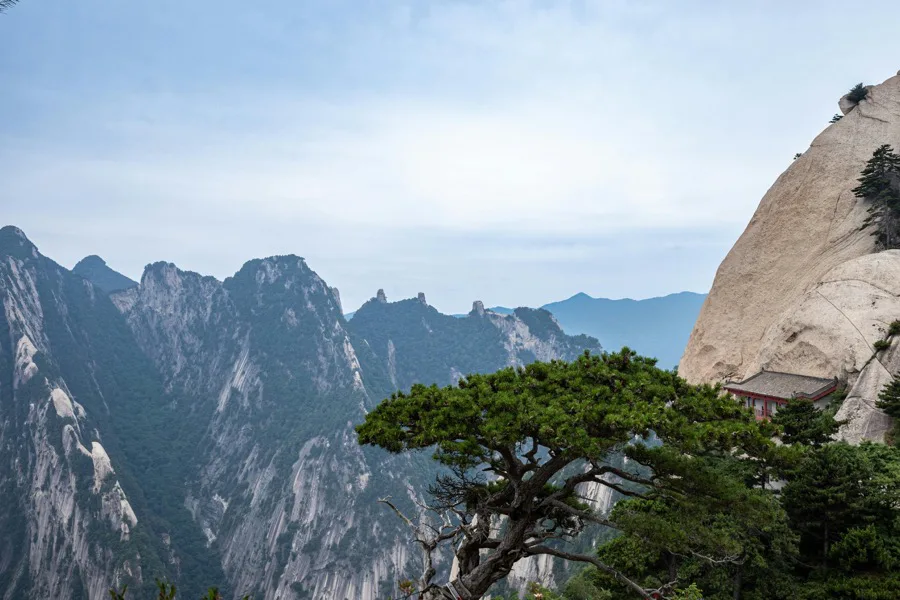
Huashan
- Best for
- Dramatic cliffs and adventure
- Recommended days
- 1–2 days
- Difficulty
- Hard
- Climb style
- Cable car + five-peak walk, or full traditional ascent
- Key warning
- Steep routes and exposed ridges make it a poor fit if you fear heights.
Hiking mountain comparison guide
A practical pillar guide for foreign independent travelers who want a real mountain day in China, not just a scenic stop.
Written and fact-checked by: Rocket Zheng
Last verified:
China has no shortage of famous mountains, but not every famous mountain gives you the feeling of a real climb.
Some are mainly scenic sightseeing areas. You take a shuttle bus, ride a cable car, walk between viewpoints, take photos, and leave. Some are spiritual mountains where temples matter more than the trail. Some are beautiful, but the physical challenge is optional. That does not make them less worthwhile. It simply means they are not always the right choice if what you want is a mountain day that you can feel in your legs.
This guide is for travelers who want something more physical.
It compares four of the best hiking mountains in China for foreign visitors: Huashan, Mount Tai, Huangshan, and Mount Emei. Each one offers a different kind of climb. Huashan is steep, exposed, and thrilling. Mount Tai is a long historic stairway with deep cultural meaning. Huangshan combines classic Chinese mountain scenery with serious stone-step walking. Mount Emei is a long Buddhist mountain journey, where forests, temples, buses, stairs, monkeys, and clouds all become part of the experience.
These are not wilderness hikes in the Western sense. They are famous Chinese mountains, which means you will often deal with ticket gates, shuttle buses, cable cars, stone paths, crowds, and route choices. But if you plan them well, they can still give you a genuine hiking experience.
The question is not simply, “Which mountain is the hardest?” A better question is: what kind of challenge do you want?
Quick answer
Do you want exposed ridges and a sense of danger? Choose Huashan.
Do you want a historic climb with thousands of steps and a sunrise tradition? Choose Mount Tai.
Do you want the best mix of hiking, cloud seas, granite peaks, and classic scenery? Choose Huangshan.
Do you want a longer mountain journey through Buddhist temples and forests? Choose Mount Emei.
In China, a “mountain hike” often does not look like a dirt trail through wilderness. Many famous mountains are highly developed scenic areas. You may see paved stone steps, cable cars, restaurants, temples, souvenir shops, shuttle buses, and crowds. At first, this can surprise foreign visitors who expect a more natural trail.
But the physical challenge is still real.
Chinese mountain paths often replace dirt trails with endless stone stairways. These stairs are easy to follow, but they can be harder on your knees than a normal hiking path. Going up is tiring. Going down can be brutal. On a long descent, your legs may feel fine for the first hour and terrible by the third.
A real climb in China usually means one or more of the following: a long stair route, major elevation gain, extended walking between scenic areas, exposed cliffside paths, a traditional pilgrimage climb, or a route where cable cars help but do not remove the effort.
That is why these four mountains are worth comparing. They are all famous, but they challenge travelers in very different ways.
Huashan challenges your comfort with height. Mount Tai challenges your patience and knees. Huangshan challenges your stamina across long summit routes. Mount Emei challenges your time, distance judgment, and route planning.
None of them should be dismissed as “easy” just because infrastructure exists. Cable cars can reduce the climb, but they rarely remove the mountain.
Quick comparison
| Mountain | Best for | Recommended days | Difficulty | Climb style | Key warning |
|---|---|---|---|---|---|
| Huashan | Cliffs, exposed paths, adventure | 1–2 | Hard | Steep stone stairs, ridges, optional plank walk | Not ideal if you fear heights |
| Mount Tai | Historic stair climb and sunrise | 1–2 | Moderate–hard | Long stone stairway to summit | Very hard on knees if descending on foot |
| Huangshan | Classic scenery and mountain hiking | 2 | Moderate | Stone steps, summit loops, cable car access | Even with cable cars, expect lots of walking |
| Mount Emei | Long Buddhist mountain route and Golden Summit | 2–3 | Moderate–hard | Long-distance mountain route, temples, buses, stairs | Distances are long; monkeys can be aggressive |
If you want a fast first filter before reading the longer mountain sections, these cards summarize the basic decision logic.
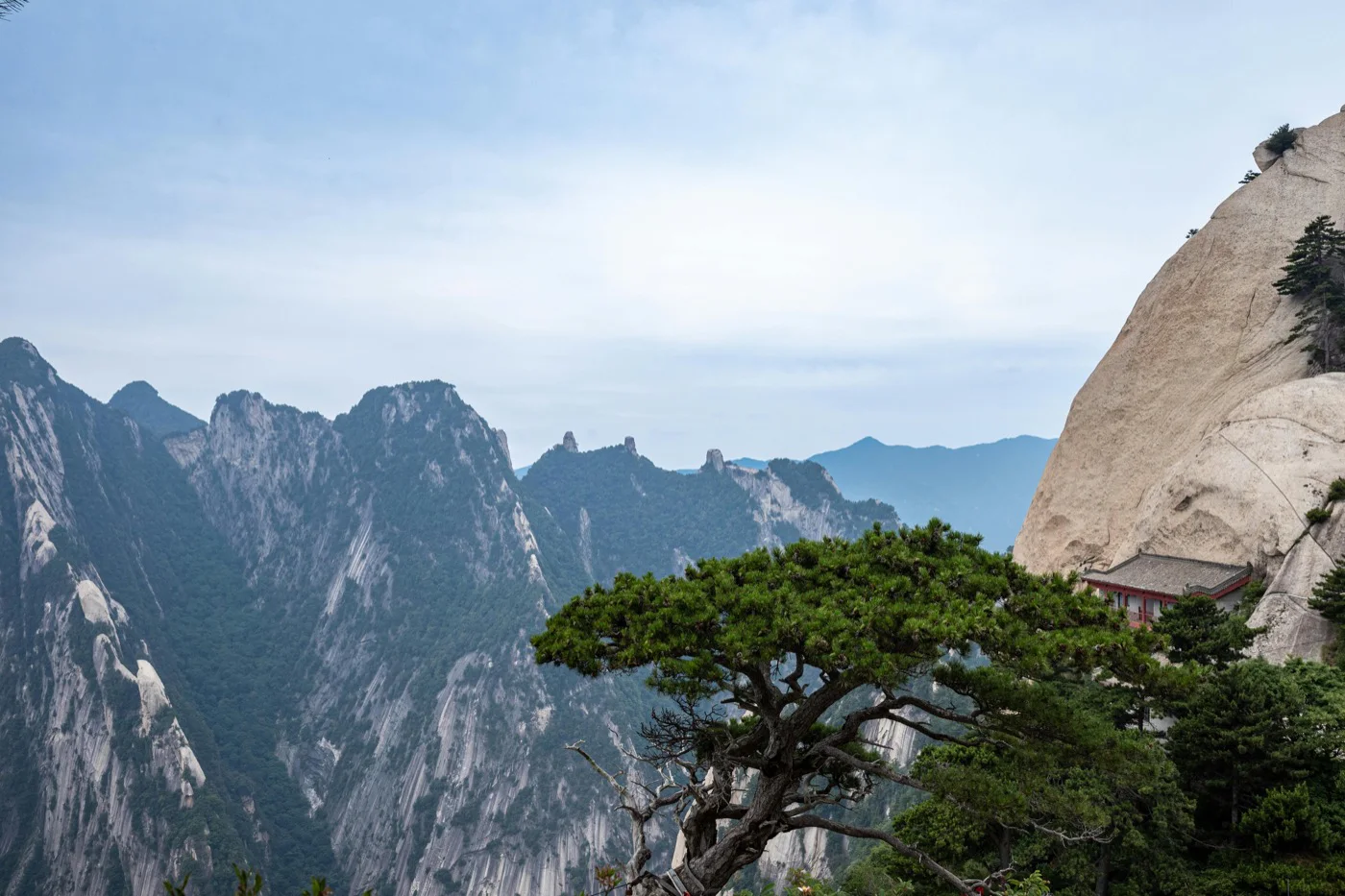
Huashan is the most dramatic hiking mountain in this guide. It is sharp, steep, exposed, and famous for paths that make many visitors slow down without being told.
The nearest major city to Huashan is Xi’an. Many travelers go to Xi’an for the Terracotta Warriors, the city wall, and the old urban atmosphere. But if you make the side trip from Xi’an to Huashan, which is in Huayin, you get a completely different kind of day: a mountain outing that feels physical, vertical, and slightly intimidating.
The mountain is famous for its five peaks, steep stone stairs, narrow ridges, and cliffside routes. The most famous feature is the Plank Walk, a narrow wooden walkway fixed to the side of a cliff. It is optional, controlled, and not necessary for enjoying the mountain. Even if you skip it, Huashan still feels more exposed than most famous mountains in China.
This is the key to understanding Huashan: the difficulty is not only about distance. It is about exposure.
A route may not be extremely long on paper, especially if you use cable cars, but the terrain changes how it feels. Steep steps, open edges, narrow sections, and crowds can make the mountain feel intense. If you are comfortable with heights, this intensity is exciting. If you are not, it can be stressful.
For many foreign visitors, the best route is not the full traditional climb from the base. A more practical plan is to take the West Peak Cable Car up, walk across selected peak areas, and descend by the North Peak Cable Car. This gives you a strong taste of Huashan’s ridges and views without turning the day into an exhausting endurance event.
More ambitious hikers can climb from the bottom, but this should be treated as a serious physical plan. It is not something to casually add after a late breakfast in Xi’an. Start early, travel light, and check the weather before committing.
Huashan is best for adventurous travelers who want a mountain to remember. It is also a strong choice for people who have limited time but still want a real climb. A well-planned Huashan day from Xi’an can be one of the most memorable parts of a China trip.
But it is not for everyone.
If you have a strong fear of heights, Huashan is a poor choice. If you are traveling with young children, older relatives, or people with knee problems, you should be cautious. And if you visit during a major Chinese holiday, the narrow routes can become crowded enough to remove much of the pleasure.
Choose Huashan if you want cliffs, ridges, adrenaline, and a mountain that makes you pay attention to every step.
Do not choose it just because it is famous. Choose it because you actually want that kind of climb.
Mount Tai, or Taishan, is not the wildest mountain in China. It is not the strangest. It is not the most visually dramatic. If you judge it only by scenery, you may misunderstand it.
Mount Tai is important because of the climb itself.
For centuries, this mountain has carried enormous cultural weight. It is associated with imperial ceremonies, pilgrimage, legitimacy, temples, inscriptions, and the idea of climbing toward heaven. The classic route is not just a way to reach the summit. It is a historical path, a symbolic ascent, and a physical ritual.
The route is famous for its long stone stairway. Step after step, gate after gate, you move upward toward the South Heavenly Gate and the summit area. There is nothing technically complicated about it. You do not need climbing skills. You do not need to cross exposed ridges. But the repetition is the challenge.
Mount Tai is hard because it is relentless.
Many travelers underestimate it because the route looks simple. A staircase sounds straightforward. But thousands of stone steps are different from a normal walk. The ascent requires patience. The descent can punish your knees. If you walk both up and down, you may remember the downhill more than the summit.
That is why Mount Tai is one of the clearest examples of a Chinese “real climb.” It does not need danger to feel serious. Its power comes from length, rhythm, history, and accumulated fatigue.
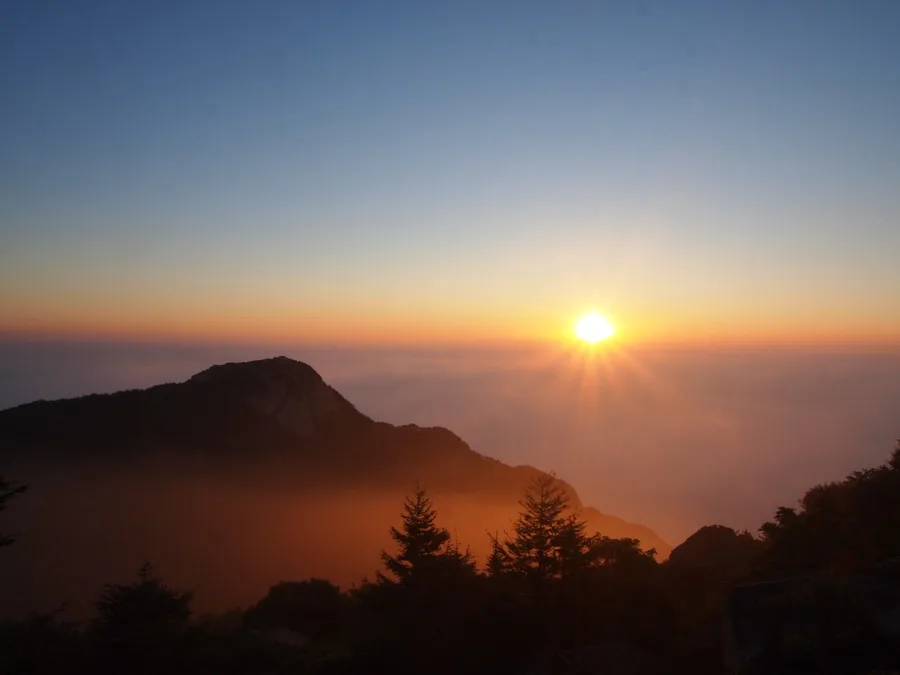
The mountain is also famous for sunrise. Some visitors climb at night or stay near the summit to watch the sun rise from the top. When the weather is good, this can be a powerful experience. The problem is that sunrise is never guaranteed. Clouds, fog, wind, cold, and crowds can change everything. Night climbing also requires preparation. Do not treat it like a casual city walk in the dark.
For foreign visitors, Mount Tai has one major advantage: logistics are relatively simple. Tai’an is easy to reach by high-speed rail, and the mountain is close to the city. This makes Mount Tai easier to structure than many other famous Chinese mountains. You can plan a one-day climb, an overnight sunrise trip, or a lighter version using transport and cable cars.
Mount Tai is best for travelers who want cultural meaning built into the hike. It is a good choice if you are interested in Chinese history, sacred mountains, pilgrimage, or symbolic landscapes. It is also satisfying for people who enjoy a clear physical goal: start low, climb steadily, reach the top.
But if your priority is dramatic cliffs or the most beautiful scenery in China, Mount Tai may not be your first choice. Huangshan is more scenic. Huashan is more thrilling. Emei is more varied. Mount Tai is special because it feels like walking through a very old idea of China.
Choose Mount Tai if you want a long historic climb, a sunrise tradition, and the feeling of joining a route that generations have walked before you.
Huangshan, or Yellow Mountain, is often described as one of China’s most beautiful mountains. That reputation is deserved. But for hiking-focused travelers, the important point is this: Huangshan is not only scenic. It is also physically demanding if you explore it properly.
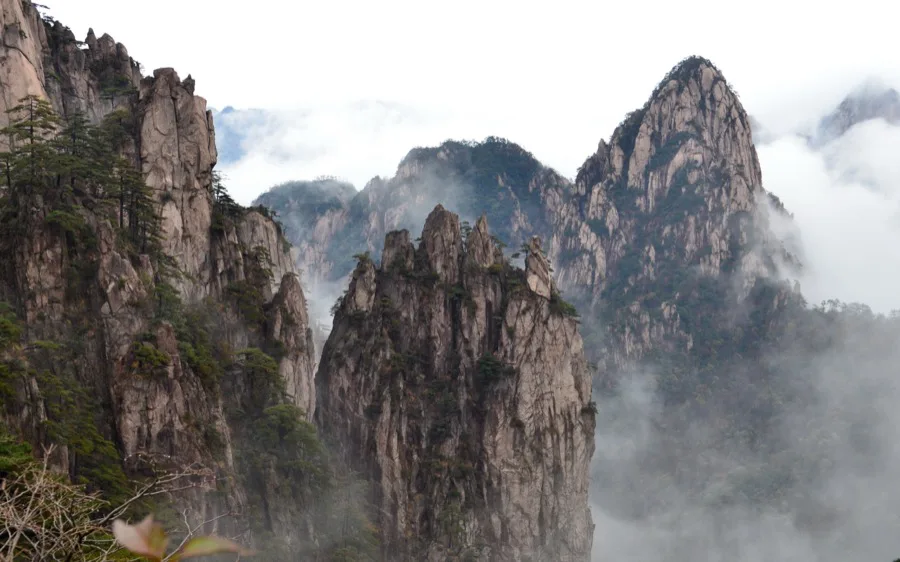
This is a mountain of granite peaks, twisted pine trees, cloud seas, sunrise viewpoints, stone stairways, and deep valleys. It is one of the great visual symbols of Chinese mountain scenery. When mist fills the lower valleys and the peaks rise above the clouds, Huangshan can feel like a Chinese landscape painting made real.
But do not let the cable cars fool you.
Many visitors assume that because Huangshan has cable cars, it must be easy. The cable cars reduce the hardest vertical climb from the base, but they do not remove the long summit walks. Once you are on the mountain, the main routes still involve constant stone steps, viewpoint loops, climbs, descents, and transfers between scenic areas.
Huangshan’s challenge is not the same as Huashan’s. It is not mainly about fear of heights. It is not the same as Mount Tai’s long direct staircase either. Huangshan is tiring because the summit area itself is large, scenic, and full of movement. You are always going somewhere: to a viewpoint, to a hotel, to a sunrise spot, to the West Sea Grand Canyon, to another cable car station.
The best Huangshan experience usually takes two days. A one-day trip is possible, but it tends to be rushed. You may spend too much time worrying about cable car closing times and not enough time enjoying the mountain’s rhythm. With two days, you can go up by cable car, walk the main scenic routes, stay overnight near the summit area, try for sunrise, and continue through more viewpoints the next day.
The West Sea Grand Canyon is one of Huangshan’s strongest hiking areas when open and when conditions are suitable. It adds depth and drama to the trip. The route descends through steep scenery and gives the mountain a more immersive feeling than simply moving from one viewpoint to another. It is beautiful, but it also requires stamina. If you include it, do not treat the day as light.
Weather matters enormously on Huangshan. Mist and clouds can create the mountain’s most beautiful moments, but heavy fog can also erase the views. A perfect cloud sea is unforgettable. A fully blocked view can be disappointing. Staying overnight gives you a better chance of catching changing conditions, but it also means paying more for mountain accommodation.
Huangshan is best for travelers who want the strongest mix of scenery and hiking. It is more visually rewarding than Mount Tai, less frightening than Huashan, and easier to structure than a full walking journey across Mount Emei. For many foreign visitors, it is the safest overall choice for a two-day mountain trip in China.
But it is not a lazy scenic stop.
Expect stairs. Expect walking. Expect weather uncertainty. Expect crowds if you go during peak season. And if you bring luggage up the mountain, expect to regret every unnecessary item.
Choose Huangshan if you want classic Chinese mountain beauty and are willing to earn it step by step.
Mount Emei, or Emeishan, is different from the other three mountains in this guide. It is not a compact cliff adventure like Huashan. It is not a direct symbolic stairway like Mount Tai. It is not simply a scenic summit network like Huangshan.
Emei is a long mountain journey.
Located in Sichuan, Mount Emei is one of China’s great Buddhist mountains. Its experience is shaped by forests, temples, stone paths, buses, cable cars, monkeys, mist, incense, and the Golden Summit. Depending on your route, it can feel like a temple pilgrimage, a forest walk, a stair climb, a scenic mountain trip, or all of these at once.
The most important thing to understand is scale. Mount Emei is large. Distances are long. The difference between “visiting Emei” and “hiking Emei” can be huge.
If you use buses and cable cars efficiently, you can reach the Golden Summit without doing an extreme hike. This is the practical choice for many visitors, especially those short on time. But if you want a real hiking experience, Emei can become a serious multi-day route with long walking sections, repeated climbs and descents, temple stops, and demanding stairs.
This flexibility is both a strength and a trap.
It is a strength because you can design the trip around your stamina. You can make it moderate with transport support, or you can make it a real endurance journey. It is a trap because many travelers do not understand how big the mountain is until they are already on the route. A section that looks manageable on a map may take much longer in practice.
Emei’s atmosphere is richer and more layered than a simple summit hike. Temples appear along the way. Forest paths shift with weather and elevation. Monkeys may show up in some areas, and they are not just cute photo subjects. They can be aggressive, especially around food or loose bags. Travelers should be careful, avoid feeding them, and keep belongings secure.
The Golden Summit is the most famous destination on the mountain. On a good day, it offers clouds, light, Buddhist architecture, and a strong sense of arrival. But the summit alone is not the whole mountain. If you only rush to the top by transport, you may see the highlight but miss much of Emei’s character.
Mount Emei is best for travelers who want a longer, more varied mountain experience. It suits people interested in Buddhism, temples, forests, and multi-day walking. It is also good for hikers who prefer a journey with changing scenery rather than one single dramatic feature.
But Emei requires respect. The route can be tiring. Weather can shift. Distances can surprise you. Monkeys can be a real problem. And because the mountain can be experienced in so many ways, planning matters.
For most foreign visitors who want more than a quick Golden Summit visit, two to three days is a better plan. This gives you time to combine transport with meaningful walking sections and temple visits, without turning the trip into a rushed checklist.
Choose Mount Emei if you want a long Buddhist mountain route, not just a mountain viewpoint. It rewards travelers who slow down, walk enough to feel the mountain, and accept that the journey matters as much as the summit.
The answer depends on what you mean by “hard.”
Huashan is the hardest if you dislike heights. The routes are steep, exposed, and mentally intense. Even if the total walking distance is not the longest, the terrain can feel demanding because it requires constant attention.
Mount Emei can be the hardest if you choose a long walking route. The mountain is large, distances are serious, and repeated climbs and descents can wear you down over multiple days.
Mount Tai is hard in the simplest possible way: stairs. The route is not complex, but the repetition is exhausting. The descent can be especially hard on knees.
Huangshan is moderate compared with the others, but only if you plan wisely. If you add long summit loops, the West Sea Grand Canyon, sunrise walks, and a rushed schedule, it can become far more tiring than expected.
So the real ranking depends on your weakness.
Fear of heights? Huashan is hardest. Weak knees? Mount Tai may punish you most. Poor endurance? Emei can become the biggest challenge. Bad planning? Huangshan can turn from beautiful to exhausting very quickly.
| Rank | Mountain | Difficulty | Why |
|---|---|---|---|
| 1 | Huashan | Hard | Steep paths, cliffs, height exposure |
| 2 | Mount Emei | Moderate–hard | Long distances and elevation changes |
| 3 | Mount Tai | Moderate–hard | Long stone stair climb |
| 4 | Huangshan | Moderate | Many stairs, but route planning is easier with cable cars |
For pure classic Chinese mountain scenery, Huangshan is the strongest choice. It combines granite peaks, pine trees, cloud seas, sunrise, stone paths, and deep valleys in a way that feels iconic.
For dramatic tension, Huashan is the most powerful. Its sharp cliffs and exposed ridges create a visual experience that feels immediate and physical.
For layered atmosphere, Mount Emei is excellent. Forests, temples, mist, clouds, and the Golden Summit create a mountain journey with cultural and natural depth.
For cultural scenery, Mount Tai stands apart. Its beauty is tied to the stairway, the inscriptions, the temples, the summit tradition, and the idea of climbing a mountain that has mattered for centuries.
If you want photos that look classically Chinese, choose Huangshan. If you want photos that look dangerous, choose Huashan. If you want a journey that feels spiritual and forested, choose Emei. If you want a climb with historical weight, choose Mount Tai.
| Rank | Mountain | Scenic style | Why |
|---|---|---|---|
| 1 | Huangshan | Classic | The strongest combination of peaks, pine trees and cloud sea |
| 2 | Huashan | Dramatic | Sharp cliffs and ridges create the strongest visual tension |
| 3 | Mount Emei | Layered | Forests, temples, Golden Summit and clouds feel rich and varied |
| 4 | Mount Tai | Historic | Its sunrise and stair-climbing atmosphere matter as much as the view itself |
All four mountains can be compressed, but compression changes the experience.
Huashan is the easiest to do as a one-day challenge, especially from Xi’an using cable cars. Start early, keep your route focused, and avoid major holidays.
Mount Tai can also be done in one day. If you want sunrise, you may either climb at night or stay near the summit, but that turns the trip into a more serious plan.
Huangshan deserves two days for most travelers. A one-day trip is possible, but it often feels like racing the mountain instead of experiencing it.
Mount Emei is the least suitable for a rushed hiking trip. If you only want the Golden Summit, transport can make it possible. If you want the mountain journey, two to three days is much better.
A useful rule is this: if the hike itself matters, give the mountain time. If you only want to check off the famous viewpoint, one day may be enough. But this page is not written for checklist travel. It is written for people who want the climb to count.
| Mountain | One-day possible? | Better plan |
|---|---|---|
| Huashan | Yes, especially from Xi’an with cable cars | One very long day, or one night near Huashan |
| Mount Tai | Yes | One day, or an overnight sunrise plan |
| Huangshan | Yes, but rushed | Two days |
| Mount Emei | Only if you focus on Golden Summit by transport | Two to three days for a real hike |
Popular Chinese mountains get crowded. Early starts cut queues, heat and time pressure.
Stone steps are easy to follow, but they can be much harder on knees than dirt trails.
They reduce elevation gain, but they rarely remove the long summit walks.
Fog, rain, snow and wind can change the whole experience and close exposed routes or cable cars.
Food on the mountain is expensive, but heavy bags become a problem fast on long stair routes.
Long stair descents are brutal on knees, especially on Mount Tai, Huangshan and Mount Emei.
Cable cars reduce climbing, but they rarely remove all of the walking.
Huashan is beautiful, but it is not the right mountain for everyone.
The route looks simple on paper, but the repeated stone steps are exhausting in practice.
You can do it, but you may miss sunrise, sunset and the best route rhythm.
Emei is large and distance-heavy, so the trip changes a lot depending on how much you walk.
Bad visibility and major holiday crowds can completely change the quality of the day.
If this is your first serious mountain trip in China and you want both scenery and physical effort, Huangshan is usually the safest choice.
It has the most recognizable landscape, mature infrastructure, and a route system that is relatively easy to plan. Even if you take a cable car up, there is still plenty of walking on the mountain. For many foreign visitors, Huangshan works very well as a two-day trip that feels both beautiful and physically satisfying.
But if you are not looking for the safest all-round choice, the other three mountains each offer something more specific.
Choose Huashan if you want cliffs, exposed paths, steep stone steps, and a mountain day that feels intense from beginning to end. It is the best choice if you want something thrilling and memorable from Xi’an.
Choose Mount Tai if you want a historic stair climb rather than a dramatic cliff route. Its appeal lies in the long ascent, the sunrise tradition, and the feeling of walking one of China’s most symbolic mountain routes.
Choose Mount Emei if you want a longer and slower Buddhist mountain journey. It is the best fit if you are interested in forests, temples, stone steps, monkeys, mist, and the Golden Summit as part of a broader mountain experience.
These four mountains are all famous, but they do not offer the same kind of hiking.
Huashan is about exposure and adrenaline. Mount Tai is about history and symbolic ascent. Huangshan is about the balance between classic scenery and substantial walking. Mount Emei is about distance, atmosphere, and a longer journey through a Buddhist mountain landscape.
The best choice is not simply the hardest mountain, or the most famous one. It is the mountain whose challenge matches the kind of trip you actually want.
For adventure, choose Huashan. For classic scenery, choose Huangshan. For history, choose Mount Tai. For a long Buddhist mountain hike, choose Mount Emei.
Huashan is usually the hardest for travelers who fear heights. Mount Emei can be the hardest if you choose long walking routes.
Yes. Many visitors do Huashan as a day trip from Xi’an using cable cars, especially if they start early.
Yes. Even with cable cars, Huangshan still involves substantial walking on stone steps and summit routes.
It depends on your route. With buses and cable cars it can stay moderate, but long walking routes make it a serious multi-day climb.
Huangshan and Mount Tai are the best-known sunrise mountains in this group.