Written and fact-checked by: Rocket Zheng
Last verified:
Is Mount Hua Worth Visiting?
Yes - with realistic expectations. Mount Hua is not a gentle scenic walk. Even with cable cars, the trails between peaks cover 4-6 km of uneven stone steps, iron chain handholds, and exposed ridgelines. The famous Plank Walk - the terrifying cliffside footage you’ve probably seen online - is one optional add-on, not a description of the whole mountain.
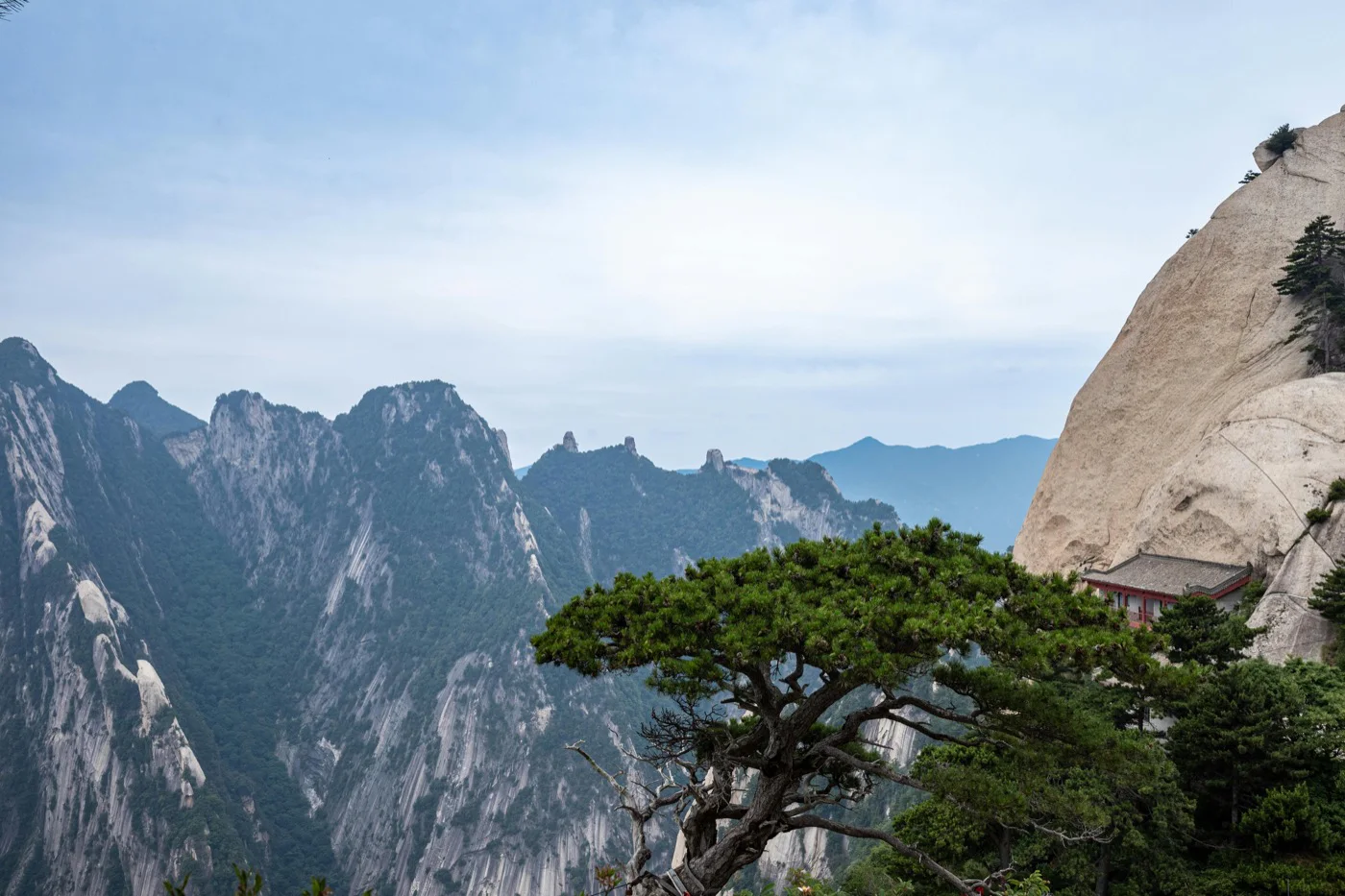
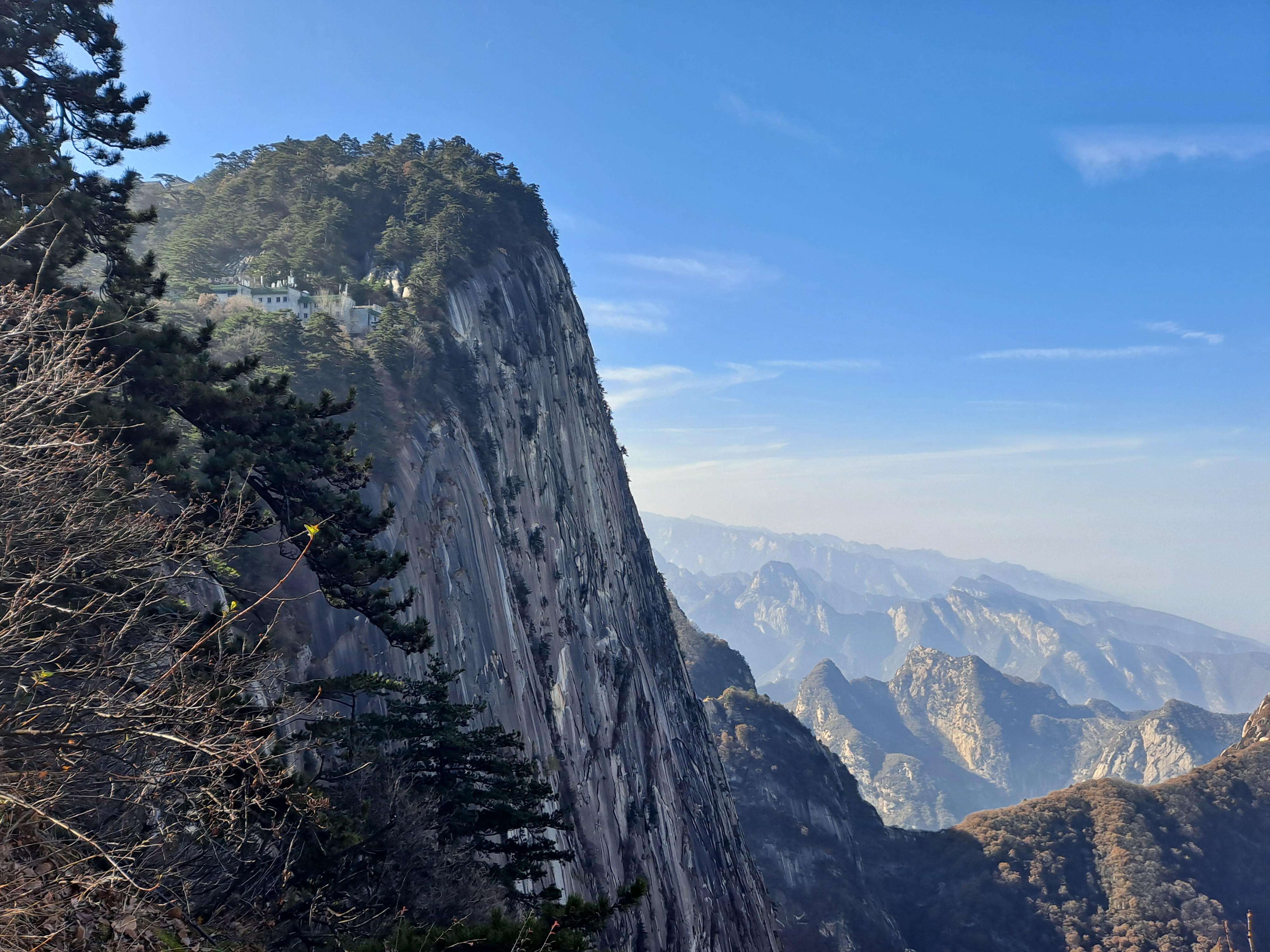
What makes it worth the trip: the mountain is genuinely dramatic. White granite cliffs, Taoist temples built into vertical rock faces, and ridge paths where you can see thousands of meters in every direction. If you put in the effort, the views are unlike anything else in China.
What can disappoint: peak-season crowds are brutal. On national holidays, cable car queues run 2-3 hours.
Is Mount Hua Dangerous?
The “world’s most dangerous hike” label comes from viral videos of the Changkong Plank Walk, roughly “sky-hanging plank path” - a 100-meter ledge path, 30 cm wide, bolted into a cliff face above a near-vertical drop. Those videos are accurate. What they don’t show is that the Plank Walk is entirely optional, takes up about 10 minutes of a full-day visit, and has its own safety harness system.
The main hiking routes are a different kind of challenge. Expect:
- Continuous stone staircases, some angled at 45-70 degrees
- Iron chain sections where you use both hands
- Exposed ridge walks that feel vertiginous even without official “danger” labels
Honest summary: the standard cable car + five peaks route is demanding but manageable for most healthy adults. The Plank Walk and Yaozi Fanshen, roughly “sparrowhawk flipping over,” are genuinely extreme and completely skippable.
The Five Peaks: What to Expect at Each
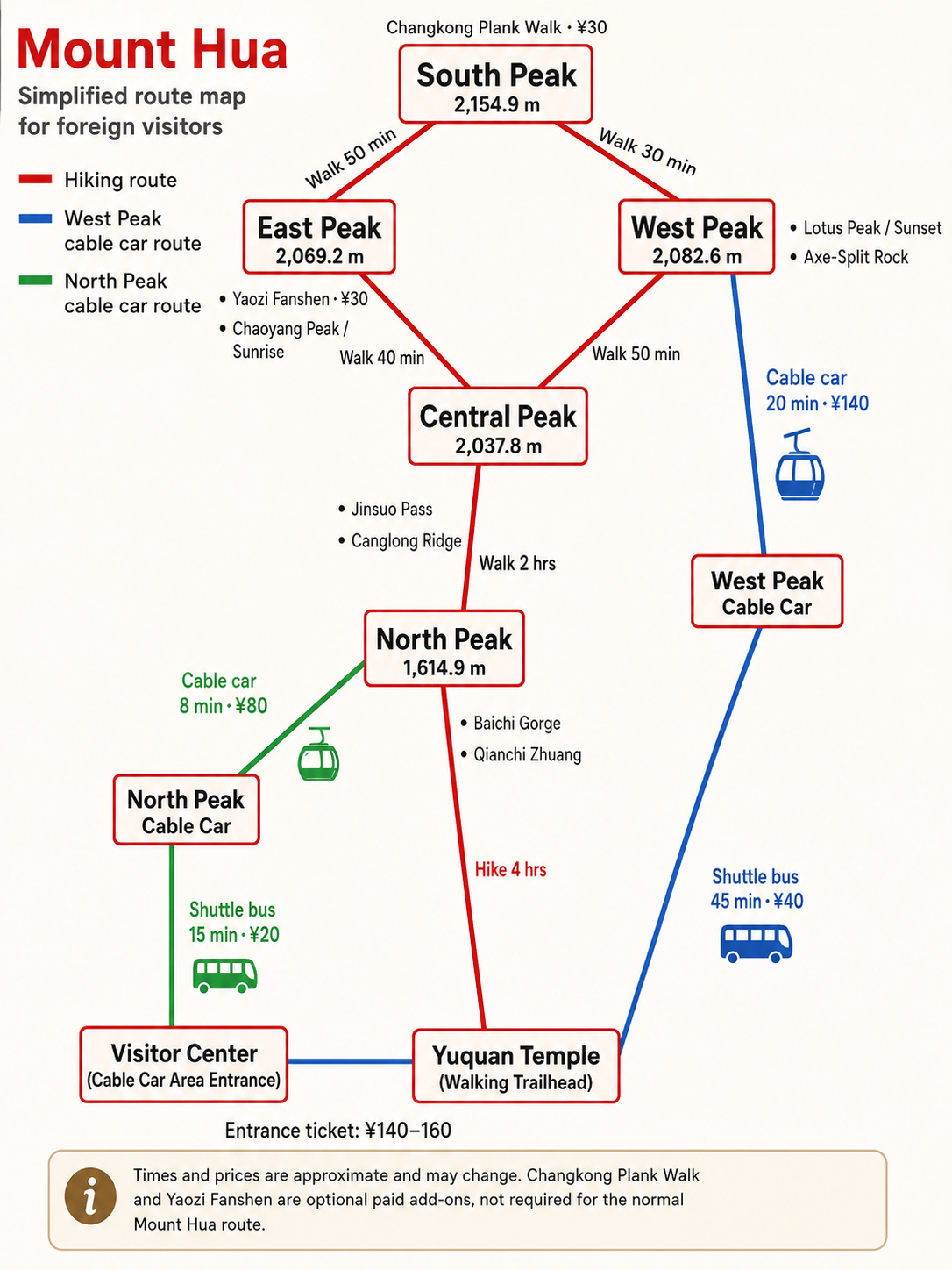
The five peaks are not separate mountains - they’re high points along a connected granite ridge. Think of it as a cross shape: North Peak is the entry point (via the cheaper cable car), and the ridge runs south to East, South, West, and Central peaks.
North Peak (Beifeng) - 1,614 m The lowest peak and the entry/exit point for the North Peak cable car. A military history site nearby commemorates a 1949 PLA operation. Scenic but not as dramatic as the southern peaks. Most visitors pass through rather than linger.
East Peak (Chaoyang Peak) - 2,096 m The sunrise peak. Chaoyang Terrace is the best-known sunrise viewpoint on the mountain, but the platform holds only around 100 people. During peak season, arrive by 4:30 AM to secure a spot. About 1.5-2 hours on foot from North Peak.
South Peak (Luoyan Peak) - 2,154.9 m The highest point on Mount Hua, and the highest of China’s Five Great Mountains. The Changkong Plank Walk is located here. Views are the most expansive on a clear day.
West Peak (Lianhua Peak) - 2,038 m Widely considered the most visually striking peak - the granite summit resembles a blooming lotus flower. The upper station for the West Peak cable car is nearby. The “Axe-Split Rock” here connects to a famous Chinese legend about a son who split the mountain to rescue his mother. Good for sunset. About 30-40 min walk from South Peak.
Central Peak (Zhongfeng) - 2,038 m The smallest peak and the one most visitors skip. A Taoist temple (Yunu Temple) is its main feature. Worth a quick stop if you’re passing through, but not a destination in itself. About 15-20 min from West Peak, then 40-60 min back to North Peak via Canglong Ridge.
Walking times between peaks (realistic estimates):
- North → East: 1.5-2 hours
- East → South: 40-60 min
- South → West: 30-40 min
- West → Central: 15-20 min
- Central → North (via Canglong Ridge): 40-60 min
- Full loop: 4-6 hours
Best Routes: A Practical Comparison
Recommended for first-time visitors: West Peak up, North Peak down
Route: Visitor Center → shuttle bus (40 RMB) → West Peak cable car → West Peak → South Peak → East Peak → Central Peak → Canglong Ridge → North Peak → North Peak cable car down → Visitor Center
Time: 6-8 hours total
Why this works: You arrive at altitude immediately (West Peak cable car, 18 min, 672 m vertical rise), then hike mostly downhill toward North Peak. More manageable on legs than the reverse. Covers all five peaks. The cable car itself is spectacular - one of the most dramatic in China.
Downsides: Lots of descent steps (hard on knees). West Peak cable car is the more expensive option at 140 RMB one-way. It occasionally closes for weather or maintenance - check before you go.
Not ideal for: People with bad knees, heavy acrophobia, elderly travelers, or young children.
West Peak cable car, round-trip (easiest option)
Time: 3-4 hours
Best for: Travelers with limited fitness, older adults, or anyone who wants a taste of the mountain without the full push. You can visit West Peak, South Peak, and part of the ridge without committing to the full traverse. Central and North peaks require a longer walk back and aren’t accessible on this route.
North Peak cable car, round-trip (cheapest option)
Time: 2-3 hours
Best for: Very limited time. North Peak itself is the least dramatic of the five, but the views are still striking. You won’t see South Peak, the Plank Walk, or the West Peak’s famous granite faces. At 80 RMB one-way (peak season), it’s the most affordable option.
Full hike from the base (for serious hikers only)
Start point: Huashan Gate (华山门), open 24 hours - this is the trailhead for the traditional “one road to Hua Shan” route.
Time: 4-6 hours up, 10-12 hours round-trip
Difficulty: Maximum. The route includes Qianchi Zhuang - a near-vertical iron chain section requiring hands and feet - and Baichi Xia. This is not just a difficult hike; it is closer to a climb. Don’t attempt it without genuine fitness and hiking experience.
Who it’s for: Experienced hikers who want the full mountain experience. Often paired with night hiking (see below).
The Plank Walk and Yaozi Fanshen
Changkong Plank Walk (长空栈道)
A section of wooden planks bolted into the cliffside of South Peak, about 100 meters long and 30 cm wide. First built 700 years ago by a Taoist monk. You shuffle sideways, facing the rock, with a safety harness clipped to a chain. Below: roughly a 1,000-meter drop.
The videos are accurate. It is terrifying. It is also real.
What to know before planning around it:
- It closes frequently - for weather (rain, wind, snow), maintenance, and without advance warning. Multiple 2024-2025 visitor reports confirm extended unannounced closures.
- When open, peak-season queues run 2-6 hours.
- Foreign visitors cannot pre-book online. You must queue on-site at the South Peak entrance.
- Safety harness rental: ~30 RMB (verify before visiting)
- Restrictions: height under 1.5 m, age over 55, or conditions including heart disease, hypertension, or acrophobia are not permitted.
Honest verdict: If the Plank Walk is your primary reason for visiting, have a backup day. Don’t build a one-day itinerary around something that’s regularly closed. If it’s just one item on a broader visit, great - but treat it as a bonus, not a guarantee.
Does Mount Hua justify the trip without the Plank Walk? Absolutely. Most visitors don’t do it.
Yaozi Fanshen (鹞子翻身)
Located near East Peak. A near-vertical descent on iron chains - you flip your body outward and climb down facing away from the cliff. Shorter than the Plank Walk but technically more demanding.
Same rules apply: safety harness required (~30 RMB), same age/health restrictions, no advance booking for foreign visitors, same closure risks.
Night Hiking and Sunrise
The route
Start at Huashan Gate (open 24 hours). Hike to North Peak, then East Peak (Chaoyang Terrace). Depart at 10-11 PM; arrive at East Peak around 5-6 AM. Sunrise in spring and summer: around 5:30 AM.
The trail is lit at night with permanent lighting. Staff are stationed at dangerous junctions. It’s not dark wilderness - it’s a well-traveled mountain path at an unusual hour. Shops along the route sell water, instant noodles, and snacks (at high markup - bring your own).
After sunrise, descend options:
- West Peak cable car down (recommended - saves legs)
- Complete the full ridge loop and descend via North Peak cable car
Is night hiking worth it?
For the sunrise: yes, it’s exceptional. East Peak at dawn, after a full night on the mountain, is a legitimately memorable experience.
For first-time foreign visitors without Chinese: conditionally. The trail is manageable without language skills. But if something goes wrong at 2 AM - injury, sudden weather change, disorientation - getting help is difficult without Mandarin. The safer alternative for sunrise is to stay overnight on the mountain at one of the summit guesthouses (book via Trip.com; confirm the hotel accepts foreign passports before booking), then walk to East Peak early the next morning.
Night hike requirements: headlamp or strong flashlight, warm layers (mountain temperature drops significantly even in summer), at least 2 liters of water, snacks, and sturdy closed-toe shoes with grip.
Getting There from Xi’an
High-speed train (strongly recommended)
Xi’an North Station (西安北) → Huashan North Station (华山北). Journey: 30-40 min. Cost: ~55 RMB second class (verify current prices on Trip.com or 12306).
First departure: approximately 6:30 AM (check current schedule - don’t rely on a specific train number). Return trains run throughout the day; last train back is generally around 8-9 PM. Check the actual schedule on 12306 or Trip.com on the morning of your trip.
Getting to Xi’an North Station: Take Metro Line 4 from central Xi’an - about 30-40 minutes. Budget this time into your morning departure.
Buying train tickets: Trip.com accepts international credit cards and is the easiest option for foreign visitors. The official 12306 app also works but requires passport registration and has a more complex setup.
From Huashan North Station to the Visitor Center
Exit the station and take the free Huayin Bus Line 1 or 2 (green minibus) to Shengtai Guangchang (生态广场), which is adjacent to the Visitor Center. About 15-20 minutes. Taxi or Didi (China’s Uber) to the same destination costs 15-20 RMB and is faster.
Visitor Center to cable car stations
Shuttle buses are mandatory - private vehicles are not permitted beyond the Visitor Center.
- To North Peak cable car station: 20 RMB one-way, ~20 min
- To West Peak cable car station: 40 RMB one-way, ~40 min
These are purchased separately from your entrance ticket.
Tickets, Costs, and Buying with a Foreign Passport
Price breakdown (peak season: March-November)
| Item | Peak season | Off-season (Dec-Feb) |
|---|---|---|
| Entrance ticket | 160 RMB | 100 RMB |
| North Peak cable car (one-way) | 80 RMB | 45 RMB |
| West Peak cable car (one-way) | 140 RMB | 120 RMB |
| Shuttle to North Peak cable car | 20 RMB | 20 RMB |
| Shuttle to West Peak cable car | 40 RMB | 40 RMB |
| Safety harness (Plank Walk / Yaozi) | ~30 RMB each | - |
All prices should be verified before your visit - they are adjusted periodically.
Typical full-day cost (West Peak up, North Peak down, peak season): 160 + 40 + 140 + 80 + 20 = approximately 440 RMB per person, not including food, water, or optional activities.
Important: these three costs - entrance ticket, shuttle bus, cable car - are paid separately at different points. This confuses most visitors, including Chinese ones. You are not done paying once you have the entrance ticket.
Buying tickets with a foreign passport
The mountain uses a real-name reservation system with daily caps. During major holidays (Golden Week, May Day, Spring Festival), tickets can sell out before you arrive.
Best options for foreign visitors:
- Official WeChat account (“华山景区”) - the system now supports foreign passport registration. This is the most reliable way to pre-book.
- Trip.com - supports international credit cards and foreign passport details. Some bundled packages (entrance + cable cars) allow direct passport scanning at the gate.
- On-site ticket window - foreign passports accepted, but during peak season you may find the day’s allocation already gone. Bring cash as backup.
Bottom line: Pre-book on Trip.com or the official WeChat account before arriving, especially on weekends and holidays. Showing up without a reservation in peak season is a real risk.
Payment
- Cash (RMB): accepted everywhere on-site. Bring at least 600 RMB per person.
- Alipay / WeChat Pay linked to a foreign bank card: works, but requires setup before your trip.
- International credit cards (Visa/Mastercard): accepted at some windows, not all - don’t rely on it as your only option.
- Trip.com / Klook: accept international credit cards online.
How Hard Is It, Really?
The honest version: if you can comfortably climb 30 floors of stairs, you can complete the standard West Peak up / North Peak down route. If you rarely exercise, you’ll finish but you’ll be in pain - particularly on the descent, where continuous stone steps create sustained knee stress.
A useful benchmark: imagine hiking up and down 80 floors of uneven stone stairs, some at 45-70 degrees, over 4-6 km of ridge trail. That’s the cable car + five peaks day.
Canglong Ridge is the section most likely to challenge people who thought they were prepared. A narrow spine of rock with steep drops on both sides, requiring iron chains for balance in steep sections. It’s not technically dangerous for most people, but it feels exposed.
Who should reconsider the standard route
Bad knees: The West Peak up / North Peak down route involves heavy descent. Consider West Peak round-trip instead, or bring trekking poles (available to rent on-site).
Extreme acrophobia: The West Peak cable car has strong exposure. Canglong Ridge is open on both sides. If heights genuinely affect you, take the North Peak cable car and stay near the North Peak area. Skip the Plank Walk entirely.
Older adults (60+): West Peak round-trip is the most realistic option. Full five-peak traverse is not recommended without confirmed fitness. Confirm knee health before planning.
Children under 12: North Peak cable car round-trip is the safest option. Night hiking is not appropriate. The main ridge trails involve chain sections and steep drops that require adult-level caution.
What to bring
- Shoes: Closed-toe with grip. Not sandals, not leather-soled, not heels. Wet stone steps are genuinely slippery.
- Water: Minimum 2 liters. On-mountain water costs 10-20 RMB per bottle.
- Food: Pack snacks. Mountain restaurants charge 3-5x normal prices and quality is poor.
- Layers: Even in summer, summit temperatures are significantly lower and wind is strong.
- Rain gear: Weather changes without warning. A compact rain jacket takes up almost no space.
- Trekking poles: Optional but useful, especially for knees on the descent. Available to rent.
- Toilets: Basic toilets are available throughout the mountain and are generally free. Many are dry toilets without flushing water, so expect strong smells and prepare mentally.
When to Visit
April-May: The best window. Mild temperatures, occasional flowers, thinner crowds, good visibility.
September: Excellent. Clear air, comfortable temperatures, autumn colors beginning. Avoid the October National Holiday week entirely - it’s the most crowded period of the year.
June-August: Hot and humid at the base. Summit is cooler but afternoon thunderstorms are common. Good for night hiking (warm enough). Highest visitor numbers.
December-February: Cold, icy trails, some sections close. Dramatic snow scenery. Significantly cheaper cable cars. Suitable only for experienced cold-weather hikers with proper gear.
West Peak cable car maintenance: The West Peak cable car typically undergoes annual maintenance in mid-November to mid-December. If you’re visiting during this window, check the official announcement (WeChat: “华山景区”) and plan to use the North Peak cable car instead.
Avoid these dates
- National Golden Week (October 1-7): worst crowds of the year, cable car queues over 3 hours
- May Day holiday (May 1-5): same conditions
- Chinese New Year and Qingming (dates vary by year)
- Any public holiday weekend
Best timing overall: weekday mornings, arriving at the Visitor Center by 7:00-8:00 AM.
Weather warnings
Don’t hike in rain - stone steps become dangerously slippery and the Plank Walk / Yaozi Fanshen close immediately. Check the forecast and check the official WeChat account for any closure notices before leaving Xi’an. If the weather looks uncertain, build flexibility into your itinerary.
Where to Stay
Xi’an (for day-trippers)
Better hotel selection, more international-friendly service, and easy airport access. The right choice if you’re making a day trip or treating Mount Hua as a side trip within a Xi’an itinerary. The trade-off: early departure required (6:00-6:30 AM from your hotel) and a late return (9:00-10:00 PM).
Huayin (for two-day trips or sunrise seekers)
Staying in Huayin cuts out the morning rush and gives you flexibility - a second day on the mountain, a chance to do a night hike without timing pressure, or simply a more relaxed pace.
Foreign passport warning: Chinese law does not require foreign visitors to stay only in hotels with a special “foreign guest” qualification. In practice, some smaller hotels in Huayin may still be unfamiliar with passport registration or may not handle it smoothly. Confirm in writing before booking, keep the message, and check the cancellation terms. If a property refuses solely because of a claimed lack of “foreign-related qualification,” ask the booking platform for help or choose another property.
Before booking any Huayin hotel: confirm in writing (via the platform’s messaging system) that the hotel can process your passport registration. Screenshot the confirmation and check the cancellation terms. Booking.com or Trip.com may make it easier to find properties with clear foreign-passport booking support, but a platform listing is not a legal guarantee.
On the mountain
Basic guesthouses exist near East and West peaks. Conditions are simple, prices are high, and booking requires Chinese-language communication (or help from a travel agent). If your goal is watching the sunrise from East Peak, this is the most straightforward option - check in the evening, wake up early, walk to Chaoyang Terrace.
Common Mistakes (and How to Avoid Them)
Assuming the entrance ticket covers everything. It doesn’t. You’ll pay separately for the shuttle bus, the cable car, and any thrill attractions. Budget the full amount before you go.
Not pre-booking during peak season. Daily visitor caps mean tickets sell out. Showing up on a Golden Week morning without a reservation is a serious risk. Book online 3-10 days ahead.
Leaving too late. Cable car ticket sales stop at 4:00 PM in peak season; operation ends at 7:00 PM. An afternoon departure from Xi’an won’t give you enough time. Start no later than 7:00 AM.
Not bringing enough water and food. On-mountain food is expensive and mediocre. Pack snacks, bring water, and resist the urge to travel light.
Wearing wrong shoes. Sandals on wet stone steps. This happens more than you’d think, and it’s genuinely dangerous.
Building the whole trip around the Plank Walk. It may be closed. Have a plan that’s satisfying even without it.
Going in bad weather. The mountain in rain is dangerous, not atmospheric. Postpone if the forecast is poor - you’ll thank yourself.
Avoid these
- Scalpers at the entrance: Anyone offering “discount tickets” or “skip the queue” tickets is selling something illegitimate or nonexistent. Use official channels only.
- Unsolicited “guides”: Individuals approaching you near the Visitor Center and offering guide services typically have no credentials and unclear fee structures.
- On-mountain restaurants: Prices are 3-5x normal. Eat at the base before entering.
Cultural Context (Short Version)
Mount Hua is one of China’s Five Sacred Mountains (五岳, Wǔyuè), each historically associated with a cardinal direction. Hua Shan is the Western Mountain - “the mountain that guards the West.” The concept is roughly two thousand years old and was treated as a political and cosmological fact by Chinese emperors, who made regular pilgrimages here.
What distinguishes Mount Hua from the other four sacred mountains is its Taoist identity. While other peaks mix Buddhism and Confucianism, Hua Shan has remained almost exclusively Taoist for two millennia. More than 20 active Taoist temples and 72 cliff-carved cave meditation cells are distributed across the mountain. The people you see in traditional robes are not performers - they’re practicing monks and nuns. This is a working religious site.
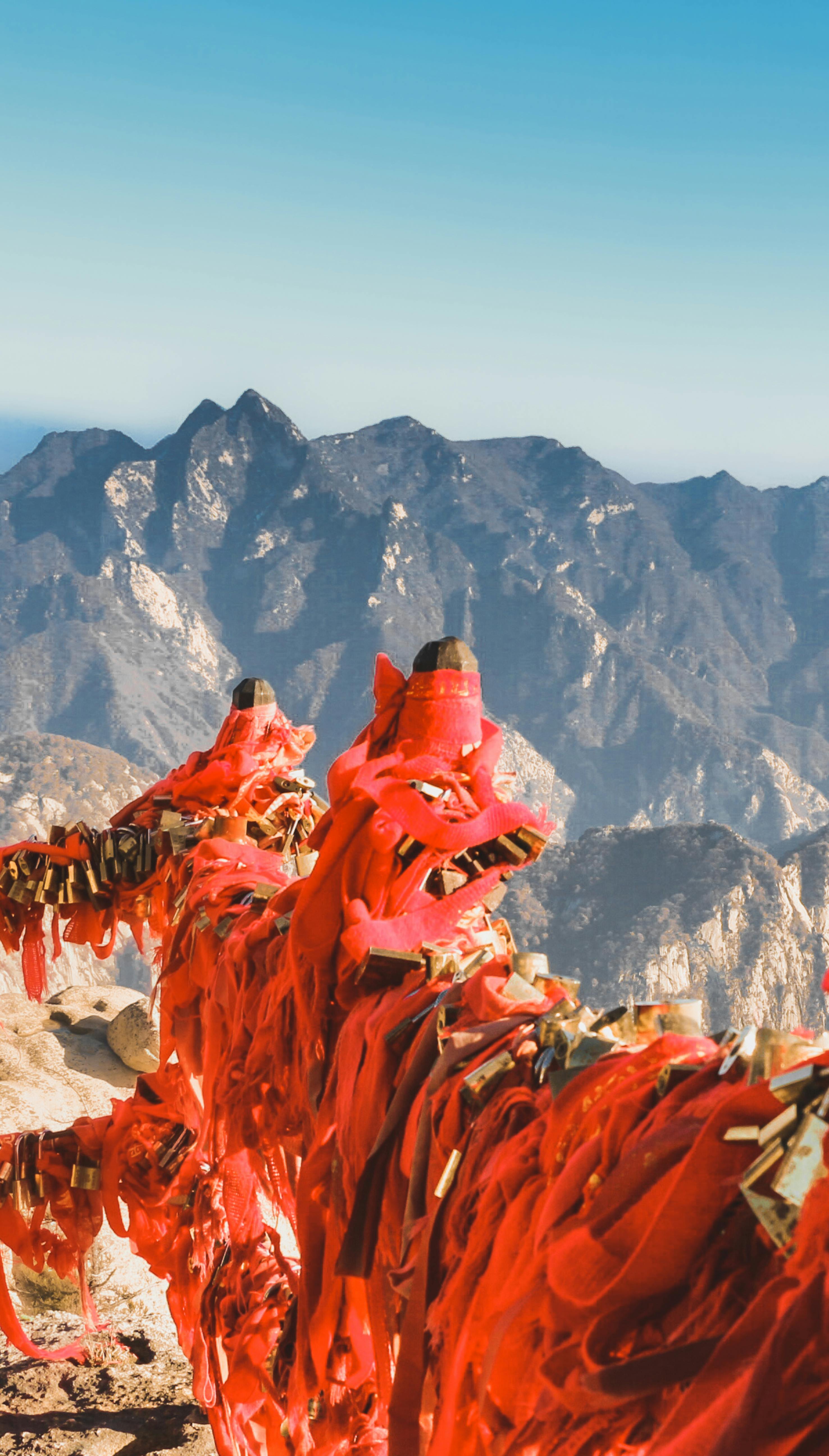
The name matters, too: the character 华 (Huá) in Huashan is the same character at the root of “China” in Chinese (中华 Zhōnghuá, 华夏 Huáxià). The mountain’s name is embedded in how Chinese civilization describes itself.
One legend worth knowing: the large flat stone near West Peak known as the “Axe-Split Rock” is said to be where a filial son split the mountain to rescue his mother, who had been imprisoned there by a god. It’s the Chinese equivalent of a Herculean myth - an act of impossible devotion, preserved in stone. The story is called Chen Xiang Splits the Mountain (沉香劈山) and is known by every Chinese child.
Frequently Asked Questions
Can I buy tickets on-site with a foreign passport? Yes - bring your passport to the ticket window. But during major holidays, daily allocations may already be sold out. Pre-booking via Trip.com or the official WeChat account (“华山景区”) is strongly recommended.
Is the Plank Walk always open? No. It closes for weather, maintenance, and without predictable scheduling. Multiple visitors in 2024-2025 reported it closed on arrival despite confirming in advance. Don’t plan your entire trip around it.
Do I need a guide? No - trail signage is reasonable and the main paths are heavily trafficked. An English-speaking guide is useful if you want historical and cultural context, or if you’re nervous about navigating the Chinese ticketing system. For pure navigation, you can manage independently.
How much should I budget? For a standard day trip (West Peak up, North Peak down, peak season): roughly 440 RMB for all tickets plus 120-200 RMB for food, water, and incidentals. Add 110-120 RMB for round-trip train from Xi’an.
What if the West Peak cable car is closed? Use the North Peak cable car instead and plan a different route. The mountain is worth visiting regardless - the West Peak cable car is spectacular but not the only way up.
Is Mount Hua safe for solo female travelers? Yes, in general. The mountain is heavily staffed and extremely well-trafficked. The usual precautions apply (avoid isolated areas after dark, keep valuables secure). Night hiking solo is not recommended for any solo traveler regardless of gender - go with at least one other person.
Prices, schedules, and policies on this page reflect information current as of mid-2026. Confirm all ticket prices, cable car operating hours, and booking procedures through Trip.com or the official Mount Hua WeChat account (“华山景区”) before your visit. The Plank Walk and West Peak cable car are subject to unannounced closures; check status the morning of your trip.
Advertisement
Advertisement
Image Credits
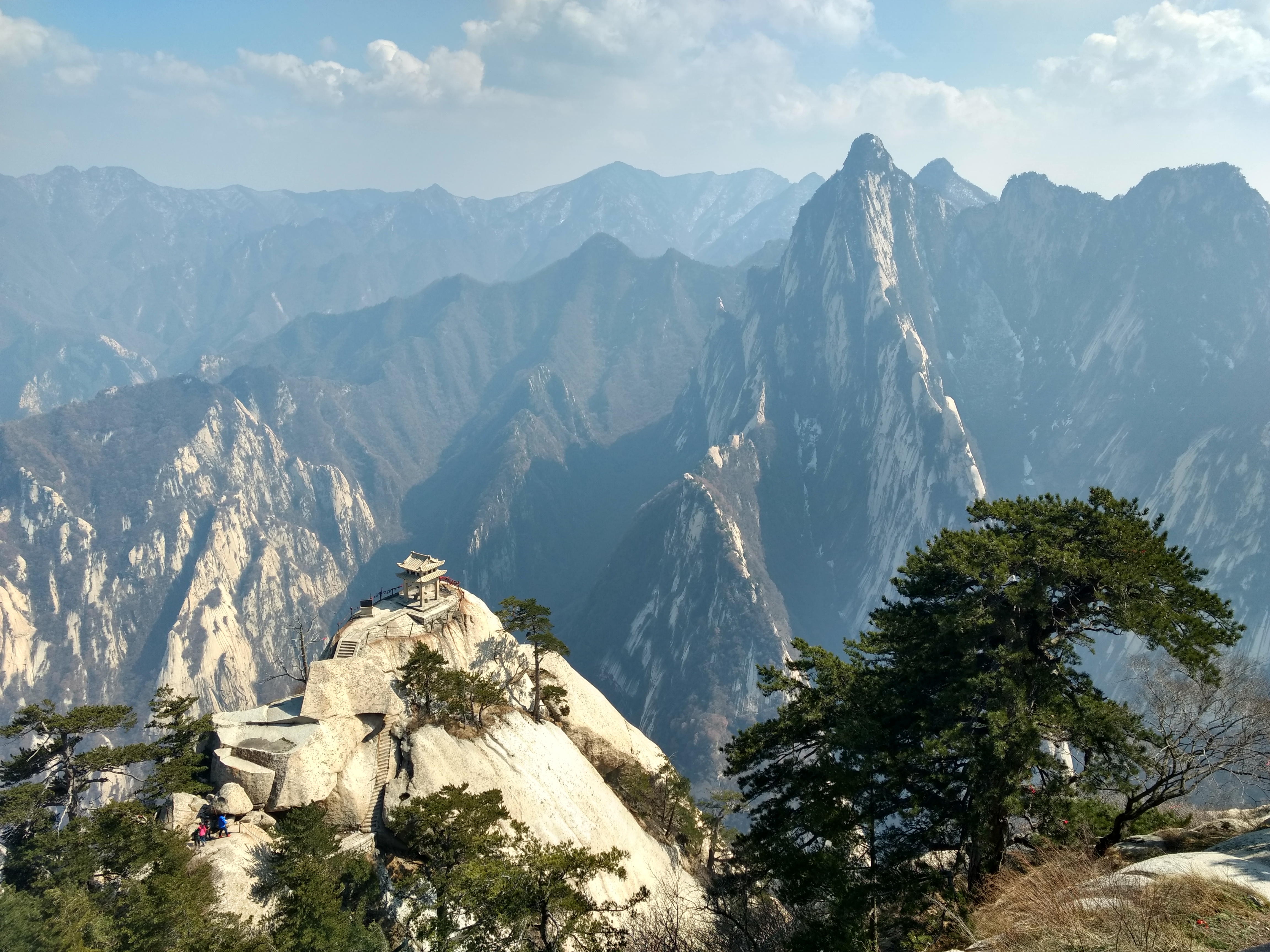
The Chess Pavilion, Huashan, China by May Wung, via Wikimedia Commons, licensed under CC BY-SA 4.0 . Resized for web.
Related guides
Mount Tai Travel Guide for Foreign Visitors: Routes, Tickets, Sunrise, and First-Timer Tips
A practical Mount Tai guide for foreign visitors covering routes, tickets, passport checks, sunrise, difficulty, transport, cable cars, where to stay, and first-timer planning tips.
Best Hiking Mountains in China for Foreign Visitors
Compare China's most worthwhile mountain routes for travelers who want more walking, more stairs, and a more physical mountain experience.