Lushan
- Best for
- The best overall summer retreat
- Recommended stay
- 2–3 days
- Difficulty
- Easy to moderate
- Main base
- Guling Town
- Main caution
- Busy in peak summer, and mountain weather can hide some views.
Summer mountain planning
Discover the best Chinese mountains for summer travel, from cool retreats like Lushan and Wutai Mountain to forest and river escapes such as Wuyi Mountain and Zhangjiajie.
Written and fact-checked by: Rocket Zheng
Last verified:
Summer in China can be intense. In many major cities, July and August bring long hot days, high humidity, crowded streets, and afternoons when sightseeing can feel more exhausting than enjoyable. In places such as Shanghai, Nanjing, Wuhan, Chongqing, Changsha, Chengdu, Fuzhou, or Guangzhou, summer travel often means strong sun, heavy air, sudden rain, and temperatures that can easily make outdoor sightseeing uncomfortable.
That is why mountain travel becomes one of the best ways to enjoy China in summer.
But not every mountain in China is a true summer retreat. Some mountains are genuinely cooler because of altitude and mountain-town geography. Some are high-altitude sacred mountains where the upper areas can feel like a different season from the city below. Others are not exactly cold, but they offer forests, rivers, shade, waterfalls, mist, and resort-style accommodation that make summer travel much more pleasant.
This guide recommends five mountain destinations in China for summer travel: Lushan, Wutai Mountain, Mount Emei, Wuyi Mountain, and Zhangjiajie.
They are not ranked only by temperature. A good summer mountain trip also depends on comfort, accommodation, transportation, scenery, crowd management, route difficulty, and how easy the destination is for a first-time foreign visitor. Some travelers want a cool mountain town. Some want a Buddhist pilgrimage atmosphere. Some want dramatic scenery. Some want forest, river, tea, and a relaxed resort base.
So instead of treating all “summer mountains” as the same, this guide divides them into three useful types: true cool retreats, cooler high-mountain escapes, and green summer escapes.
if you want the most complete summer retreat experience: cooler air, a real mountain town, historical villas, misty roads, waterfalls, lakes, and an easy place to slow down for two or three days.
if you want a cooler highland Buddhist region with temples, pilgrimage culture, open mountain air, and a quieter spiritual atmosphere.
if you are traveling from Chengdu and want a cooler mountain escape with temples, forests, monkeys, cable cars, and the famous Golden Summit.
if you want a comfortable green summer trip with forest, river scenery, bamboo rafting, tea culture, and a mature resort base around Sangu Resort.
if you want dramatic summer scenery: sandstone pillars, forested valleys, mist, cable cars, elevators, and famous viewpoints.
Many visitors make the mistake of choosing a summer mountain in China only by looking at photos. A mountain may look green and cool in pictures, but the actual travel experience can be very different.
For summer travel, you should ask five practical questions.
Some mountains have genuinely cooler climates, especially high-altitude areas or old summer resort towns. Others are still hot and humid, but feel better because of forests, rivers, shade, and mist.
For summer trips, accommodation matters a lot. A mountain with a real town or mature resort area is usually more relaxing than a mountain where you must rush up and down in one day.
A beautiful mountain can become unpleasant if you need to climb thousands of stairs under strong sun. Cable cars, scenic buses, shaded trails, and flexible routes are important.
Rain can create mist, waterfalls, and cloud seas. But it can also hide views, make stone steps slippery, delay cable cars, or turn the trip into a foggy disappointment.
Foreign visitors need clear transportation, passport-friendly ticketing, understandable route planning, and lodging areas that are not too confusing.
-900.webp)
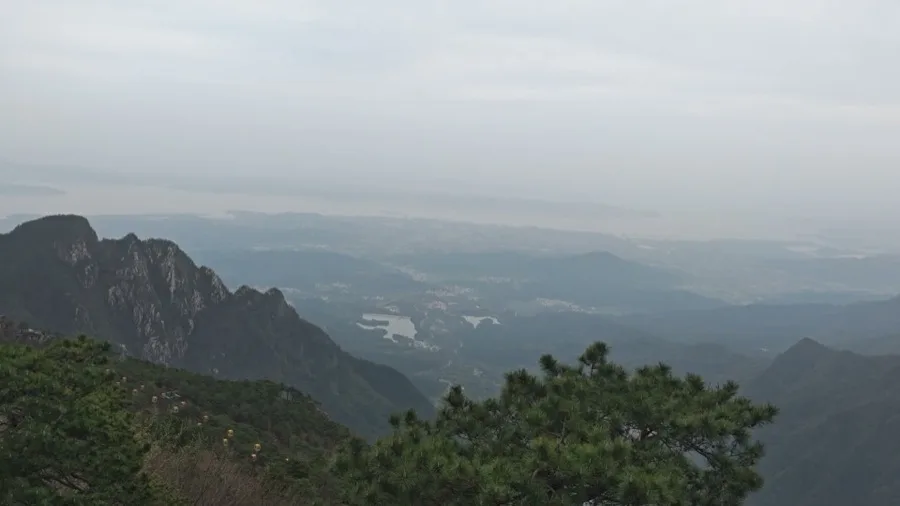
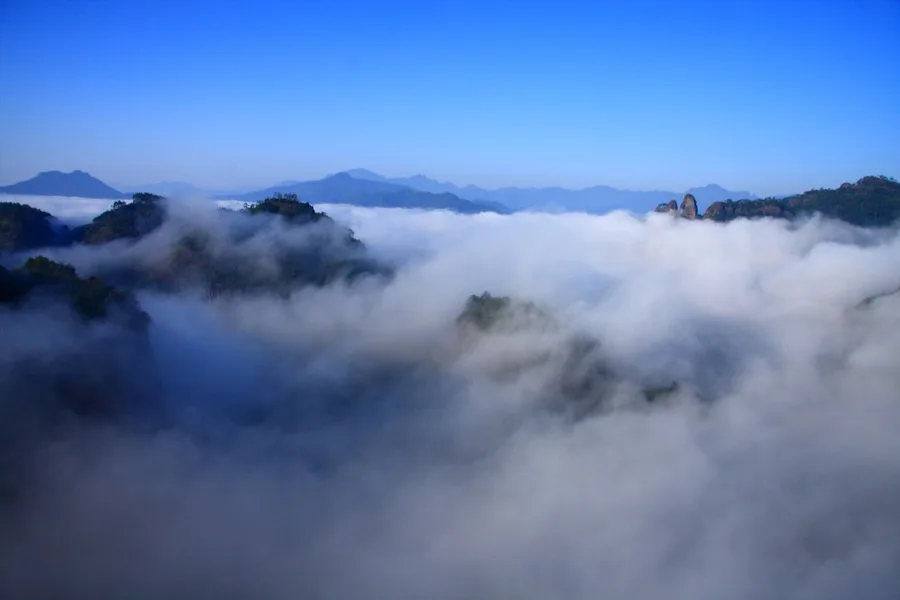
Lushan is the strongest recommendation for a summer mountain escape.
If this page had to choose only one destination, Lushan would be the most natural answer. It is not just a mountain with views. It is a classic summer retreat with a real mountain town, cooler air, old villas, forested roads, waterfalls, lakes, mist, and enough cultural history to make a slow stay meaningful.
For foreign visitors, Lushan is easier to understand than many Chinese mountains because the experience is not only about reaching a summit. You can stay in Guling Town, walk to viewpoints, visit waterfalls, explore historical buildings, and enjoy a slower mountain-town rhythm.
Lushan’s summer appeal comes from a combination of climate, geography, and lifestyle.
First, the mountain is high enough to feel noticeably cooler than the lowland cities around the Yangtze River region. Second, it has a real mountain-town structure, and Guling Town is part of the travel experience itself. Third, Lushan has a softer style of mountain travel built around mist, valleys, villas, forest roads, lakes, and waterfalls rather than one hard summit climb.
In summer, mornings and evenings can be cool enough for a light jacket, while afternoons are usually more comfortable than the surrounding cities.
For a first-time visitor, the best Lushan trip should not be too rushed. The ideal plan is two or three days.
A classic first day can focus on Guling Town, Ruqin Lake, Flower Path, Jinxiu Valley, and nearby historical areas. A second day can include Sandiequan Waterfall or other scenic routes, depending on your energy and weather.
If you have a third day, slow down. That is where Lushan becomes more than a checklist: old villas, morning mist, cafés, quiet roads, and the contrast between Chinese mountain scenery and early modern resort history.
Lushan is best for travelers who want:
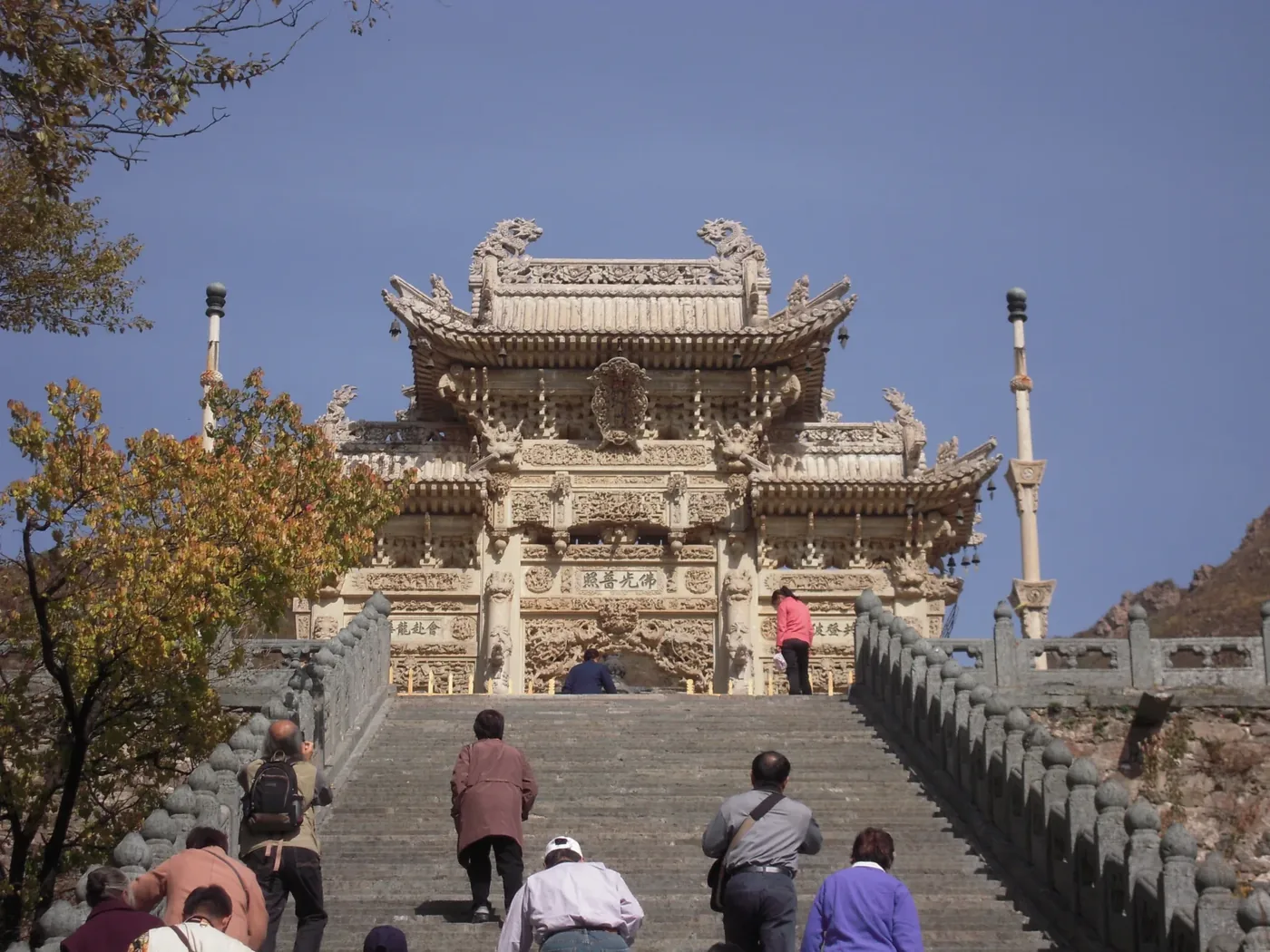
Wutai Mountain is another excellent summer choice, but its appeal is very different from Lushan.
Lushan feels like a mountain resort town. Wutai Mountain feels like a highland Buddhist world.
For foreign visitors, the main experience is not climbing one peak. It is staying around Taihuai Town, visiting temples, watching pilgrims, understanding Buddhist culture, and feeling the colder mountain air and wide highland atmosphere.
Wutai Mountain is one of the best places in China where “cool mountain” is not just a marketing phrase. Its high elevation and northern location give it a very different summer climate from the hot plains and basins below.
The second reason is cultural depth. Temples are not decorative stops here. They are the core of the journey. You see incense, pilgrims, monks, prayer halls, and a rhythm that feels very different from ordinary sightseeing.
For most foreign visitors, the best plan is to stay in or near Taihuai Town and build the trip around the main temples.
A good first-time route may include Shuxiang Temple, Tayuan Temple, Xiantong Temple, Pusa Ding, and nearby temple areas. Dai Luoding is another meaningful stop if you want a symbolic connection to the Five Terraces without attempting the full route.
More serious travelers may want the actual five terraces, but for most foreign independent visitors the temple-focused Taihuai Town route is more realistic and more enjoyable.
Wutai Mountain is best for travelers who want:
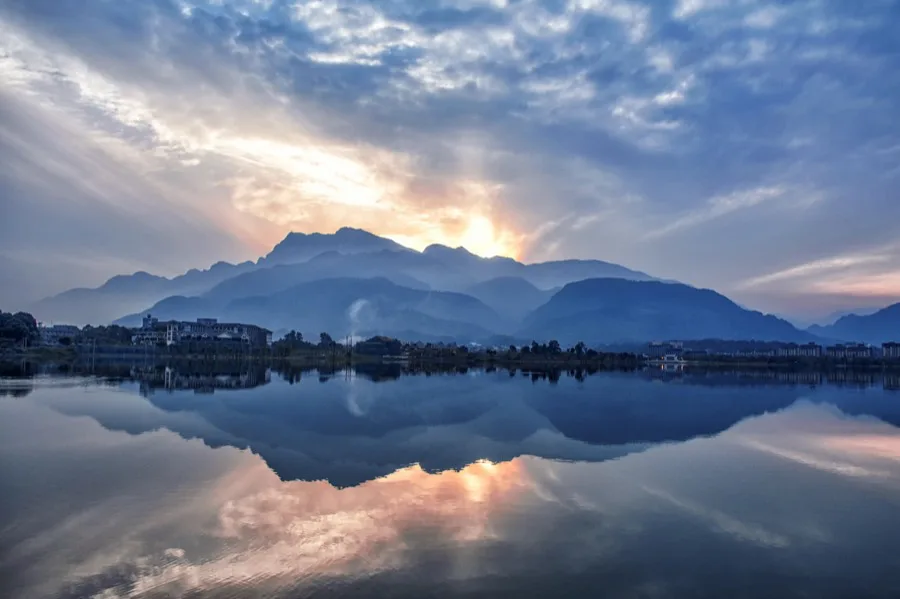
Mount Emei is one of the best summer mountain choices for travelers visiting Sichuan.
Chengdu and the Sichuan Basin can feel hot, humid, and heavy in summer. Mount Emei offers a dramatic change: forests, temples, mist, high elevation, shuttle buses, cable cars, monkeys, and the famous Golden Summit.
Compared with Lushan and Wutai Mountain, Mount Emei is more vertical. The lower mountain may still feel warm and humid, but the upper areas can be much cooler.
Mount Emei works well in summer because it offers both ecological richness and altitude contrast. Most first-time foreign visitors can use scenic buses and cable cars to reach the upper areas, making the cool high-mountain experience more accessible.
It also has strong cultural value as one of China’s Four Sacred Buddhist Mountains. Temples, incense, forest paths, and Buddhist architecture are part of the journey, not side attractions.
In summer, the Golden Summit and nearby high-altitude areas may require a jacket even when Chengdu is extremely hot.
For summer visitors, the most practical plan is usually not a full climb.
A realistic first-time route is: arrive at Emeishan or the Baoguo Temple area, take the scenic bus toward Leidongping, walk to Jieyin Hall, take the cable car to the Golden Summit, and return by cable car and scenic bus.
Travelers with more time can stay overnight near the mountain or in the Emeishan area and combine Mount Emei with the Leshan Giant Buddha.
Mount Emei is best for travelers who want:
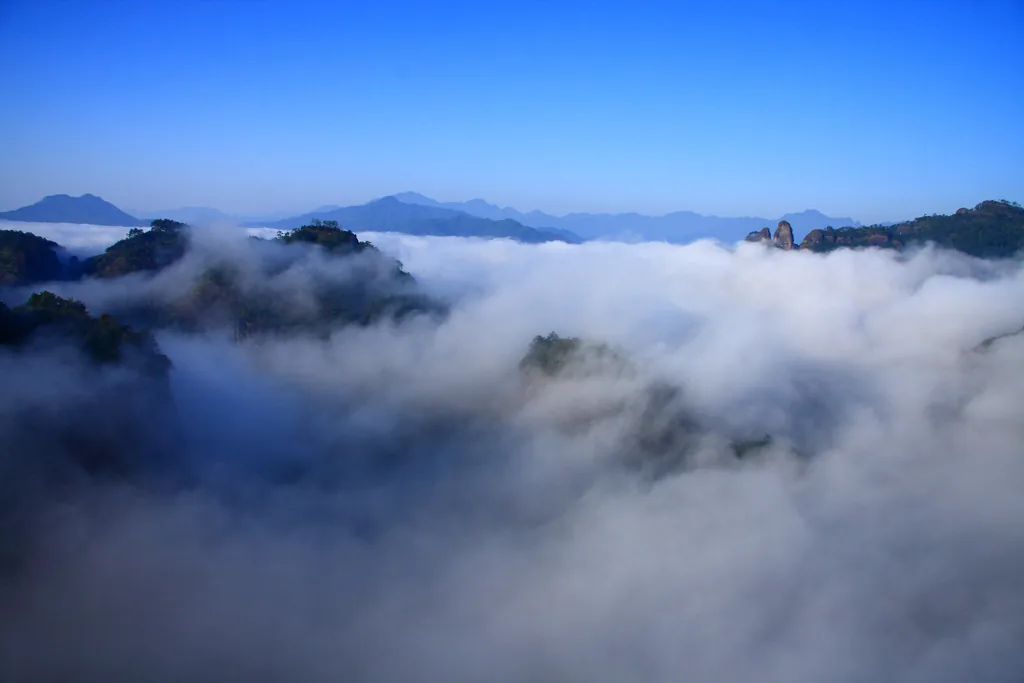
Wuyi Mountain deserves a place on this list, even though it is not the coldest mountain in China.
Its summer value is different. Wuyi Mountain is a green summer escape: forest, river, tea culture, bamboo rafting, red cliffs, shaded paths, and one of the most comfortable tourist bases among Chinese mountain destinations.
For foreign visitors, that matters. You can stay around Sangu Resort, visit scenic areas during the day, return to restaurants and hotels at night, and build a relaxed two-day trip.
Wuyi Mountain has three strong summer advantages: forest, water, and comfort.
The forest gives the area a greener and softer atmosphere than many exposed mountain destinations. The Nine-Bend Stream bamboo rafting route is also one of the most comfortable scenic experiences for summer.
The third advantage is Sangu Resort, the mature tourism base near the scenic area, with many hotels, guesthouses, restaurants, shops, and transport connections.
A good first-time Wuyi Mountain itinerary usually takes two days.
On the first day, visit Tianyou Peak and Wuyi Palace. On the second day, take the Nine-Bend Stream bamboo raft, then visit the Dahongpao or Water Curtain Cave area.
In the evening, Sangu Resort works well as a base. You can eat local food, drink tea, walk around, and rest without needing to solve complicated transportation problems.
Wuyi Mountain is best for travelers who want:
Zhangjiajie is not the coolest mountain on this list, but it may be the most visually dramatic.
Its sandstone pillars, misty valleys, forested cliffs, cable cars, elevators, and high viewpoints create a scene that feels almost unreal.
In summer, Zhangjiajie is humid and can be hot, but it also becomes intensely green. Rain and mist can make the pillars look even more mysterious.
Zhangjiajie works in summer because its scenery often benefits from moisture and mist.
The scenic infrastructure also helps. For most travelers, the trip includes Wulingyuan National Forest Park, Tianmen Mountain, and sometimes the Grand Canyon Glass Bridge. Scenic buses, cable cars, elevators, and planned routes make it possible to see major landscapes without a full mountain trek.
For most first-time foreign visitors, the core should be Wulingyuan National Forest Park, where you find the famous sandstone pillar scenery.
Golden Whip Stream is especially relevant in summer because it offers a lower, greener, more shaded walking experience compared with exposed high viewpoints.
Tianmen Mountain is also worth considering, but it should be planned as a separate area, not confused with the national forest park.
Zhangjiajie is best for travelers who want:
The temperature ranges below are based on typical summer conditions from past climate and travel-weather data. They are not exact forecasts. Mountain weather changes quickly, and temperatures can vary a lot between the town, valley, cable car station, and summit.
| Mountain | Summer travel type | Typical summer temperature range | Main base | Best for | Main caution |
|---|---|---|---|---|---|
| Lushan | True cool retreat | 15–28°C / 59–82°F | Guling Town | Cool mountain town, waterfalls, mist, historical villas | Summer crowds, rain, booking early |
| Wutai Mountain | True cool retreat | 8–22°C / 46–72°F | Taihuai Town | Buddhist temples, cool highland atmosphere | Cold mornings and evenings, transport planning |
| Mount Emei | Cooler high-mountain escape | 7–26°C / 45–79°F depending on elevation | Emeishan / Baoguo Temple area / upper mountain | Chengdu side trip, Golden Summit, temples, forest | Rain, mist, monkeys, big elevation change |
| Wuyi Mountain | Green summer escape | 23–32°C / 73–90°F | Sangu Resort | Forest, river, bamboo rafting, tea culture | Humid weather, rafting availability |
| Zhangjiajie | Green summer escape | 22–34°C / 72–93°F depending on area and weather | Wulingyuan / Zhangjiajie city | Dramatic pillars, mist, forest viewpoints | Crowds, rain blocking views, area confusion |
The key lesson is simple: Lushan and Wutai Mountain are the real cooling choices. Mount Emei gives you a high-altitude escape if you go to the upper mountain. Wuyi Mountain and Zhangjiajie are better understood as green summer escapes, not cold-weather retreats.
Lushan is the best all-around summer mountain recommendation. It has the clearest identity as a summer retreat and the best balance of comfort, scenery, history, and cool mountain-town atmosphere.
Wutai Mountain is the best choice if your summer trip should feel spiritual, quiet, and culturally deep. It is cooler, more religious, and less like a normal sightseeing mountain.
Mount Emei is the most practical summer mountain escape if you are already visiting Chengdu or Leshan. It combines easy transport, sacred mountain culture, and a cooler high-altitude summit area.
Wuyi Mountain is ideal if you want forest, river, tea, and a convenient place to stay. Sangu Resort makes it one of the most comfortable summer mountain bases for foreign visitors.
Zhangjiajie is the best choice if scenery is your top priority. It is not the most relaxing or the coolest, but it has the strongest visual impact.
Choose Lushan for the best short summer retreat, Wuyi Mountain for a relaxed forest-and-river trip, or Mount Emei if you are coming from Chengdu.
Choose Zhangjiajie for a full scenic trip, or Wutai Mountain for a deeper Buddhist mountain journey.
Choose Lushan or Wutai Mountain first. Mount Emei can also work if you go to the upper mountain.
Choose Wuyi Mountain or Lushan. Both have clear bases where you can stay and organize the trip more easily.
Choose Zhangjiajie. It is not the coolest destination, but it has the strongest visual impact.
Summer afternoons can be hot, crowded, or rainy. Start major walking routes early in the morning.
A lightweight rain jacket is often better than only carrying an umbrella, especially on stone steps or windy viewpoints.
Even if the city is extremely hot, mountains such as Lushan, Wutai Mountain, and Mount Emei can feel cool in the morning, evening, or upper areas.
The weather at the mountain base and the mountain top can be very different. This is especially true for Mount Emei and Wutai Mountain.
Lushan’s Guling Town, Wuyi Mountain’s Sangu Resort, and Zhangjiajie’s Wulingyuan area can be busy in summer.
July and August are summer holiday months in China. Travel on weekdays when possible.
Mist and rain can change the value of different viewpoints. Sometimes the lower forest walk becomes better than the summit platform.
A summer mountain trip should feel cooler and more comfortable, not like a race.
For most foreign visitors planning a summer mountain trip in China, the best choice is Lushan. It offers the most complete summer retreat experience: cooler air, a real mountain town, misty scenery, waterfalls, historical villas, and a comfortable two- or three-day rhythm.
The second strongest choice is Wutai Mountain, especially for travelers interested in Buddhism, temples, and highland atmosphere. It is cooler and more spiritual, but it requires more planning.
Choose Mount Emei if you are traveling in Sichuan and want a cooler mountain escape from Chengdu. Choose Wuyi Mountain if you want forest, water, tea, and comfort. Choose Zhangjiajie if dramatic scenery matters more than temperature.
Advertisement
For most foreign visitors, Lushan is the best overall choice. It has cooler air, a real mountain town, waterfalls, mist, historical villas, and comfortable accommodation in Guling Town.
Wutai Mountain is one of the coolest summer mountain destinations in China, especially in higher areas. It is traditionally known as “Cool Mountain.”
Not really. Zhangjiajie is usually warm and humid in summer. It works better as a green summer scenery destination than a true cooling retreat.
Yes, especially if you want a comfortable forest-and-river holiday. It can be hot and humid, but its forests, rafting, tea culture, and Sangu Resort make it pleasant.
The lower mountain can be warm and humid, but the upper mountain around Leidongping and the Golden Summit can be cool or even chilly.
Lushan and Wuyi Mountain are usually the easiest choices. Lushan has a real town and a slower pace, while Wuyi Mountain has a comfortable resort base and moderate sightseeing routes.
Zhangjiajie is the most dramatic, especially after rain when mist forms around the sandstone pillars. Lushan and Mount Emei are also excellent for atmospheric scenery.