-900.webp)
Zhangjiajie
- Best for
- Surreal sandstone pillars and cinematic scenery
- Suggested time
- 2-3 days
- Difficulty
- Easy to moderate
- Best base
- Wulingyuan
- What to watch for
- Do not confuse Wulingyuan, Tianmen Mountain, and the Glass Bridge.
Scenic mountain planning
A practical guide for choosing between Zhangjiajie, Huangshan, Mount Hua, Yandang Mountain, Lushan, and Mount Tai.
Written and fact-checked by: Rocket Zheng
Last verified:
China has many famous mountains, but they do not offer the same kind of experience. Some are known for strange rock formations. Some are loved for cloud seas and dramatic ridgelines. Some are sacred, historical, or symbolic. Others are better for families, slower travel, waterfalls, or summer retreats.
For foreign visitors, choosing a mountain in China is not only about scenery. It is also about route planning, transport, ticketing, cable cars, stairs, crowd levels, and how much Chinese-language information you are able to handle. A mountain may look simple on a map but become confusing once you need to find the right entrance, shuttle bus, cable car station, or overnight location.
This guide compares six of the best scenic mountains in China for foreign independent travelers: Zhangjiajie, Huangshan, Mount Hua, Yandang Mountain, Lushan, and Mount Tai.
They are all scenic, but they are scenic in very different ways.
Zhangjiajie is the most surreal. Its sandstone pillars look almost unreal, especially when mist rises between them. Huangshan is the most classic and majestic, famous for granite peaks, cloud seas, pine trees, sunrise, and the West Sea Grand Canyon. Mount Hua is the steepest and most adventurous, with exposed ridges and cliffside routes. Yandang Mountain is more flexible and underrated, with waterfalls, sharp peaks, valleys, and night scenery. Lushan is a mountain retreat, cooler and slower, shaped by villas, history, forests, and mist. Mount Tai is the most culturally important, known less for wild scenery than for pilgrimage, stone steps, temples, inscriptions, and sunrise.
There is no single best mountain in China. The better question is: which mountain matches the trip you are trying to take?
Quick answer
Travelers looking for strange, cinematic scenery should put Zhangjiajie first.
Travelers looking for grand Chinese mountain scenery, cloud seas, and a powerful sense of scale should choose Huangshan.
Travelers looking for a steep, physical, memorable day near Xi'an should consider Mount Hua.
Travelers who prefer waterfalls, flexible routes, and fewer international crowds may enjoy Yandang Mountain.
Travelers who want a cooler summer stay with history and atmosphere should look at Lushan.
Travelers interested in Chinese cultural symbolism should not ignore Mount Tai.
Jump to a mountain
Many foreign visitors imagine a mountain trip as a simple hike: arrive at the trailhead, walk up, enjoy the view, walk down. In China, famous mountains often work differently.
Most major mountains are managed scenic areas. They may include entrance gates, shuttle buses, cable cars, elevators, paved stone paths, separate valleys, overnight hotels, temple areas, and multiple ticket zones. The mountain is often not one trail but a whole travel system.
That can be good news. You do not need to be a serious hiker to see many of China's best mountain views. But it can also make planning harder, because a poor route choice can waste half a day, and staying near the wrong entrance can make the trip tiring before it even begins.
Think about whether you want sandstone pillars, cloud seas, granite cliffs, waterfalls, misty forest atmosphere, or a climb with historical meaning. These six mountains are scenic in very different ways.
Cable cars can reduce elevation gain, but Chinese scenic mountains still involve a lot of steps. Even the easier choices are not flat nature parks.
Zhangjiajie and Huangshan reward careful planning. Yandang and Lushan feel more flexible, but they often need more local transport awareness. Mount Hua is intense but comparatively straightforward from Xi'an.
Huangshan works naturally with Shanghai, Hangzhou, and southern Anhui. Mount Hua is one of the best Xi'an add-ons. Mount Tai fits Shandong well. Lushan and Yandang work best when they already match your regional route.
These six mountains are all scenic, but they are scenic in very different ways. This table is the fast planning version before you read the fuller sections below.
| Mountain | Best for | Suggested time | Difficulty | What to watch for |
|---|---|---|---|---|
| Zhangjiajie | Surreal sandstone pillars and cinematic scenery | 2-3 days | Easy to moderate | Do not confuse Wulingyuan, Tianmen Mountain, and the Glass Bridge. |
| Huangshan | Cloud seas, granite peaks, pine trees, sunrise, and classic Chinese mountain scenery | 2 days | Moderate | Mountain hotels are expensive, and weather can completely change the experience. |
| Mount Hua | Steep cliffs, exposed ridges, and mountain adventure near Xi'an | 1-2 days | Hard | Not ideal for strong fear of heights, weak knees, or anyone wanting a relaxed nature day. |
| Yandang Mountain | Waterfalls, strange rock formations, valleys, and flexible route building | 1-2 days | Easy to moderate | English information is thinner, and the scenic areas are spread out. |
| Lushan | A cool mountain retreat with mist, waterfalls, villas, and slower travel | 2 days | Easy to moderate | The area is large, and a loose plan can become inefficient. |
| Mount Tai | Cultural weight, pilgrimage atmosphere, stone steps, and sunrise | 1-2 days | Moderate to hard | The route is not technically hard, but the stairs are relentless. |
If you prefer to scan first, these six cards summarize the practical tradeoffs before you go deeper into the mountain-by-mountain sections.
Mountain section
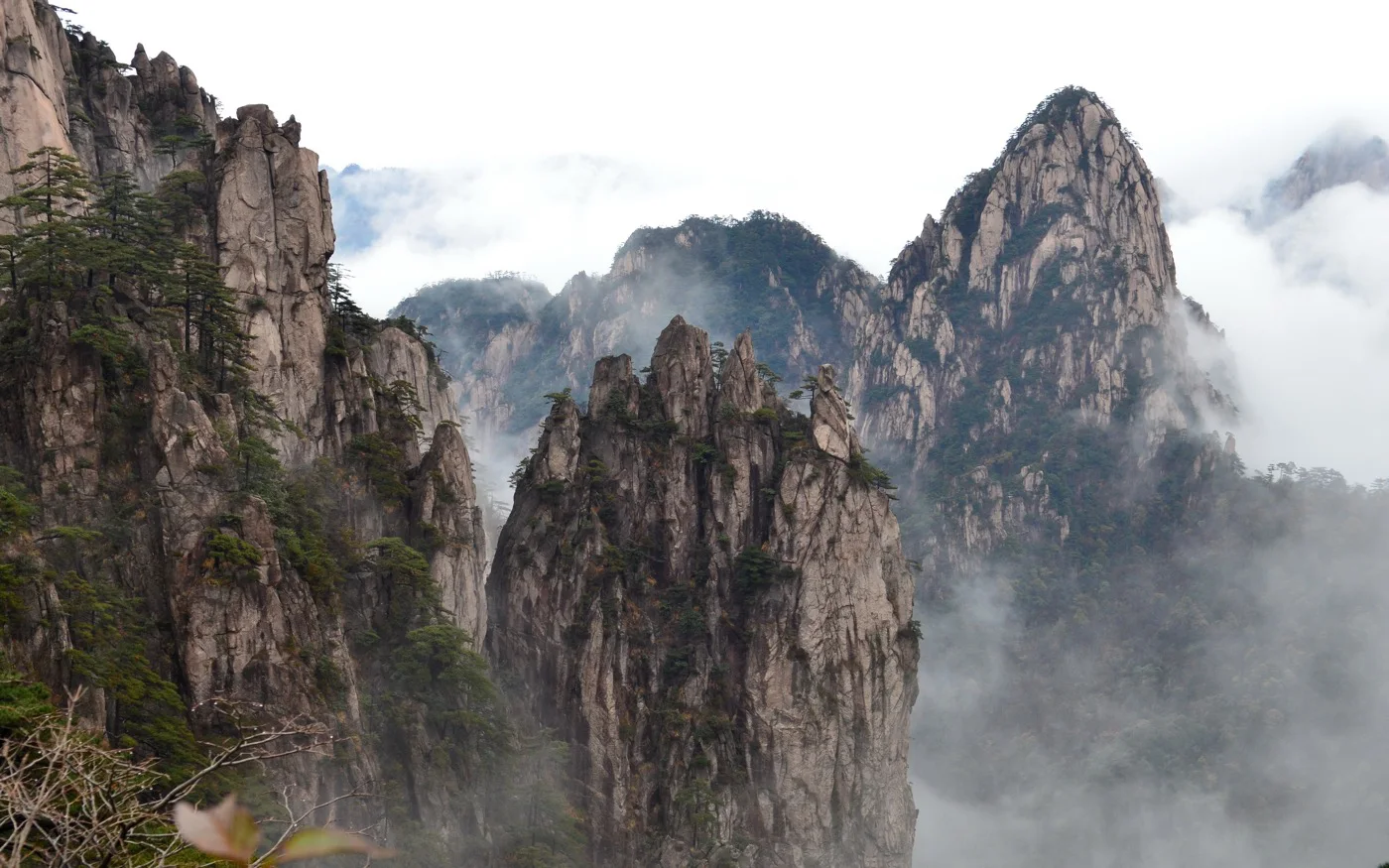
Zhangjiajie is the mountain area to choose when you want scenery that feels almost impossible. Its most famous landscape is a forest of sandstone pillars rising from deep valleys. On misty days, the columns seem to float. On clear days, they stand like giant stone towers, sharp and vertical against the sky.
This is why Zhangjiajie is often linked with the floating mountains in Avatar. The comparison is repeated so often that it can sound like a marketing cliché, but the landscape really does have a fantasy quality. It does not look like a typical alpine mountain, and it does not feel like a traditional Chinese sacred mountain. It feels strange, theatrical, and immediately memorable.
For most foreign visitors, the main focus is Zhangjiajie National Forest Park. The experience is not one summit climb but a mountain world connected by shuttle buses, cable cars, the Bailong Elevator, and walking routes.
Guide available
For route logic, transport, ticketing, hotel location, and practical planning, continue to the dedicated guide.
Read the full Zhangjiajie guide →Mountain section
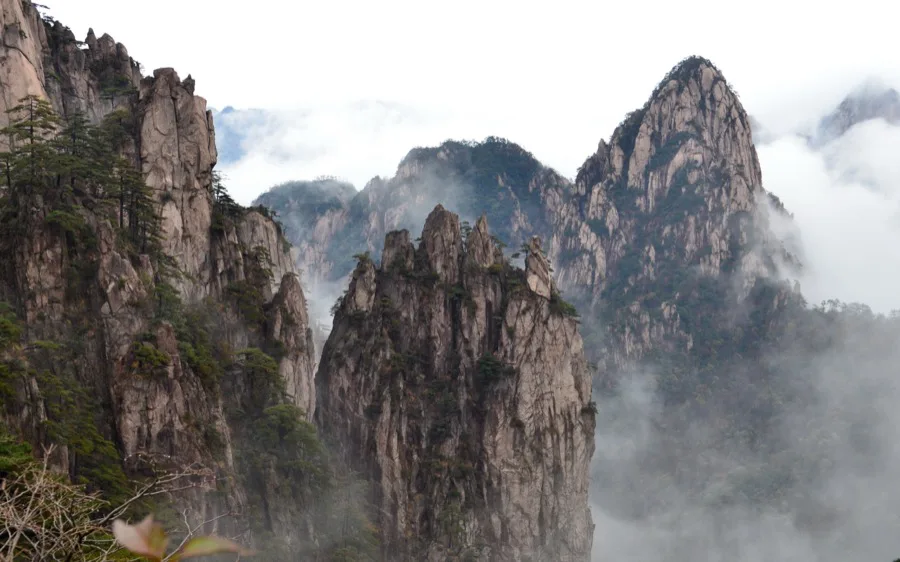
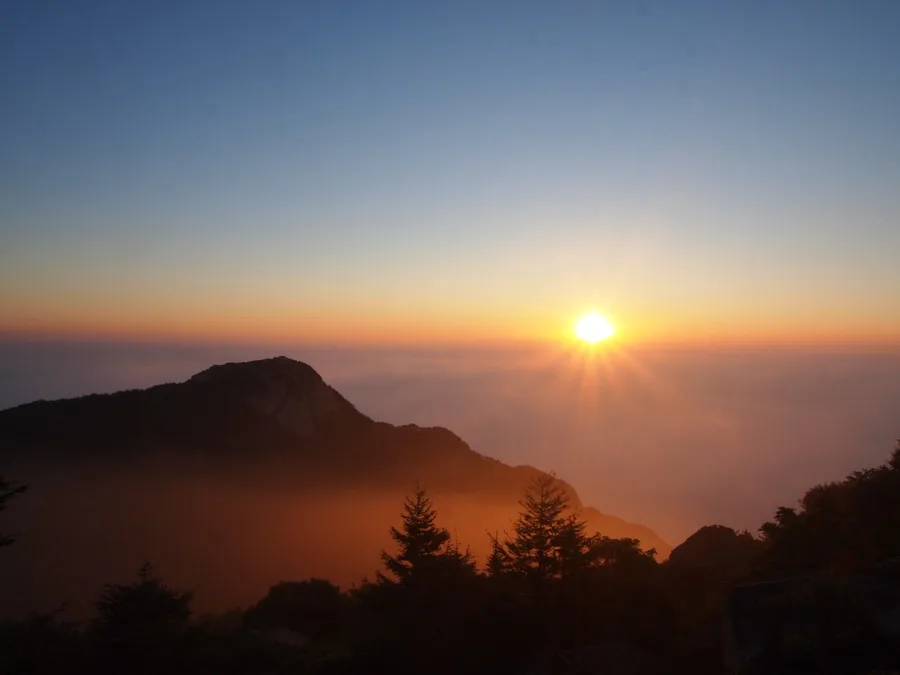
Huangshan, or Yellow Mountain, is one of the great classic scenic mountains of China. It is famous for granite peaks, cloud seas, twisted pine trees, strange rocks, sunrise, steep stairways, and the West Sea Grand Canyon. More than almost any other mountain, Huangshan represents the visual language of Chinese landscape painting.
This is not a mountain to describe merely as easy views with cable cars. Cable cars help, but Huangshan’s real character is grand, layered, and physically present. The mountain has height, depth, cliffs, valleys, stone paths, changing weather, and a strong sense of scale.
The cloud seas are central to the mountain’s identity. When conditions are right, the lower world disappears, and the peaks stand above the clouds like islands. The West Sea Grand Canyon adds a more dramatic, almost vertical side, with deep scenery and cliff-hugging paths.
Guide available
For route logic, transport, ticketing, hotel location, and practical planning, continue to the dedicated guide.
Read the full Huangshan guide →Mountain section
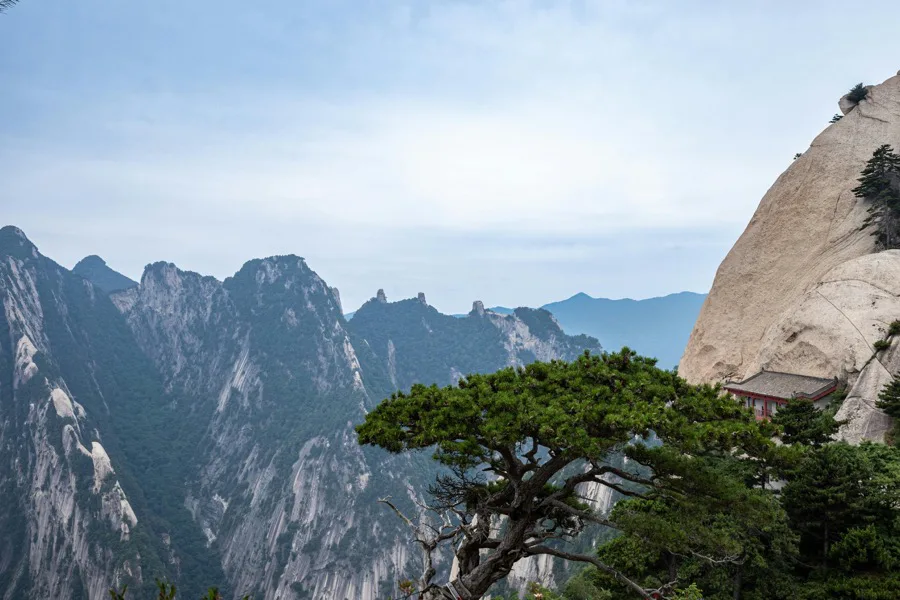
Mount Hua, or Huashan, is the most intense mountain in this guide. It is steep, exposed, sharp, and famous for routes that cling to cliffs and ridges. Unlike Zhangjiajie, which amazes through strange stone pillars, or Huangshan, which impresses through cloud seas and grand scenery, Huashan gives you a physical reaction.
Located near Xi'an, it is also one of the easiest dramatic mountains to add to a classic China itinerary. High-speed trains make a day trip possible, which is part of its appeal.
Cable cars can save a huge amount of climbing, especially the West Peak and North Peak lines, but they do not remove the mountain’s character. Even after taking a cable car, you may still face steep steps, narrow passages, and open views that are not comfortable for everyone.
Guide available
For route logic, transport, ticketing, hotel location, and practical planning, continue to the dedicated guide.
Read the full Mount Hua guide →Mountain section
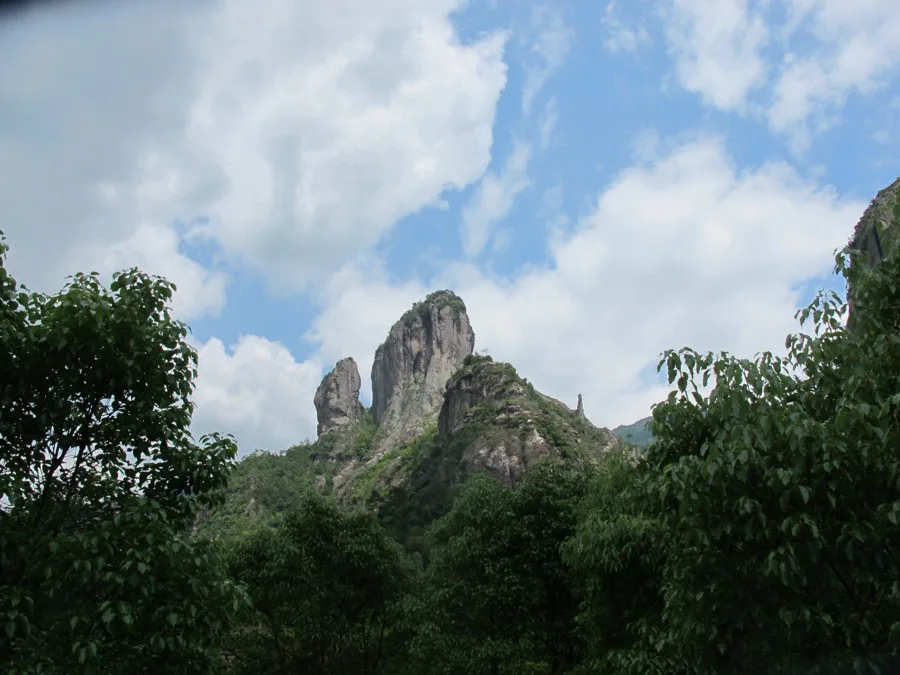
Yandang Mountain is less internationally famous than Zhangjiajie or Huangshan, but it deserves much more attention. It offers sharp peaks, valleys, waterfalls, caves, cliffs, and unusual rock silhouettes.
Its strength is variety rather than one single summit or one global postcard view. Lingfeng is known for rock formations and night scenery. Lingyan offers cliffs and dramatic valley views. Dalongqiu is famous for its waterfall.
That structure makes Yandang one of the most flexible mountains in this guide. You can build a scenic trip around separate areas instead of committing to one long climb.
Guide available
For route logic, transport, ticketing, hotel location, and practical planning, continue to the dedicated guide.
Read the full Yandang guide →Mountain section
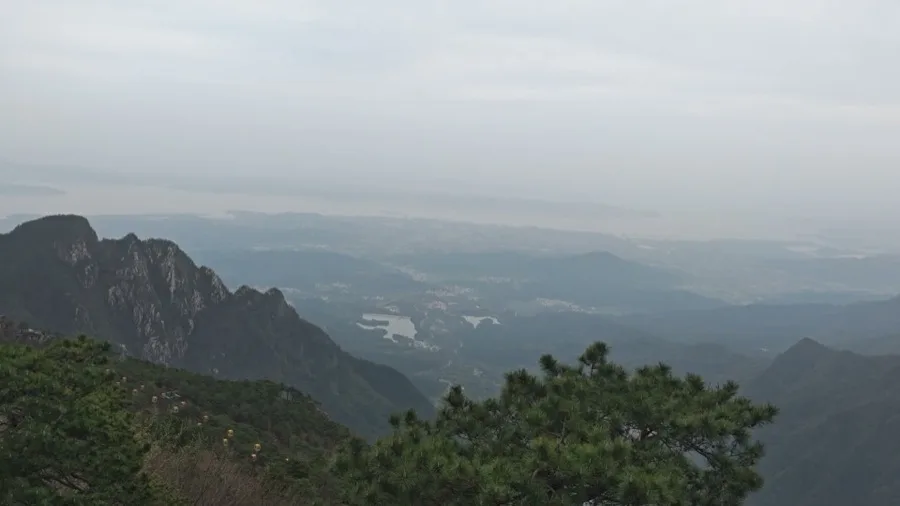
Lushan is not a mountain to judge only by dramatic viewpoints. Its appeal is broader and slower. It is a historic mountain retreat, a summer escape, a cultural landscape, and a scenic area shaped by forests, villas, mist, waterfalls, and mountain-town life.
That is what makes it different from the rest of this list. Huangshan is about grandeur. Zhangjiajie is about visual surprise. Huashan is about steep adventure. Lushan is about atmosphere.
The town of Guling is central to the experience. Instead of only going up, taking photos, and coming down, visitors often stay on the mountain and use the town as a base for exploring nearby sights.
Guide available
For route logic, transport, ticketing, hotel location, and practical planning, continue to the dedicated guide.
Read the full Lushan guide →Mountain section
Mount Tai, or Taishan, is one of the most important mountains in Chinese civilization. It does not compete with Huangshan or Zhangjiajie in pure visual drama. Its power comes from history, ritual, symbolism, endurance, and the act of climbing.
For centuries, Mount Tai was linked with imperial worship, heaven, legitimacy, and pilgrimage. Temples, gates, inscriptions, and old routes turn the mountain into a cultural journey as much as a scenic one.
This is the key to understanding Mount Tai. It should not be chosen only for views. It should be chosen because the climb itself matters.
Guide available
For route logic, transport, ticketing, hotel location, and practical planning, continue to the dedicated guide.
Read the full Mount Tai guide →Choose Zhangjiajie for the most surreal scenery. Its sandstone pillars are strange, cinematic, and instantly impressive.
Choose Huangshan for the most classic grand mountain scenery in China. Its cloud seas, canyons, granite peaks, pine trees, and sunrise views make it one of the strongest scenic choices for foreign visitors.
Choose Mount Hua for adventure. It is steep, exposed, convenient from Xi'an, and best for travelers who want a mountain day with physical intensity.
Choose Yandang Mountain for flexibility and variety. It is a good choice for waterfalls, rock formations, night scenery, and a less internationally crowded trip.
Choose Lushan for a cool mountain retreat. It is best for summer, slower travel, historical atmosphere, and staying in a mountain town.
Choose Mount Tai for cultural weight. It is one of China's great symbolic mountains, best appreciated through its climb, temples, inscriptions, and sunrise tradition.
For a first scenic mountain trip in China, Huangshan is probably the strongest all-round choice. It has the scenery, fame, infrastructure, and depth to justify the journey. Zhangjiajie is better for travelers who care most about unusual landscapes. Mount Hua is better for travelers already visiting Xi'an and seeking adventure. Yandang is ideal for a more underrated eastern China route. Lushan is better for slow travel and summer comfort. Mount Tai is best for travelers who want Chinese history and pilgrimage meaning built into the climb.
The most famous mountains often involve entrance gates, shuttle buses, cable cars, separate scenic zones, and timed ticket systems. Understanding the route before arrival can save hours.
Some online systems are easier for Chinese ID holders than for passport holders. Major scenic areas usually support foreign visitors, but the exact purchase method may vary.
Golden Week, May Day, summer vacation, and popular weekends can make famous mountains extremely crowded.
Cable cars reduce elevation gain, but most scenic mountains still require walking up and down stone steps. Good shoes matter.
For Zhangjiajie, Huangshan, Lushan, and Yandang especially, staying near the wrong entrance or base area can make the trip much harder.
China's mountains are not interchangeable. The best choice is the one that matches the scenery, difficulty, pace, and meaning you actually care about.
For most foreign visitors seeking a truly scenic mountain in China, Huangshan is the best all-round recommendation. It offers the most complete version of classic Chinese mountain beauty: cloud seas, deep canyons, granite peaks, old pines, sunrise, and a magnificent sense of scale.
Zhangjiajie is the best choice for surreal sandstone scenery. Mount Hua is the best choice for steep adventure. Yandang Mountain is the best underrated scenic choice. Lushan is the best mountain retreat. Mount Tai is the best culturally symbolic climb.
Together, these six mountains show why mountain travel in China is so varied. Some mountains are strange. Some are majestic. Some are dangerous. Some are peaceful. Some are sacred. The right mountain is not simply the most famous one. It is the one that gives you the kind of China mountain experience you actually came for.
There is no single answer. For surreal scenery, choose Zhangjiajie. For classic Chinese mountain beauty, choose Huangshan. For dramatic cliffs and exposed ridges, choose Mount Hua.
Zhangjiajie is more surreal and visually strange, while Huangshan is more classic, majestic, and culturally iconic. Choose Zhangjiajie for sandstone pillars and fantasy-like scenery. Choose Huangshan for cloud seas, granite peaks, pine trees, and the most traditional Chinese mountain image.
Mount Hua is best for adventurous hiking and exposure. Mount Tai is best for a historic stair climb. Huangshan is best for scenic hiking if you want classic views rather than pure physical intensity.
Yandang Mountain and Lushan are often easier physically if you plan transport well. Zhangjiajie can also be manageable in physical terms, but it is more confusing logistically than it first appears.
Huangshan is the most famous and most rewarding classic choice. Yandang Mountain is a very good lighter alternative. Lushan can also work if you want a longer, slower mountain stay.
Huangshan and Mount Tai are the best-known sunrise choices on this list. Huangshan is stronger for cloud-sea drama. Mount Tai is stronger for symbolic sunrise tradition.
Avoid Mount Hua if you have a strong fear of heights. Zhangjiajie and Huangshan also have high viewpoints, but they are usually less psychologically intense than Huashan's exposed cliff routes.
For most travelers, one or two major mountain destinations are enough. Chinese mountain scenic areas are large, and each usually deserves at least one to three days.