Written and fact-checked by: Rocket Zheng
Last verified:
Is Huangshan Worth Visiting?
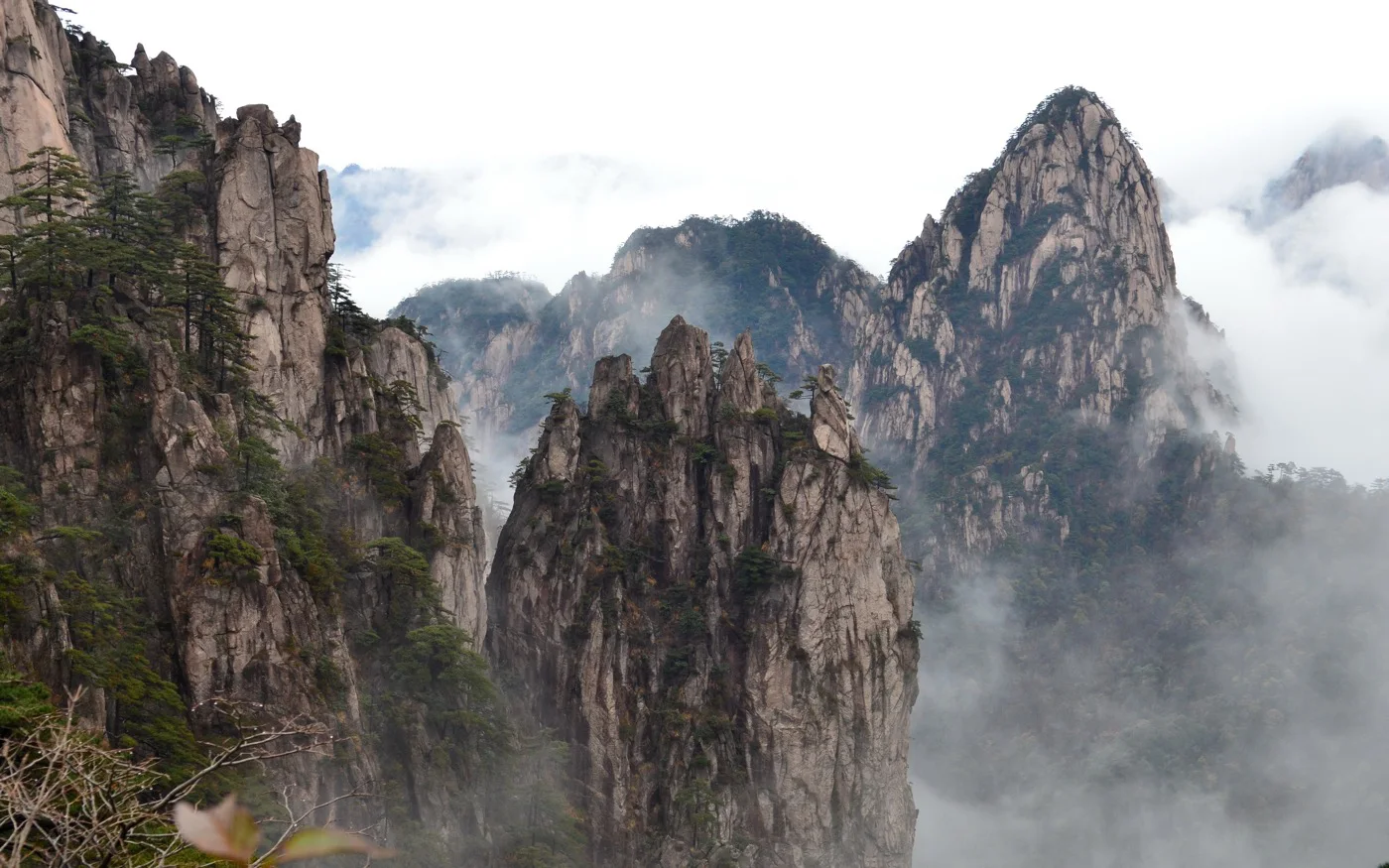
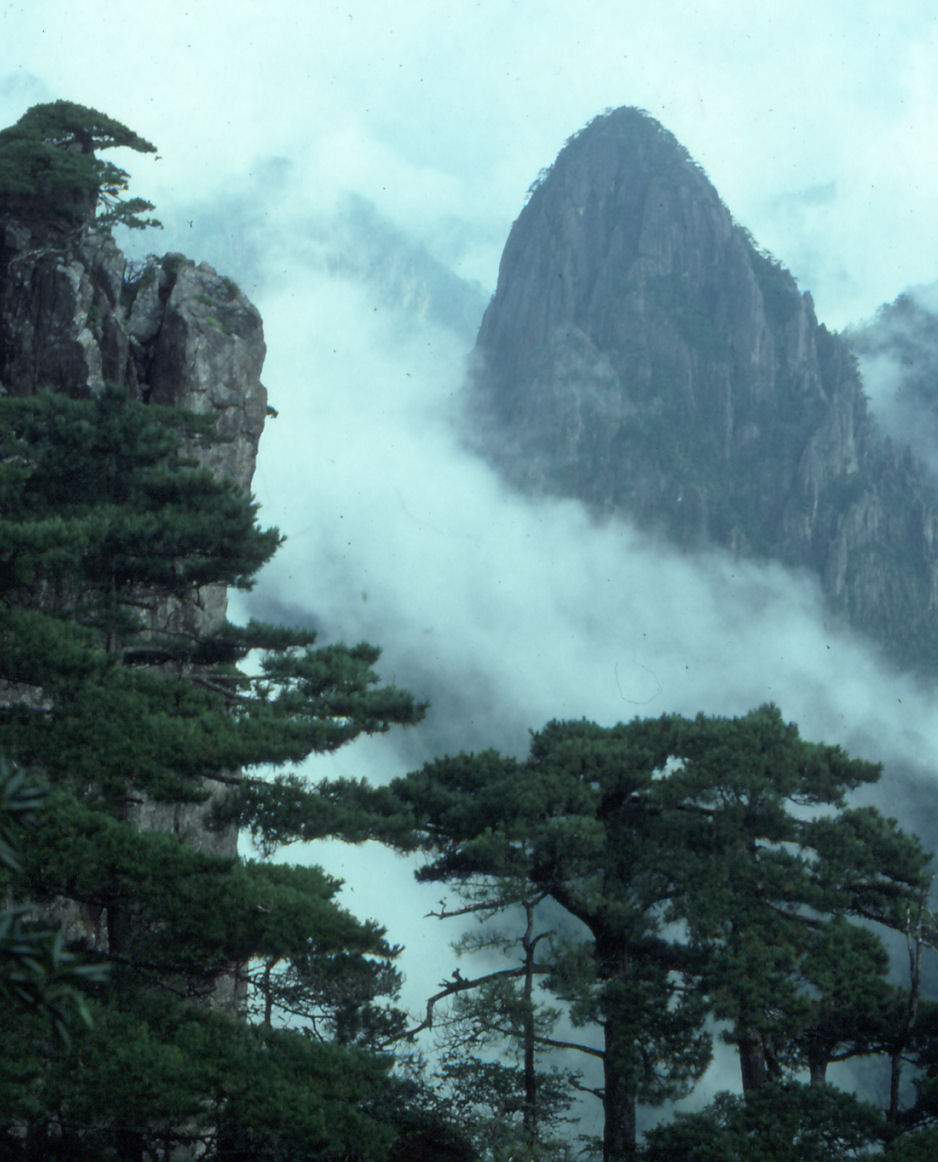
Yes. Huangshan is one of China’s most visually iconic mountain destinations. If you have seen Chinese ink paintings with mist, pine trees, and sharp rock peaks, Huangshan is probably close to the image in your mind.
It is worth visiting for:
- dramatic granite peaks;
- pine trees growing out of cliffs;
- cloud sea and sunrise;
- famous viewpoints such as Bright Summit, Shixin Peak, and Guest-Greeting Pine;
- West Sea Grand Canyon, if open;
- winter snow and rime scenery;
- a strong connection with Chinese landscape painting;
- easy combination with Hongcun, Xidi, and Huizhou villages.
Huangshan is not a wilderness hike. It is a highly developed mountain scenic area with cable cars, paved stone steps, hotels, shuttle buses, signs, toilets, and restaurants. But it can still be physically demanding because the mountain is huge and the stairs are endless.
Huangshan City, Tangkou, and the Scenic Area: Do Not Confuse Them
Foreign visitors often get confused because several places use the name “Huangshan.”
| Name | What It Means |
|---|---|
| Huangshan / Yellow Mountain | The mountain scenic area |
| Huangshan City | The larger city region; not the same as the mountain entrance |
| Tunxi | The old urban area of Huangshan City, useful for hotels and Tunxi Old Street |
| Huangshan North Railway Station | The main high-speed rail station |
| Tangkou | The town at the foot of the mountain, near the South Gate |
| South Gate | The most common entrance area for first-time visitors |
| Yungu Temple / Mercy Light Pavilion | Transfer points for major cable car routes |
The most important thing to remember:
Huangshan North Railway Station is not at the mountain entrance. Huangshan City is not the same as Huangshan Scenic Area.
Most travelers go:
Huangshan North Station → Tangkou / South Gate Transfer Center → scenic shuttle bus → cable car station → mountain top
Build transfer time into your plan.
How Many Days Do You Need?
One day
Possible, but rushed. Best if you arrive the night before and stay in Tangkou. Take an early shuttle and cable car, do a compact route, and come down before the last cable car.
Two days / one night
Best for most foreign visitors. Staying on the mountain gives you a chance to see sunset, sunrise, and cloud sea without rushing.
Three days
Best if you want to combine Huangshan with Hongcun, Xidi, or Tunxi Old Street. This is the most balanced cultural + mountain trip.
Best Routes for First-Time Visitors
Route 1: Classic One-Day Huangshan
Best for: travelers short on time
Difficulty: moderate
Main idea: cable car up, walk the highlights, cable car down
Stay: Tangkou before or after the hike
A one-day route should be simple. The most common logic is to enter from the South Gate, take one of the main cable cars up, visit several classic viewpoints, and descend by another cable car if time allows.
A realistic one-day route may include:
- cable car up;
- Bright Summit or nearby viewpoints;
- Guest-Greeting Pine area;
- Shixin Peak or Beihai area, depending on your route;
- cable car down before closing time.
Do not add West Sea Grand Canyon unless you are fit, start very early, and confirm it is open. Do not try to include every famous peak.
Good for: first-time visitors who mainly want the iconic Huangshan views.
Bad for: travelers who want sunrise, deep hiking, or a relaxed experience.
Route 2: Classic Two-Day Huangshan — Best Overall Choice
Best for: most foreign visitors
Difficulty: moderate, with some tiring stairs
Stay: one night on the mountain
This is the route I recommend most.
Day 1
- Arrive in Tangkou.
- Take the scenic shuttle to the cable car area.
- Take a cable car up.
- Visit Guest-Greeting Pine, Bright Summit, and nearby viewpoints.
- Check in to a mountain hotel.
- Watch sunset if weather allows.
Day 2
- Wake early for sunrise.
- Visit Shixin Peak, Beihai, or West Sea viewpoints.
- If West Sea Grand Canyon is open and you are fit, include part of it.
- Take a cable car down.
- Transfer to Tangkou, Hongcun, Tunxi, or Huangshan North Station.
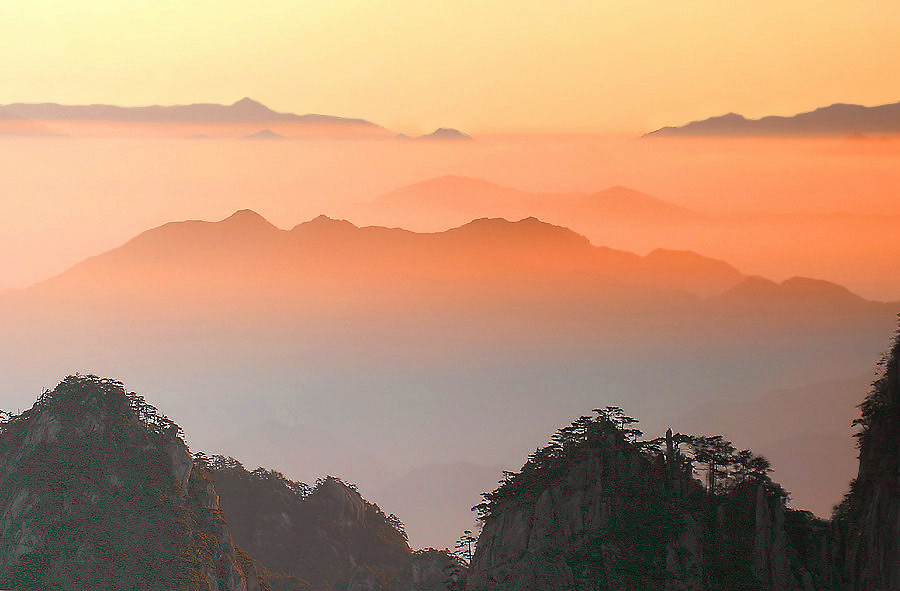
This plan works because Huangshan rewards time. Weather changes quickly, and staying overnight gives you two chances for good light: sunset and sunrise.
The downside is cost. Mountain hotels are expensive and can be basic for the price. Book early, especially in peak seasons.
Route 3: West Sea Grand Canyon Route
Best for: fit travelers who want Huangshan’s most dramatic walking route
Difficulty: moderate to hard
Important: opening status must be checked before travel
West Sea Grand Canyon is one of the most spectacular parts of Huangshan. It has deep valleys, cliffside paths, dramatic stone steps, and some of the most impressive views in the scenic area.
But it is not always open. It may close in winter, bad weather, or maintenance periods. Before planning around it, check official announcements.
A good way to experience it is as part of a two-day mountain stay. Trying to squeeze it into a one-day trip can make the day too rushed.
If the canyon is closed, focus on Bright Summit, Shixin Peak, Beihai, Guest-Greeting Pine, and other open viewpoints instead.
Route 4: Huangshan + Hongcun / Xidi — Best 3-Day Plan
Best for: travelers who want mountain scenery + traditional Huizhou culture
Time needed: 3 days
A balanced plan:
| Day | Plan |
|---|---|
| Day 1 | Go up Huangshan, visit Guest-Greeting Pine and Bright Summit, stay on the mountain |
| Day 2 | Sunrise, Shixin Peak / West Sea area, cable car down, transfer to Hongcun |
| Day 3 | Hongcun + Xidi, then return via Huangshan North Station |
Hongcun and Xidi are traditional villages in the Huizhou cultural region. Hongcun is famous for its water system, white-walled architecture, black-tiled roofs, and reflections around South Lake and Moon Pond. Xidi is quieter and often feels less commercial.
If you only care about mountain scenery, you can skip the villages. But if you want a fuller Anhui trip, Huangshan + Hongcun / Xidi is one of the strongest combinations in eastern China.
Which Cable Car Should You Take?
Huangshan’s cable car choices are one reason planning feels complicated.
The most useful cable cars for first-time visitors are usually:
- Yungu Cable Car — often used for the back-mountain / Beihai / Shixin Peak side;
- Yuping Cable Car — useful for Guest-Greeting Pine, Yuping area, and front-mountain routes;
- Taiping Cable Car — useful for the north side, less common for ordinary first-time visitors.
Many first-time visitors use one cable car to go up and another to come down, creating a route across the mountain rather than repeating the same path.
The exact best direction depends on your hotel, route, weather, crowd level, and whether West Sea Grand Canyon is open.
For most foreign travelers, the practical advice is:
Do not choose a cable car randomly. Choose it based on your route and where you plan to sleep.
Best Things to See
Guest-Greeting Pine
Guest-Greeting Pine is the most famous tree in China. It is a symbol of Huangshan and is often used as a visual symbol of Chinese hospitality.
It is worth seeing, but it is also one of the most crowded places on the mountain. Go early or accept that you may need patience for photos.
Bright Summit
Bright Summit is one of the most important high points on Huangshan. It is a key route junction and a popular sunrise and sunset area.
It is not just a viewpoint. It is also useful for route planning because many paths connect around it.
Shixin Peak
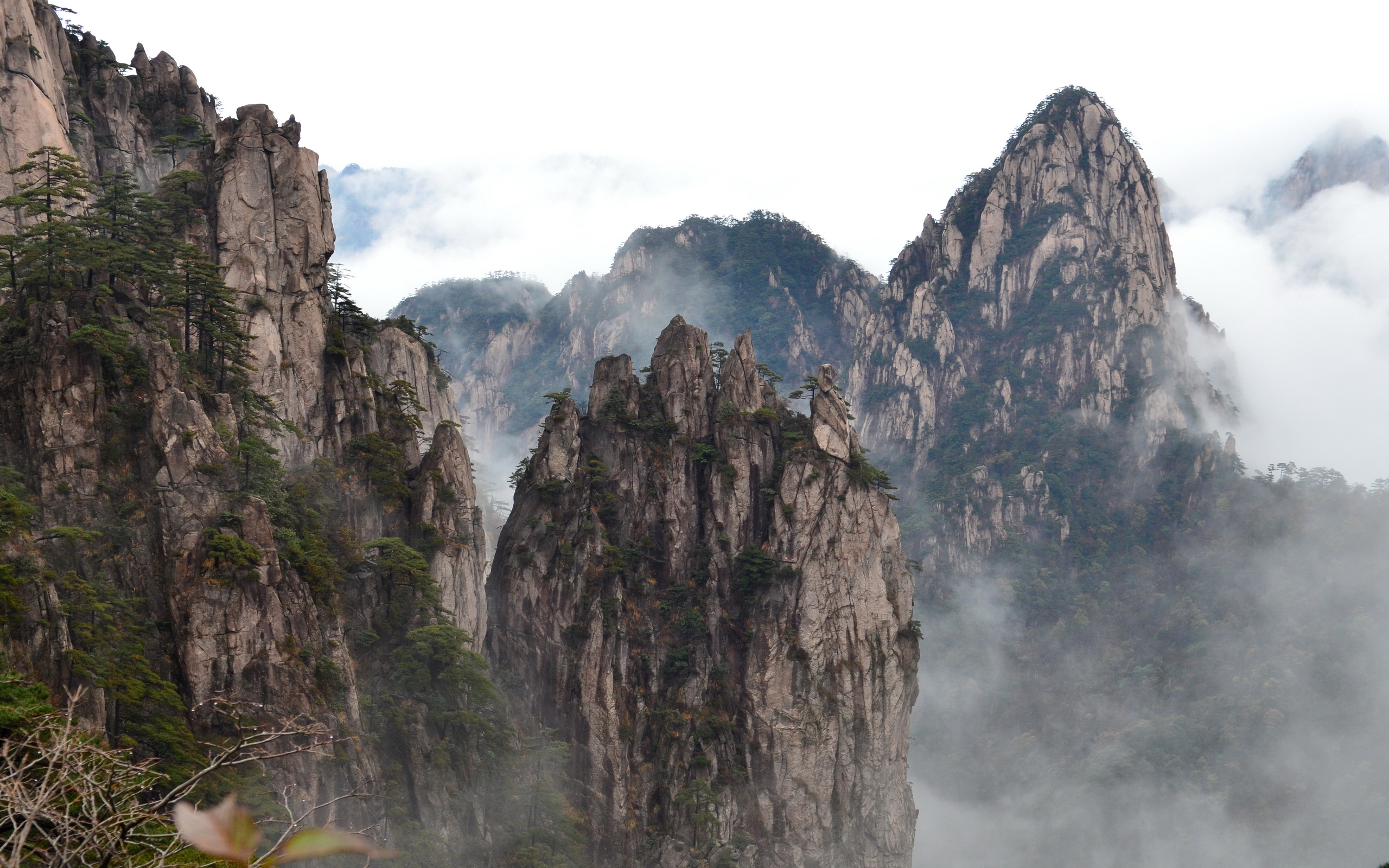
Shixin Peak is one of the best places to understand Huangshan’s classic scenery: pine trees, rock peaks, mist, and layered ridges.
If you have limited time, Shixin Peak is often more rewarding than trying to force in too many far-apart sights.
West Sea Grand Canyon
If open, this is one of Huangshan’s most dramatic routes. It is best for fit travelers who want more than standard viewpoints.
Check opening status before travel. Do not build your whole trip around it without confirming.
Flying-over Rock
Flying-over Rock is one of Huangshan’s recognizable rock formations. It is a good stop if your route naturally passes it.
Lotus Peak and Tiandu Peak
Lotus Peak and Tiandu Peak are among Huangshan’s famous summit areas, but their opening status can change due to rotation, maintenance, seasonal closures, and crowd-control rules.
Do not assume both are open. Check official announcements before planning.
Tiandu Peak is especially steep and is not suitable for all visitors. It can be thrilling, but it is not necessary for a first Huangshan trip.
How to Get to Huangshan
From Shanghai
Take a high-speed train to Huangshan North Railway Station, then transfer to Tangkou / the scenic area. The train makes Huangshan very reachable from Shanghai, but it is still not a simple “arrive and climb immediately” trip unless your schedule is carefully planned.
From Hangzhou
Hangzhou is one of the easiest major cities for reaching Huangshan by high-speed rail. Many travelers combine Hangzhou and Huangshan in one itinerary.
From Nanjing or Hefei
Both cities can work by high-speed rail. Hefei is especially useful as a provincial transport hub.
From Huangshan North Station to the Scenic Area
After arriving at Huangshan North Station, you still need to reach Tangkou or the South Gate transfer area. Options may include shuttle buses, taxis, ride-hailing, or booked transfers.
For foreign visitors who do not read Chinese, the easiest option is often:
Huangshan North Station → pre-booked transfer or taxi → Tangkou hotel → next morning early entry
This avoids trying to solve train arrival, ticketing, shuttle transfer, cable car, and mountain walking all in one rushed day.
Getting Around Inside the Scenic Area
Private cars do not simply drive to the mountaintop trails. Huangshan uses a scenic shuttle system from the entrance area to cable car stations and trailheads.
The normal sequence is:
- Arrive at Tangkou / South Gate area.
- Buy or verify ticket.
- Take scenic shuttle bus.
- Reach cable car station or hiking trailhead.
- Take cable car or walk up.
- Continue on foot on the mountain.
Even with cable cars, expect a lot of walking and stairs. Huangshan is not a “take cable car and stand at one viewpoint” destination.
Tickets, Passport, and Payment Notes
Ticket prices, cable car prices, scenic shuttle fares, opening times, and booking rules can change. Verify current details before traveling.
Foreign visitors should prepare:
- original passport;
- Alipay or WeChat Pay if possible;
- some RMB cash as backup;
- hotel booking details;
- screenshots of Chinese place names;
- enough time for manual ticket windows if passport online booking fails.
Trip.com and Klook may be easier for English booking and international payment. Chinese official mini-programs may have more local information but can be harder for foreign passport users.
During major Chinese holidays, book everything early: tickets, mountain hotels, transfers, and train seats.
Where to Stay
Stay on the mountain
Best if you want sunrise, sunset, or cloud sea. Also best for a relaxed two-day route.
Pros:
- sunrise and sunset access;
- less rush;
- easier to cover both front and back mountain areas;
- better chance of seeing cloud sea.
Cons:
- expensive;
- rooms may be basic for the price;
- limited availability;
- you should not bring large luggage.
Book early, especially during spring, autumn, summer holidays, and public holidays.
Stay in Tangkou
Best for one-day visitors or people entering the mountain early the next morning.
Pros:
- closest practical base for the South Gate;
- easier early start;
- cheaper than mountaintop hotels;
- good place to store large luggage.
Stay in Tunxi / Huangshan City
Best if you arrive late, want city hotels, or plan to visit Tunxi Old Street.
Not ideal if your main goal is an early mountain start, because you still need to transfer to Tangkou.
Stay in Hongcun or Xidi
Best if you want village atmosphere and photography. Not ideal as a base for an early Huangshan climb unless your transfer is planned carefully.
How Hard Is Huangshan?
Huangshan is moderate to hard depending on your route.
Even with cable cars, there are many stone steps. A normal day can involve several hours of walking, climbing, and descending.
| Route Type | Difficulty |
|---|---|
| Cable car + short viewpoints | Easy to moderate |
| Classic one-day crossing | Moderate |
| Two-day route with sunrise | Moderate |
| West Sea Grand Canyon | Moderate to hard |
| Tiandu Peak / long stair routes | Hard |
Compared with other Chinese mountains:
- easier than hiking Mount Tai entirely from the base;
- less dangerous-feeling than Mount Hua’s exposed routes;
- usually more physically complex than Lushan’s easy west line;
- more logistically complex than many scenic areas because of route and cable car decisions.
Wear non-slip shoes. Do not hike in smooth city shoes, especially after rain.
Best Time to Visit
Spring
Good for fresh scenery, mist, and cloud effects. Weather can be changeable.
Summer
Green and lively, but also hot in lower areas and crowded during school holidays. Afternoon storms are possible.
Autumn
Probably the best overall season for first-time visitors. Weather is often more stable, and visibility can be better.
Winter
Excellent for snow scenery, rime, and dramatic photography, but routes may be icy and some areas may close. Not ideal for casual first-time visitors unless you specifically want winter Huangshan.
Clouds, sunrise, and fog
Cloud sea and sunrise are never guaranteed. Staying overnight improves your chances, but weather decides everything.
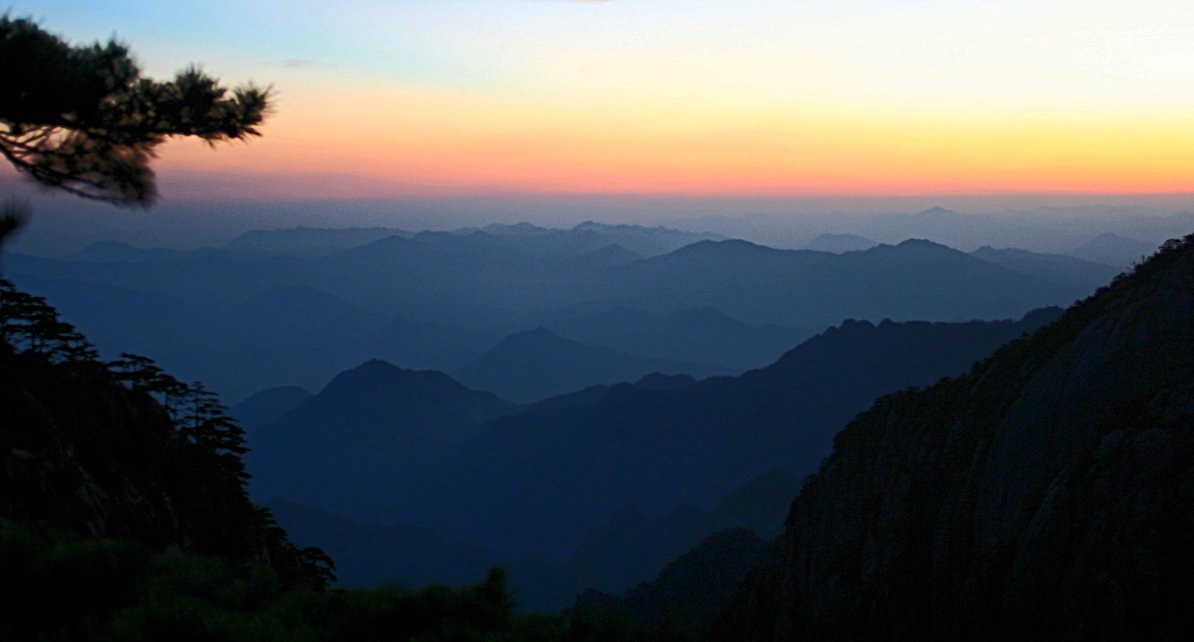
If the mountain is foggy, do not treat the day as a failure. Huangshan’s pines, rocks, and close-range scenes can still be beautiful in mist.
Avoid May Day, National Day Golden Week, and peak summer holiday periods if possible.
What to Pack
Bring:
- passport;
- non-slip walking shoes;
- light rain jacket or poncho;
- warm layer for early morning;
- water and snacks;
- power bank;
- small backpack;
- screenshots of hotel, ticket, and Chinese destination names;
- a little RMB cash.
Do not bring a large suitcase up the mountain. Store it in Tangkou, at your hotel, or at a luggage storage point if available.
Food and drinks on the mountain are available but expensive because supplies are carried up with difficulty. Bring basic snacks, but do not overload yourself.
Huangshan + Hongcun / Xidi
Hongcun and Xidi are among the best add-ons to a Huangshan trip.
Hongcun is more famous and photogenic, especially around the lake and water system. It is popular, polished, and very photogenic.
Xidi is also historic and often feels quieter and less commercial.
If you have three days, the combination is excellent:
- Day 1: go up Huangshan and stay on the mountain;
- Day 2: sunrise, more mountain scenery, descend, transfer to Hongcun;
- Day 3: Hongcun + Xidi, then return via Huangshan North Station.
This gives you both the natural icon of Huangshan and the cultural landscape of Huizhou villages.
Cultural Background in Brief
Huangshan is one of the most important mountains in Chinese visual culture. The famous saying often translated as “After seeing the Five Great Mountains, you need not see other mountains; after seeing Huangshan, you need not see the Five Great Mountains” reflects its special aesthetic status.
Huangshan is not mainly famous for imperial ritual like Mount Tai. It is famous for beauty: pine trees, rocks, mist, peaks, and the kind of composition that shaped Chinese landscape painting.
It is also connected with Huizhou culture. A trip that combines Huangshan with Hongcun or Xidi gives foreign visitors a stronger sense of southern Anhui: mountains, villages, white walls, black tiles, merchants, and old clan architecture.
Common Mistakes
1. Thinking Huangshan North Station is beside the mountain
It is not. You still need a transfer to Tangkou or the scenic area.
2. Confusing Huangshan City with Huangshan Scenic Area
Tunxi / Huangshan City is not the same as the mountain entrance.
3. Trying to see too much in one day
Huangshan is large. Choose a route instead of collecting every famous name.
4. Not booking a mountain hotel early
If sunrise matters, book early. Mountain hotels sell out and prices rise.
5. Forgetting to check closures
West Sea Grand Canyon, Tiandu Peak, Lotus Peak, and some routes may close due to season, weather, maintenance, or crowd control.
6. Underestimating cable car queues
During busy seasons, cable car queues can seriously affect your schedule.
7. Wearing bad shoes in rain
Stone steps can be slippery. Wear proper shoes.
8. Bringing a suitcase up the mountain
Use luggage storage. Huangshan has too many steps for rolling luggage.
9. Relying only on Chinese mini-programs
Use Trip.com or Klook if you need English support and international payment. Use official channels for the latest notices.
10. Expecting perfect views
Fog is part of Huangshan. Long-distance views may disappear, but misty pine-and-rock scenery can still be beautiful.
Prices, opening hours, cable car operations, route closures, passport booking rules, and mountain hotel availability can change. Verify key details through official channels or your booking platform before traveling.
FAQ
Is Huangshan the same as Yellow Mountain?
Yes. Huangshan is the Chinese name; Yellow Mountain is the common English translation.
Is Huangshan worth visiting?
Yes. It is one of China’s most famous mountain landscapes and is especially strong for scenery, photography, sunrise, clouds, and pine-and-rock views.
How many days do I need?
Two days and one night is best for most foreign visitors. One day is possible but rushed. Three days is ideal if you add Hongcun or Xidi.
Should I stay on the mountain?
Yes, if sunrise, sunset, or cloud sea matters to you. Otherwise, Tangkou is easier and cheaper.
Which cable car should I take?
It depends on your route and hotel. Yungu and Yuping are the most common for first-time visitors. Do not choose randomly; choose based on your planned route.
Is West Sea Grand Canyon always open?
No. It can close due to season, weather, maintenance, or safety rules. Check before travel.
Can foreigners buy Huangshan tickets online?
Often yes through international platforms such as Trip.com or Klook, but official Chinese systems may be harder with a passport. Bring your passport and allow time for manual help if needed.
Can I combine Huangshan and Hongcun?
Yes. A three-day plan is best: one night on Huangshan, then one night around Hongcun or Tunxi.
Is Huangshan hard?
Moderate with cable cars, hard if you include long stair routes, West Sea Grand Canyon, or steep peaks. Even easy Huangshan still involves stairs.
Image Credits
Huangshan (347503084).jpg by B_cool from SIN, Singapore, via Wikimedia Commons, licensed under CC BY 2.0 . Resized for web.
Huangshan-笔架峰 20141109.JPG by 颐园新居, via Wikimedia Commons, licensed under CC BY-SA 4.0 . Resized for web.
Huangshan-morning-ss.jpg by Serge925, via Wikimedia Commons, licensed under CC BY-SA 3.0 . Resized for web.
Related guides
Wuyi Mountain Travel Guide: Bamboo Rafting, Tea Culture, Tickets and Best Routes
A practical Wuyi Mountain guide for foreign visitors: Nine-Bend Stream bamboo rafting, Tianyou Peak, Dahongpao tea culture, Sangu Resort, train stations, tickets, passport notes, and first-time route planning.
Best Mountains in China for First-Time Foreign Visitors
A practical guide to the mountains that are easiest to recommend on a first China trip, balancing scenery, culture, comfort, and route planning.
Can You Visit China Without a Visa?
A clear guide to China visa-free entry, 240-hour visa-free transit, regional visa-free policies, and when foreign travelers still need a Chinese visa.