Written and fact-checked by: Rocket Zheng
Last verified:
Quick Answer
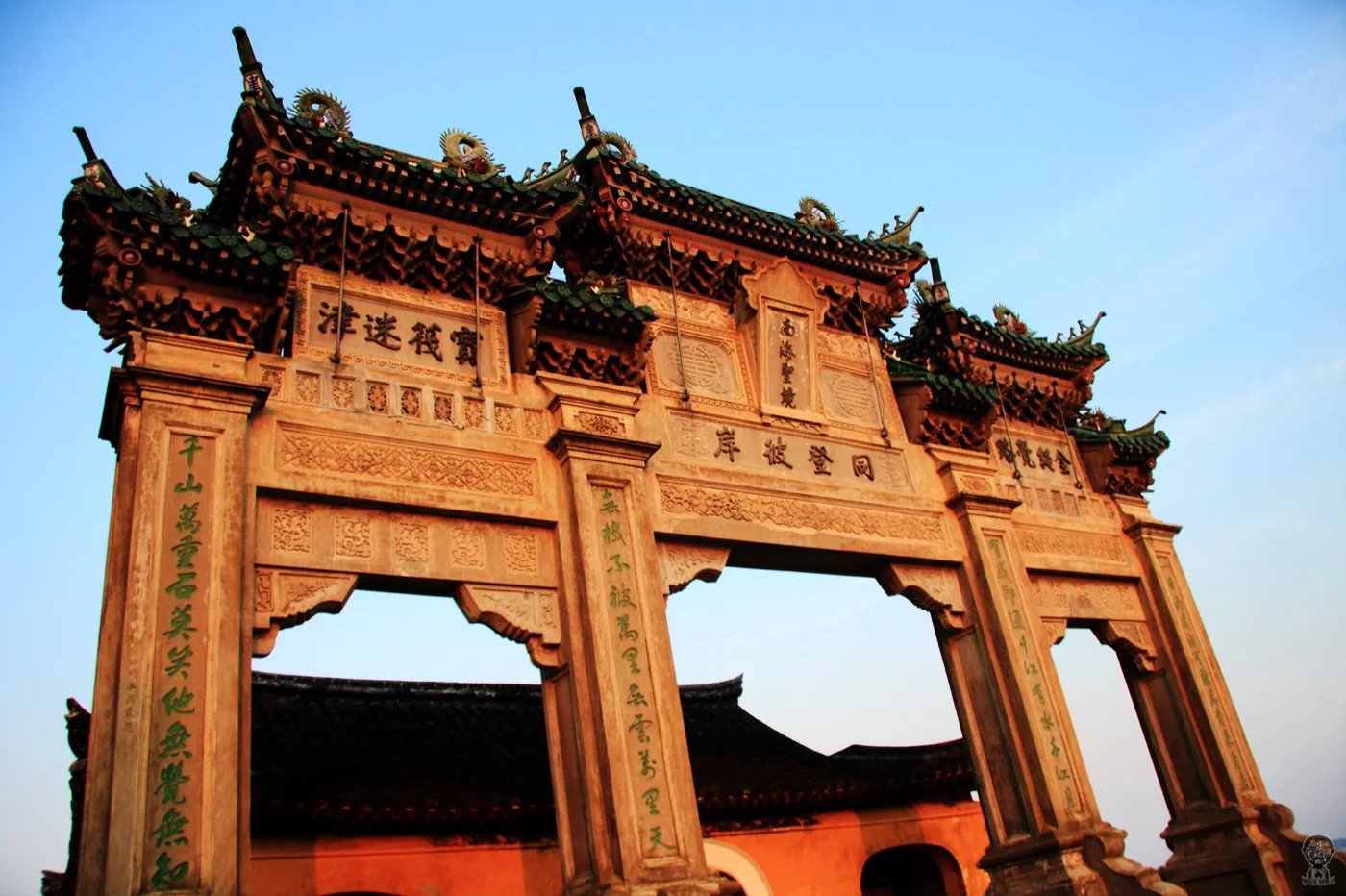
Mount Putuo, also called Putuoshan, is one of China’s Four Sacred Buddhist Mountains. But unlike Mount Emei, Mount Wutai, or Mount Jiuhua, it is not a high mountain. It is a small sacred island off the coast of Zhejiang Province, dedicated to Guanyin, the Bodhisattva of Compassion.
The most important thing to understand is this:
Mount Putuo is both a sacred Buddhist mountain and an island. You cannot drive or walk there. You must take a ferry.
For most first-time foreign visitors, the easiest route is:
Ningbo → Zhujiajian Wugongzhi Pier → ferry to Putuoshan → Puji Temple → Nanhai Guanyin Statue → Purple Bamboo Grove → return or stay overnight
A one-day visit is possible, especially from Ningbo or Zhujiajian. A two-day visit is much better if you want to see Fayu Temple, Huiji Temple, Foding Mountain, or experience the island before tour groups arrive.
Mount Putuo is one of the easiest famous Chinese mountains physically, but one of the more confusing logistically because of ferries, piers, tickets, passport booking, weather, and typhoon risks.
Is Mount Putuo Worth Visiting?
Yes, especially if you are interested in Buddhism, island temples, Chinese pilgrimage culture, or a slower coastal experience near Ningbo and Shanghai.
Mount Putuo is worth visiting because it combines:
- one of China’s most important Guanyin pilgrimage sites;
- a sacred island atmosphere;
- ancient temples and active Buddhist worship;
- the 33-meter Nanhai Guanyin statue;
- low physical difficulty;
- sea views, beaches, incense, and temple courtyards;
- a very different experience from inland Chinese mountains.
It is not the right destination if you want dramatic high-altitude scenery like Huangshan or a serious climb like Mount Tai. Mount Putuo is more about pilgrimage, temples, sea air, incense, and island rhythm.
A useful way to explain it:
Mount Putuo is China’s most accessible sacred Buddhist mountain — but only if you understand the ferry system first.
Mount Putuo, Zhoushan, Zhujiajian and Ningbo: What’s the Difference?
This is the part that confuses many first-time visitors.
| Name | What It Means | Why It Matters |
|---|---|---|
| Zhejiang Province | Coastal province south of Shanghai | Mount Putuo is in Zhejiang |
| Zhoushan | Island city made of many islands | The administrative region around Mount Putuo |
| Zhoushan Island | The largest island in Zhoushan | Contains Dinghai and Shenjiamen |
| Zhujiajian | Island next to Zhoushan Island | Airport and Wugongzhi Pier are here |
| Wugongzhi Pier | Main pier used by many visitors | Most practical pier for foreign visitors |
| Mount Putuo / Putuoshan Island | The sacred island itself | You must take a ferry here |
| Putuo Mountain Airport | Airport on Zhujiajian, not on Putuoshan | You still need car transfer + ferry |
| Ningbo | Mainland city with rail and airport access | Most practical transport gateway |
The most common mistake is thinking that Putuo Mountain Airport is on Mount Putuo. It is not. The airport is on Zhujiajian Island. After landing, you still need to get to the pier and take a ferry to Putuoshan.
Another common mistake is thinking that arriving in Zhoushan means you are already at Mount Putuo. You are not. You still need to reach a ferry pier and cross to Putuoshan Island.
Why Mount Putuo Is Unique Among China’s Buddhist Mountains
China’s Four Sacred Buddhist Mountains are traditionally associated with four major Bodhisattvas:
| Mountain | Main Association | Landscape Type |
|---|---|---|
| Mount Putuo | Guanyin | Sacred island |
| Mount Emei | Samantabhadra / Puxian | High mountain |
| Mount Jiuhua | Ksitigarbha / Dizang | Mountain temple region |
| Mount Wutai | Manjushri / Wenshu | Highland mountain region |
Mount Putuo is the only one that sits in the sea. That changes everything about the trip.
You do not come here for a major summit climb. You come for:
- Guanyin worship;
- island temples;
- ferry arrival;
- sea-facing Buddhist sites;
- incense smoke and ocean wind;
- easy walking routes;
- a pilgrimage atmosphere that feels different from inland mountains.
The highest point, Foding Mountain, is only about 291 meters. This makes Mount Putuo much easier than most famous Chinese mountains.
How Many Days Do You Need?
One Day
One day is enough if you only want the essential experience: Puji Temple, Nanhai Guanyin Statue, Purple Bamboo Grove, Bukenqu Guanyin Temple, and maybe a beach or short walk.
This is best for travelers coming from Ningbo or staying in Zhujiajian.
Two Days
Two days is the best choice for most foreign visitors who want a complete but not exhausting visit. You can see Puji Temple, Nanhai Guanyin, Purple Bamboo Grove, Fayu Temple, Huiji Temple, Foding Mountain, and early morning temple atmosphere.
Staying overnight on the island lets you experience Mount Putuo before day-trippers arrive.
Three Days
Three days is only necessary if you want to add Luojia Mountain, more beaches, Shenjiamen seafood, Zhujiajian, or Ningbo.
Best Routes for First-Time Visitors
Route 1: Classic One-Day Route
Best for: first-time visitors with limited time
Difficulty: very easy
Transport: ferry + scenic bus + walking
Main sights: Puji Temple, Nanhai Guanyin, Purple Bamboo Grove, Bukenqu Guanyin Temple
Suggested route:
- Arrive at Zhujiajian Wugongzhi Pier.
- Take the ferry to Putuoshan.
- Enter the scenic area.
- Visit Puji Temple.
- Continue to Nanhai Guanyin.
- Visit Purple Bamboo Grove and Bukenqu Guanyin Temple.
- Add Baibusha Beach if time allows.
- Return to the pier before the last ferry.
This is the most practical first-time route. It gives you the core identity of Putuoshan without making the day too complicated.
It is also the best route for elderly travelers, families, or visitors who mainly want a light temple-and-island experience.
Route 2: Classic Two-Day Route
Best for: travelers interested in Buddhist culture and photography
Difficulty: easy to moderate
Stay: on Putuoshan Island if possible
Day 1
- Arrive by ferry.
- Visit Puji Temple.
- Walk around the lotus pond and nearby temple areas.
- Visit Nanhai Guanyin.
- Continue to Purple Bamboo Grove and Bukenqu Guanyin Temple.
- Add Baibusha Beach or Xitian Scenic Area if time allows.
- Stay on the island.
Day 2
- Visit Fayu Temple.
- Take the cable car or walk to Foding Mountain.
- Visit Huiji Temple.
- Walk down if weather and knees allow.
- Return to the pier.
This route gives you the three major temple areas and a slower sense of the island.
If you care about atmosphere, the morning is the best time. Early temple hours feel very different from the crowded midday period.
Route 3: Mount Putuo + Ningbo
This is one of the easiest combinations for foreign travelers.
| Day | Plan |
|---|---|
| Day 1 | Arrive in Ningbo, visit Tianyi Pavilion or Old Bund |
| Day 2 | Ningbo → Zhujiajian Wugongzhi Pier → Mount Putuo full-day visit → stay on island or Zhujiajian |
| Day 3 | Morning temples or Foding Mountain → return to Ningbo for train or flight |
Ningbo is useful because it has rail connections, airport access, hotels, and easier logistics than starting from smaller island towns.
Route 4: Easy Temple Route for Elderly Visitors
Best for: elderly visitors, families, or travelers with limited mobility
Difficulty: very easy
Walking: about 2–3 km, mostly flat
Suggested route:
Pier → scenic bus to Puji Temple → Nanhai Guanyin → Purple Bamboo Grove → return by bus
Skip Foding Mountain if stairs or slopes are a concern. You can still experience the core of Mount Putuo without climbing.
How to Get to Mount Putuo
The Easiest Route: Ningbo → Zhujiajian → Putuoshan
For most foreign travelers, Ningbo is the simplest gateway.
Step 1: Arrive in Ningbo
Ningbo has high-speed rail connections and an airport. It is easier to reach than Zhoushan for many visitors.
Step 2: Ningbo to Zhujiajian Wugongzhi Pier
The most practical option is usually a direct coach from Ningbo South Bus Station, which is near Ningbo Railway Station.
The journey to Zhujiajian Wugongzhi Pier is usually around 1.5 hours, depending on traffic and route.
Step 3: Ferry from Wugongzhi Pier to Putuoshan
The ferry or fast boat from Wugongzhi Pier to Putuoshan is short, often around 5–10 minutes. This is the final step that many first-time visitors forget.
Your trip is not complete until you are actually on Putuoshan Island.
From Shanghai to Mount Putuo
There are several possibilities, but not all are equally reliable.
Option 1: Shanghai → Ningbo → Zhujiajian → Putuoshan
This is the most stable and easiest route to understand.
Take a high-speed train from Shanghai to Ningbo, then continue by bus or car to Wugongzhi Pier, then take the ferry.
This is not a relaxed one-day trip. It works better as a two-day trip.
Option 2: Overnight boat from Shanghai
Shanghai has had overnight boat services to Putuoshan, usually leaving in the evening and arriving the next morning. This can be attractive for travelers who like old-style ferry travel or want to save one hotel night.
However, schedules, cabins, stops, and weather conditions can change. Verify before planning around this route.
Option 3: Direct fast boat routes
Some older information mentions direct fast boat options from Shanghai-area ports. Treat these as uncertain unless you confirm current operation before travel.
For most foreign travelers, Shanghai → Ningbo → Zhujiajian → Putuoshan remains the safest default plan.
From Hangzhou to Mount Putuo
A practical route is:
Hangzhou → Ningbo by high-speed rail → Zhujiajian Wugongzhi Pier by bus or car → ferry to Putuoshan
There may also be long-distance bus options, but for foreign travelers, the train-to-Ningbo route is often easier to manage.
Is Putuo Mountain Airport Useful?
Putuo Mountain Airport, officially in the Zhoushan area, is located on Zhujiajian Island, not on Putuoshan Island.
It can be useful if you are flying from another Chinese city. From the airport, it is a short drive to Wugongzhi Pier, then a ferry ride to Putuoshan.
But it is not a normal international gateway for most foreign visitors. Ningbo is usually more practical.
Ferry Tickets, Scenic Tickets, Passports and Payment
Ticket rules can change, so verify before travel.
Common cost categories include:
- Putuoshan scenic area ticket;
- ferry ticket from Zhujiajian to Putuoshan;
- temple incense admission tickets, often small fees;
- Foding Mountain cable car;
- Luojia Mountain boat and ticket if you add that side trip;
- scenic buses on the island.
Do not assume one ticket includes everything.
Can foreigners buy tickets with a passport?
In practice, foreign visitors should be prepared to use their passport information for real-name ticketing. Official local platforms may support passport booking, but the process can be less smooth than for Chinese ID holders.
The easiest options for many foreign travelers are:
- official local platform if you can use Chinese apps;
- Trip.com or another English-friendly booking platform;
- manual ticket window at the pier with your passport.
During holidays, do not rely only on same-day window purchase.
Payment tips
Prepare:
- passport;
- Alipay or WeChat Pay if possible;
- some RMB cash;
- screenshots of bookings;
- Chinese names of key places.
International Visa or Mastercard cards may not work at small windows or shops. Mobile payment plus cash backup is safer.
Getting Around Putuoshan Island
There are no normal taxis on Putuoshan Island.
Your options are:
- walking;
- scenic buses;
- Foding Mountain cable car.
Core sights are not far apart, but the island can still feel tiring if you walk everywhere in heat, rain, or crowds.
Scenic buses connect major areas such as the pier, Puji Temple, Fayu Temple, cable car station, and other points. During holidays, bus queues can be long.
If you only visit Puji Temple and Nanhai Guanyin, walking plus one or two bus rides is enough.
Luggage: Should You Bring a Suitcase?
Avoid bringing large luggage onto Putuoshan if possible.
The island has stone paths, temple steps, slopes, and crowded ferry areas. A large suitcase becomes annoying quickly.
Best strategy:
- leave big luggage in Ningbo, Zhujiajian, or your hotel;
- bring only a small backpack to the island;
- use luggage storage at the pier if available and convenient.
Best Things to See on Mount Putuo
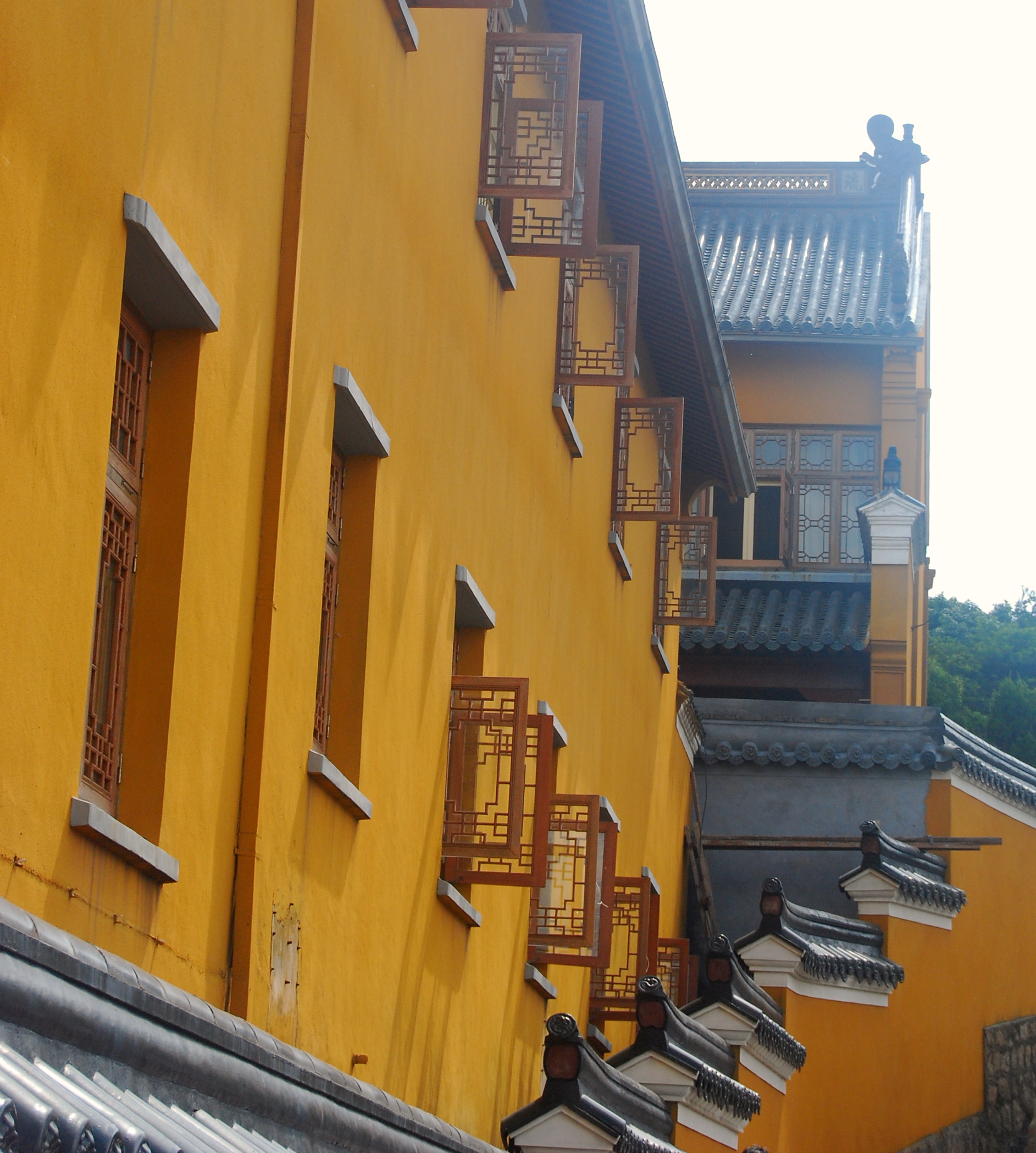
Puji Temple
Puji Temple is the most important temple on Putuoshan. It is the largest and most central temple on the island, with strong pilgrimage energy and a beautiful lotus pond area.
If you only have a few hours, this should be your first temple.
Best for: first-time visitors, Buddhist culture, photography, easy walking
Difficulty: very easy
Suggested time: 1–1.5 hours
Nanhai Guanyin Statue
The 33-meter Nanhai Guanyin statue is the most recognizable landmark on Mount Putuo. It is visually powerful and easy for non-Buddhist visitors to understand.
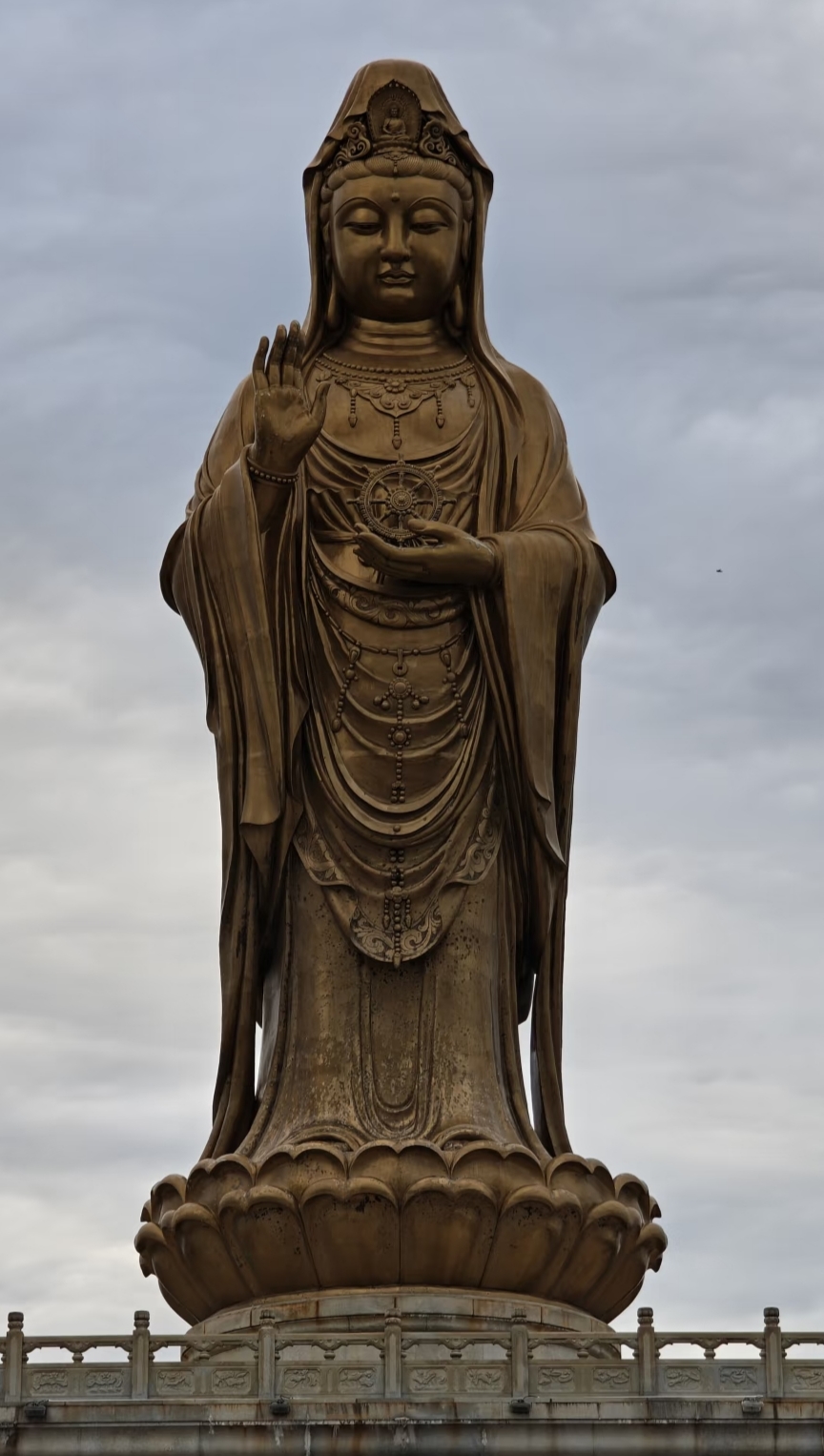
For many foreign travelers, this is the image they remember most clearly from Putuoshan.
Best for: iconic photos, Guanyin culture, first-time visitors
Difficulty: easy
Suggested time: 30–60 minutes
Purple Bamboo Grove and Bukenqu Guanyin Temple
This area is closely connected with the origin story of Putuoshan’s Guanyin worship. It also has a coastal temple atmosphere that feels different from inland Buddhist mountains.
It pairs naturally with Nanhai Guanyin.
Fayu Temple
Fayu Temple is one of the island’s major temples and is known for its architecture and quieter atmosphere compared with Puji Temple.
It is highly recommended on a two-day route.
Huiji Temple and Foding Mountain
Huiji Temple sits on Foding Mountain, the highest point of the island. You can reach it by cable car or on foot.
This is worth adding if you have a second day. It is not necessary for a short one-day visit.
Baibusha and Qianbusha Beaches
These beaches add a coastal element to the trip. They are not the main reason to visit Putuoshan, but they can make the island feel more relaxed and balanced.
Remember: Putuoshan is a sacred Buddhist island, not mainly a beach resort.
Luojia Mountain
Luojia Mountain is another small island associated with Guanyin worship. It requires an extra boat trip and takes additional time.
It is best for serious Buddhist pilgrims or travelers with a deeper interest. For ordinary first-time visitors, it is optional.
Who Is Guanyin? A Simple Explanation for Foreign Visitors
Guanyin is one of the most beloved Buddhist figures in China, Japan, Korea, and much of East Asia. In English, she is often described as the Bodhisattva of Compassion or Goddess of Mercy.
A simple way to understand Guanyin:
Guanyin represents compassion, protection, and help for ordinary people.
You do not need to be Buddhist to visit Mount Putuo respectfully. Many visitors come for history, architecture, sea views, photography, or cultural experience.
Basic concepts:
- Bodhisattva: an enlightened being who helps others;
- incense: a way to show respect or make a wish;
- pilgrimage: traveling to a sacred site for prayer or merit;
- merit donation: voluntary donation, not required.
Temple Etiquette
Mount Putuo is an active religious site. Be respectful.
Basic rules:
- speak quietly in temple areas;
- do not touch statues, ritual objects, bells, drums, or incense burners;
- follow signs about photography;
- avoid taking close-up photos of worshippers;
- do not step on temple thresholds;
- remove hats inside halls if requested;
- keep your phone on silent;
- do not treat monks or nuns as photo props.
You do not need to burn incense or bow. Quiet observation is enough.
Incense and donation tips
You may see incense for sale around temple areas. You do not need to buy large expensive incense bundles. Small standard incense offerings are enough if you choose to participate.
Donation boxes are voluntary. Nobody should force you to donate.
Be cautious with:
- expensive incense;
- fortune-telling;
- blessing services;
- “consecration” sales;
- anyone dressed as clergy actively asking for money.
Where to Stay
On Putuoshan Island
Best for travelers who want early morning temples, quieter evenings, or a two-day Buddhist culture experience.
Advantages:
- no need to catch the first ferry;
- best for morning temple atmosphere;
- convenient for photography and slow walking.
Disadvantages:
- more expensive;
- limited rooms during holidays;
- you must bring luggage by ferry unless you store it elsewhere.
Zhujiajian
Best balance for many visitors. It is near Wugongzhi Pier, usually cheaper than staying on the island, and convenient for ferry access.
Shenjiamen
Good for seafood and lower prices. It is a famous fishing port area and can be combined with a Putuoshan visit if you want a seafood meal.
Ningbo
Best if you have a train or flight the next day, or if you only do a one-day Putuoshan trip.
It is less atmospheric than staying near the island, but logistically safer.
Hotel passport note
Some small hotels may be confused about foreign passport registration. Book through international platforms when possible, and confirm in advance that the hotel accepts foreign passports.
How Difficult Is Mount Putuo?
Mount Putuo is one of the easiest famous Chinese mountain destinations.
It is more like walking around a coastal temple town than climbing a mountain.
| Route | Difficulty |
|---|---|
| Puji Temple + Nanhai Guanyin | Very easy |
| Classic one-day route | Easy |
| Two-day temple route | Easy to moderate |
| Foding Mountain with cable car | Easy |
| Foding Mountain on foot | Moderate |
| Whole island walking without buses | Moderate due to distance |
Most visitors do not need hiking poles. Comfortable walking shoes are enough.
Bring sun protection in summer and rain gear year-round.
Best Time to Visit
Spring
Spring is pleasant and atmospheric, with mild weather and temple activity. It can also be rainy.
Autumn
Autumn is one of the best times to visit. The weather is usually more comfortable, and the sea air feels clearer.
Winter
Winter is quieter and can be a good low-crowd season, but sea wind can feel cold.
Summer
Summer is hot and humid, and it overlaps with typhoon season. Ferries can be affected by storms.
Avoid major crowd periods
Avoid Chinese public holidays if possible, especially:
- May Day holiday;
- National Day Golden Week;
- major Guanyin festival dates;
- busy pilgrimage days.
The three major Guanyin lunar calendar dates are especially crowded. If you are not visiting specifically for pilgrimage, avoid those periods.
Typhoon and Ferry Risks
Because Mount Putuo is an island, weather matters more than at inland temples.
During typhoon season, especially from July to September, ferries may be suspended. If ferries stop, you may be unable to enter or leave the island.
Practical advice:
- check official ferry and scenic area announcements before travel;
- avoid tight departure plans during typhoon season;
- do not schedule a must-catch international flight immediately after leaving Putuoshan;
- keep one backup day if traveling in storm season.
The ferry system is the heart of this trip. Treat it seriously.
Mount Putuo + Nearby Itineraries
Mount Putuo + Ningbo
A very practical 2–3 day plan:
- Day 1: Arrive in Ningbo, visit Tianyi Pavilion or Old Bund.
- Day 2: Ningbo to Putuoshan, visit Puji Temple and Nanhai Guanyin.
- Day 3: Fayu Temple and Foding Mountain, return to Ningbo.
Mount Putuo + Shanghai
Works best as a two-day side trip, not a relaxed one-day trip.
Use the high-speed train to Ningbo, then continue to Zhujiajian and Putuoshan.
Mount Putuo + Hangzhou
A good Zhejiang route:
Hangzhou → Ningbo → Mount Putuo
This works well for travelers who want culture, city history, and a sacred island.
Mount Putuo + Shenjiamen Seafood
If you like seafood, consider adding Shenjiamen on the way back. It is famous for seafood night markets and fishing-port atmosphere.
This can balance the religious focus of Putuoshan with a more local coastal food experience.
Common Mistakes
1. Thinking Putuo Mountain Airport is on Putuoshan Island
It is on Zhujiajian. You still need a car transfer and ferry.
2. Thinking Zhoushan means you have arrived at Mount Putuo
Zhoushan is the broader island city. Mount Putuo is a separate island.
3. Not checking ferry times
Miss the last ferry and you may have to stay overnight.
4. Ignoring typhoon season
Bad weather can stop ferries completely.
5. Trying to do too much in one day
Puji Temple, Fayu Temple, Huiji Temple, Nanhai Guanyin, Luojia Mountain, and beaches are too much for one comfortable day.
6. Bringing a big suitcase onto the island
Stone paths, steps, crowds, and ferry boarding make this inconvenient.
7. Depending only on Visa or Mastercard
Use Alipay, WeChat Pay, and cash backup.
8. Buying expensive incense because someone pressures you
Small standard offerings are enough. You do not need expensive incense.
9. Photographing worshippers too closely
Be respectful inside active temple spaces.
10. Booking small hotels without checking passport acceptance
Confirm foreign passport registration before arrival.
Ticket prices, ferry schedules, temple fees, cable car operations, passport booking rules, hotel policies, and weather-related ferry suspensions can change. Verify key details through official channels, the local booking platform, or your travel provider before visiting.
FAQ
Is Mount Putuo worth visiting?
Yes, especially if you are interested in Buddhist culture, Guanyin worship, island temples, and an easy sacred mountain experience near Ningbo or Shanghai.
Is Mount Putuo actually a mountain?
It is both an island and a low mountain. The highest point is only about 291 meters, so it is not a difficult mountain climb.
Do I need to take a ferry to Mount Putuo?
Yes. Putuoshan is an island, and ordinary visitors must take a ferry or boat to reach it.
What is the easiest way to get to Mount Putuo?
For most foreign visitors, the easiest route is Ningbo to Zhujiajian Wugongzhi Pier, then ferry to Putuoshan.
Can foreigners buy Mount Putuo tickets with a passport?
Foreign visitors should be prepared to use passport information for real-name ticketing. Official platforms, Trip.com, or manual pier windows may be used, but current rules should be verified before travel.
Is Mount Putuo difficult?
No. It is one of the easiest famous Chinese mountain destinations. Most routes are flat or gently sloped.
Should I stay on Putuoshan Island?
Stay on the island if you want early morning temples and a slower experience. Stay in Zhujiajian or Ningbo if you prefer easier logistics or lower cost.
What are the must-see places on Mount Putuo?
Puji Temple, Nanhai Guanyin, Purple Bamboo Grove, Bukenqu Guanyin Temple, and, if you have time, Fayu Temple and Huiji Temple.
Is Mount Putuo good for non-Buddhist visitors?
Yes. You can enjoy the temples, sea views, architecture, incense atmosphere, and cultural experience without being Buddhist.
When should I avoid Mount Putuo?
Avoid major Chinese public holidays, major Guanyin pilgrimage dates, and typhoon periods if your schedule is tight.
Image Credits
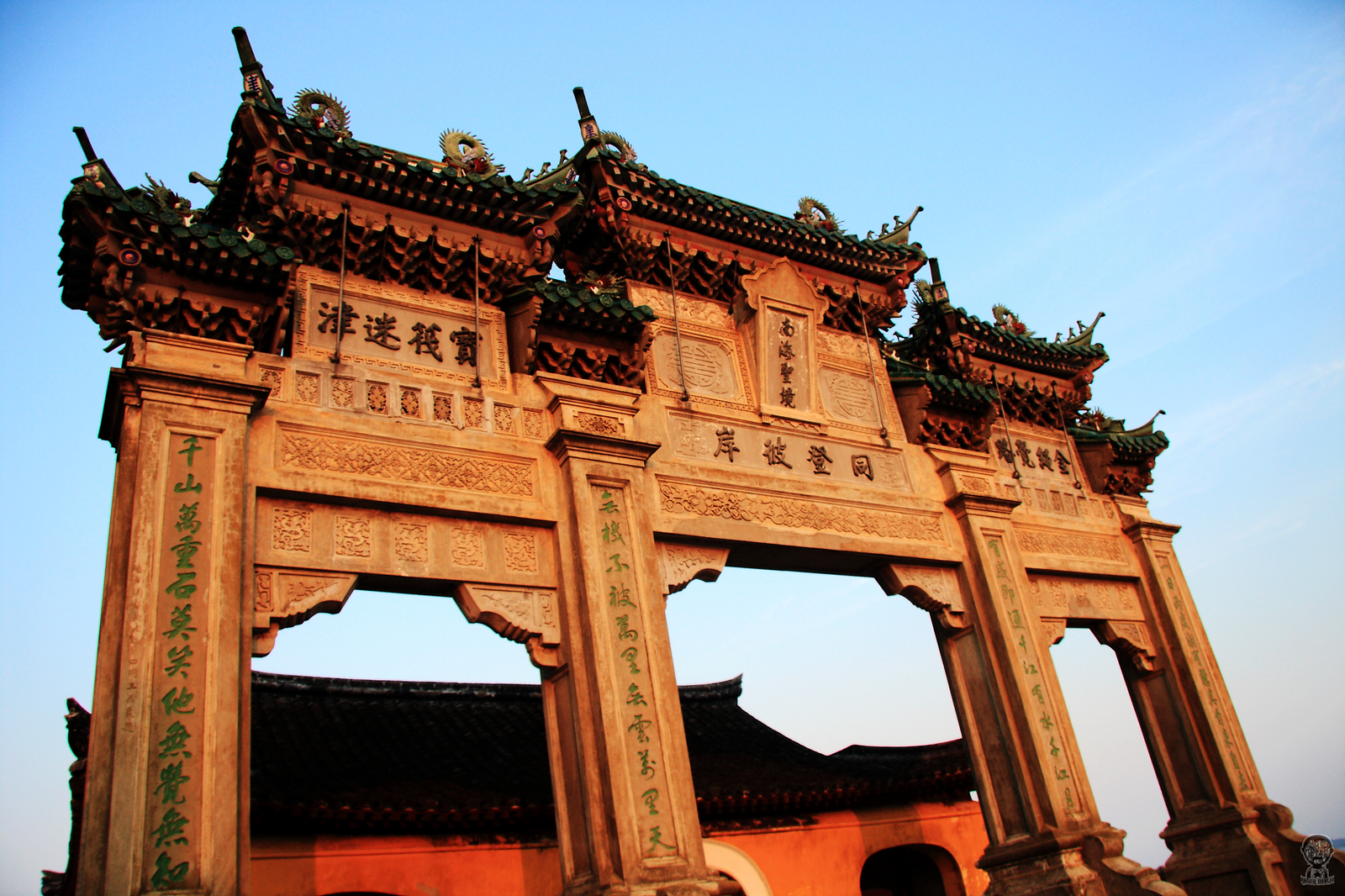
Putuo, Zhoushan, Zhejiang, China - panoramio by Han Lei, via Wikimedia Commons / Panoramio archive, licensed under CC BY-SA 3.0 . Resized/cropped for web if used as hero; resized for web if used in body.
普陀山寺院 1 by shizhao, via Wikimedia Commons / Flickr, licensed under CC BY-SA 2.0 . Resized for web.
Related guides
Wutai Mountain Travel Guide for Foreign Visitors
A practical Wutai Mountain travel guide for foreign visitors, covering Taihuai Town, main temples, Dai Luoding, the Five Terraces, transport from Taiyuan and Datong, tickets, passport rules, weather, altitude, lodging, etiquette and common mistakes.
Best Buddhist Mountains in China for Foreign Visitors
Compare the most practical Buddhist mountain journeys in China, including island pilgrimage sites, temple mountain regions, and Shaolin-related routes.