Written and fact-checked by: Rocket Zheng
Last verified:
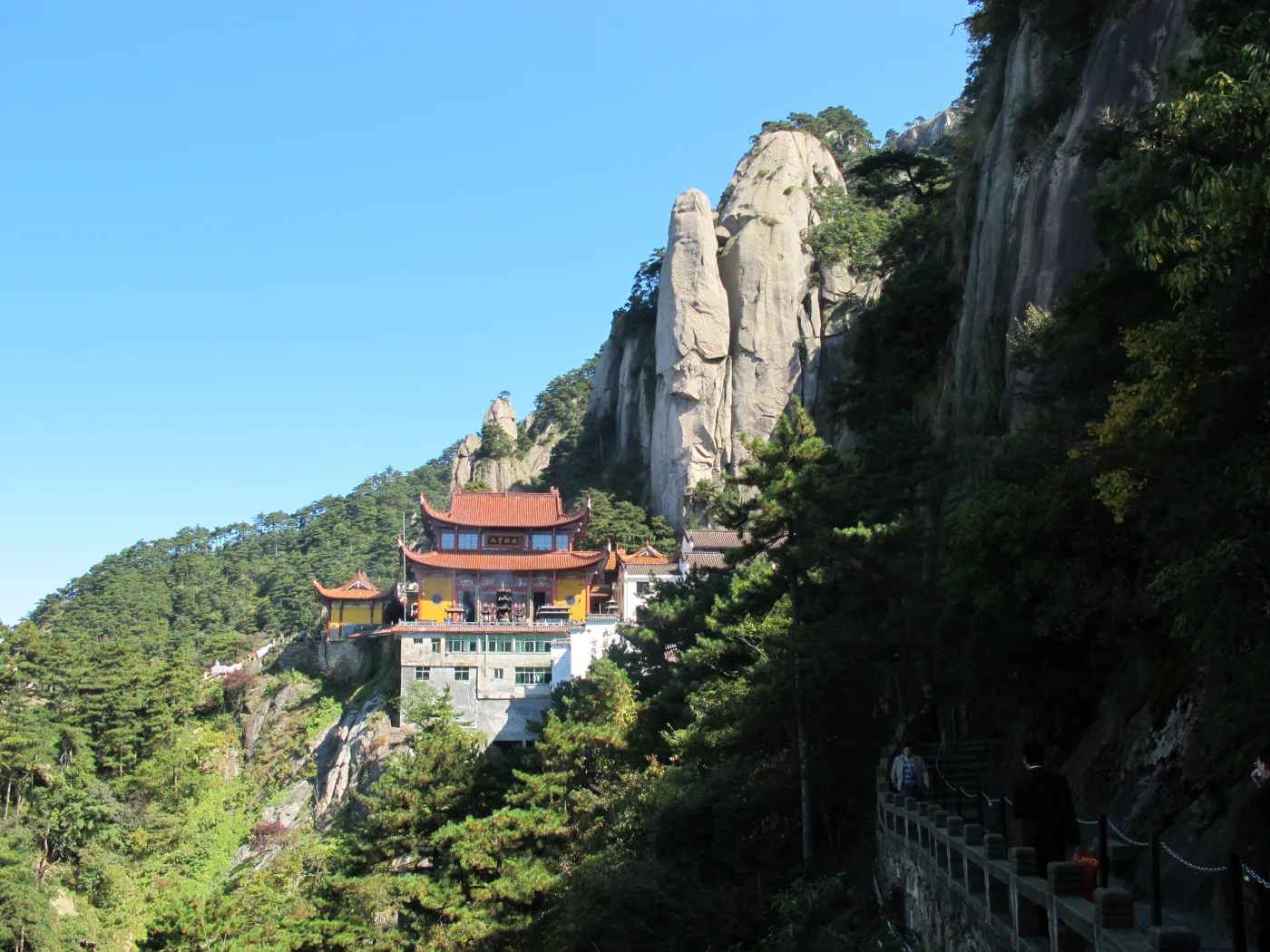
Jiuhua Mountain, or Jiuhuashan, is one of China’s most important Buddhist mountains. But for foreign visitors, the best way to understand it is not as a mountain to “climb.”
Think of Jiuhua Mountain as a Buddhist mountain town.
Its real heart is Jiuhua Street, a temple-filled mountain settlement with old halls, incense, monks, guesthouses, vegetarian restaurants, stone steps and narrow lanes. Around it are several important temple areas, including Roushen Baodian, Baisui Palace, Tiantai and Huatai.
Jiuhua Mountain is sacred to Ksitigarbha, known in Chinese as Dizang Bodhisattva. The mountain’s religious identity is closely connected with Kim Gyo-gak — Jin Qiaojue in Chinese — a monk from the ancient Korean kingdom of Silla who came to China in the Tang dynasty and practiced here for decades. After his death, his preserved body became central to Jiuhua Mountain’s sacred status.
That sounds heavy. But the actual travel experience can be very simple:
Stay on Jiuhua Street, walk between temples, visit Roushen Baodian, take the cable car to Baisui Palace, and decide whether you want to add Tiantai or Huatai for mountain views.
This guide is written for foreign independent travelers who do not speak Chinese, do not have a Chinese ID card, and want to visit Jiuhua Mountain without getting lost in vague temple lists.
Quick Answer
Jiuhua Mountain is worth visiting if you want:
- a real Buddhist mountain-town atmosphere;
- a temple route that feels alive, not staged;
- a deeper cultural stop in southern Anhui;
- an easier Buddhist mountain than a full wilderness hike;
- a good side trip before or after Huangshan.
For most first-time foreign visitors, the best route is:
Day 1: Arrive at Jiuhua Mountain → take the scenic shuttle to Jiuhua Street → Huacheng Temple → Zhantanlin → Roushen Baodian → Qiyuan Temple → stay overnight on Jiuhua Street Day 2: Baisui Palace by cable car → optional short walk around Jiuhua Street → leave in the afternoon
If you only have one day, stay focused on Jiuhua Street, Roushen Baodian and Baisui Palace.
If you want mountain scenery, add Huatai or Tiantai, but do not try to force Jiuhua Street, Tiantai and Huatai into the same day.
What Makes Jiuhua Mountain Different?
Jiuhua Mountain is not a single summit route.
The main visitor experience is divided into several areas:
- Jiuhua Street, the living temple town and normal overnight base;
- Roushen Baodian and the surrounding core temple zone;
- Baisui Palace, one of the easiest scenic and religious add-ons;
- Tiantai, which carries stronger pilgrimage meaning and more stair climbing;
- Huatai, which is more about mountain scenery than temple culture.
The biggest mistake is treating Jiuhua Mountain as a normal scenic mountain where the goal is to reach the highest point. For a first visit, the real value is Jiuhua Street and the surrounding temple landscape.
Jiuhua Street: The Real Center of the Trip
Jiuhua Street is where Jiuhua Mountain becomes memorable.
It is not just a street. It is a mountain town, a lodging base, a food area, a temple cluster and a living Buddhist community at the same time.
This is where you find:
- Huacheng Temple;
- Roushen Baodian;
- Qiyuan Temple;
- Zhantanlin;
- small lanes, incense shops and vegetarian restaurants;
- monks and pilgrims moving through daily temple life;
- the best place to stay overnight.
For foreign visitors, staying on Jiuhua Street is usually the smartest choice. You can walk to many important temples, avoid wasting time going up and down the mountain every day, and experience the quieter atmosphere in the morning and evening.
If you only visit Jiuhua Mountain as a quick day trip, you will still see the main sights. But if you stay one night on Jiuhua Street, the place makes much more sense.
How Many Days Do You Need?
One Day
One day is enough for the core route, but you need to be selective.
Focus on:
Jiuhua Street → Huacheng Temple → Zhantanlin → Roushen Baodian → Qiyuan Temple → Baisui Palace
This is the best one-day plan for foreign visitors. It covers the religious heart of Jiuhua Mountain and avoids overloading the day with distant scenic areas.
Two Days
Two days are much better.
You can arrive without rushing, stay on Jiuhua Street, see the main temples in the afternoon, enjoy the evening atmosphere, then visit Baisui Palace or Tiantai the next morning.
This is the route I recommend most.
Three Days
Three days are useful if you want both Buddhist culture and mountain scenery.
You can spend one day on Jiuhua Street, one day on Baisui Palace and Tiantai, and one day on Huatai or a slower temple route.
But most foreign visitors do not need three days unless Jiuhua Mountain is a major focus of the trip.
The 3 Best Routes for Foreign Visitors
Route 1: Jiuhua Street Core Temples in One Day
Best for travelers with limited time.
Start from the Visitor Center at Kecun, take the scenic shuttle bus up to Jiuhua Street, and spend the day around the main temple area.
Suggested route:
- Huacheng Temple
- Zhantanlin
- Roushen Baodian
- Qiyuan Temple
- Jiuhua Street lunch or vegetarian meal
- Baisui Palace by cable car
- Shuttle back down in the late afternoon
This route is not physically difficult. It feels more like walking through a slightly hilly old town with temples than climbing a mountain.
It is also the best rainy-day route. Rain and mist may ruin distant views, but Jiuhua Street’s temples still work well in bad weather — sometimes even better.
Best for: first-time visitors, one-day trips, culture-focused travelers Difficulty: Easy to moderate Main weakness: You miss the morning and evening atmosphere of Jiuhua Street
Route 2: One Night on Jiuhua Street
This is the best route for most foreign visitors.
Day 1:
- Arrive before or around midday
- Check in on Jiuhua Street
- Visit Huacheng Temple, Zhantanlin and Roushen Baodian
- Walk through Jiuhua Street in the evening
- If possible, quietly observe evening temple activity at Qiyuan Temple
Day 2:
- Visit Baisui Palace by cable car
- Return to Jiuhua Street for lunch
- Leave in the afternoon
This route gives you a real sense of the place. You are not just “checking off temples.” You get the slower rhythm: incense in the morning, shops opening, pilgrims walking, temple bells, small restaurants, and the town becoming quieter after day-trippers leave.
Best for: first-time visitors with two days Difficulty: Easy to moderate Main weakness: Jiuhua Street lodging can be tight during holidays, so book early
Route 3: Jiuhua Street + Tiantai or Huatai
This route is for visitors who also want mountain scenery.
The key question is: Tiantai or Huatai?
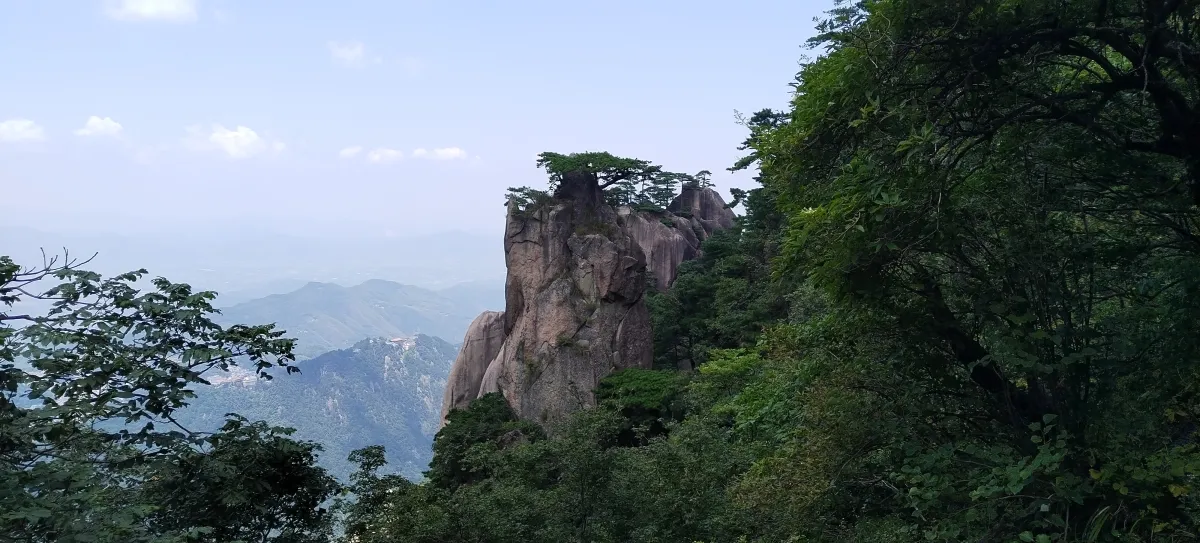
For most ordinary foreign visitors, Huatai is easier. It is more about mountain scenery, cliffs and photography. The walking after the cable car is usually more manageable.
Choose Tiantai if you care more about the pilgrimage side of Jiuhua Mountain and do not mind stairs. Even with the cable car, Tiantai still requires walking and climbing after the ride.
Do not put Tiantai and Huatai on the same day unless you are very efficient, very fit and already know the transport system. For most people, it makes the day messy.
Best for: photographers, repeat visitors, travelers with 2–3 days Difficulty: Moderate for Huatai; harder for Tiantai Main weakness: Weather matters. Fog and rain can erase the views.
Main Places to Visit
Huacheng Temple
Huacheng Temple is one of the best places to start. It is closely tied to the early history of Jiuhua Mountain and helps you understand why this place became a Buddhist center.
It is not huge or flashy, but it gives the route a historical foundation. If you skip it and only chase bigger temples, you lose part of the story.
Recommended time: 30–45 minutes Difficulty: Easy Best for: history, first stop on Jiuhua Street
Roushen Baodian
Roushen Baodian is the most important religious site for understanding Jiuhua Mountain.
It is connected with Kim Gyo-gak, the monk whose preserved body became central to the mountain’s identity as the sacred site of Dizang Bodhisattva. This is not a place to treat as strange or sensational. In Buddhist tradition, a preserved body of a highly respected monk can be venerated as a sign of spiritual attainment.
A good way to explain it to foreign readers is this:
Roushen Baodian is not a macabre attraction. It is a sacred Buddhist site where the preserved body of a revered monk is enshrined and worshipped.
There are steps leading up to the hall, but the climb is not long. The atmosphere is serious, and photography inside is usually not allowed.
Recommended time: Around 1 hour Difficulty: Moderate because of the steps Best for: understanding the heart of Jiuhua Mountain Important: Be quiet, do not photograph inside, and avoid joking about the body relic
Baisui Palace
Baisui Palace is one of the most useful add-ons for first-time visitors.
It is associated with another preserved monk body and sits on the mountainside with good views. The cable car makes it manageable even for visitors who do not want a hard climb.
If you have only one day, Baisui Palace is often a better choice than Tiantai because it is easier to combine with Jiuhua Street.
Recommended time: 1.5–2 hours Difficulty: Easy with cable car; moderate if walking Best for: views, Buddhist history, efficient add-on
Qiyuan Temple
Qiyuan Temple is one of the major temples near Jiuhua Street and is especially worthwhile if you stay overnight. In the evening, the atmosphere can be much more memorable than during a rushed midday visit.
You do not need to understand every ritual. Just move quietly, keep some distance, and observe respectfully.
Recommended time: 30–45 minutes Difficulty: Easy Best for: temple atmosphere, evening visit if available
Zhantanlin
Zhantanlin is close to the Jiuhua Street temple route and works well as part of a short walking loop. It is not the one site that defines Jiuhua Mountain, but it helps build the feeling of a dense Buddhist town rather than isolated attractions.
Recommended time: 20–30 minutes Difficulty: Easy Best for: walking route between Huacheng Temple and Roushen Baodian
Tiantai
Tiantai is the traditional high pilgrimage area of Jiuhua Mountain. It carries more religious meaning than Huatai and is better for travelers who want the feeling of climbing toward a sacred high point.
But do not underestimate it. Even with the cable car, there is still walking and stair climbing after the ride. In fog or rain, the views may disappear, and the route becomes less rewarding.
Recommended time: 3–4 hours Difficulty: Moderate to hard Best for: pilgrimage atmosphere, stronger mountain route Not ideal for: weak knees, tight schedules, rainy days
Huatai
Huatai is more about natural scenery than temple culture.
It has rock formations, cliffside walkways, seasonal flowers and open views. If your main question is “Where can I get a beautiful mountain view without turning the day into a hard pilgrimage route?”, Huatai is usually the better choice.
It is still weather-sensitive. On foggy days, distant views may vanish, but close-up rocks and walkways can still be interesting.
Recommended time: 2–4 hours Difficulty: Moderate Best for: scenery, photography, easier mountain views
Dayuan Cultural Park
Dayuan Cultural Park is near the foot of the mountain around Kecun. It is a modern Buddhist cultural park with a large Dizang statue.
It can be visually impressive, but it feels different from Jiuhua Street. If this is your first visit and time is limited, prioritize Jiuhua Street, Roushen Baodian and Baisui Palace first.
Best for: extra time near the Visitor Center Not first priority: if you only have one day
Tiantai vs Huatai: Which One Should You Choose?
This is one of the most useful decisions to make before you go.
Choose Tiantai if:
- you want the more traditional pilgrimage route;
- you care about Buddhist meaning;
- you do not mind stairs after the cable car;
- you have at least half a day.
Choose Huatai if:
- you want mountain scenery and photography;
- you prefer a more visual, less religious route;
- you want something more manageable after the cable car;
- the weather is decent.
For most first-time foreign visitors who already plan to see Jiuhua Street, I would choose Baisui Palace first, then decide between Tiantai and Huatai only if there is extra time.
How to Get to Jiuhua Mountain
The Main Arrival Point: Jiuhua Mountain Station
The easiest rail option is now Jiuhua Mountain Station, a high-speed rail station opened on the Chizhou–Huangshan high-speed rail line.
This station is close to the Jiuhua Mountain Visitor Center at Kecun, about 6 km away. From the station, you can take a local shuttle, direct bus, taxi or ride-hailing car to the Visitor Center.
For many visitors coming from Shanghai, Nanjing, Hangzhou or Hefei, this is now the cleanest route.
Chizhou Station
Chizhou Station is the older and more traditional arrival point. It is farther from the mountain, about 37 km from the Visitor Center, so you still need a bus, taxi or transfer.
Do not confuse Chizhou Station with Jiuhua Mountain Station. They are not the same place.
From Hefei
Hefei is a practical gateway. You can take a high-speed train to Jiuhua Mountain Station and then transfer to the Visitor Center.
There are also long-distance buses from Hefei to the Jiuhua Mountain area, but for most foreign visitors the train route is easier to understand.
From Huangshan
Jiuhua Mountain now combines very well with Huangshan. The Chizhou–Huangshan high-speed rail makes the transfer much easier than before.
A good route is:
Shanghai or Nanjing → Jiuhua Mountain → Huangshan
Jiuhua Mountain gives you the Buddhist mountain-town experience. Huangshan gives you the classic Chinese mountain scenery.
From Shanghai, Nanjing or Hangzhou
High-speed rail to Jiuhua Mountain Station is the simplest option if the schedule works.
After arrival, show the Chinese name for the Visitor Center to a driver:
九华山游客服务中心 / 柯村
Save this as a screenshot before you go.
Getting Around Jiuhua Mountain
Most visitors first arrive at the Visitor Center / Kecun area at the foot of the mountain. From there, you take scenic transport up to Jiuhua Street.
In most cases, private cars cannot freely enter the Jiuhua Street core area. During busy periods, traffic control becomes stricter. Plan to use the official scenic shuttle unless your hotel clearly tells you otherwise.
Inside Jiuhua Street, many temples are walkable. This is one reason staying there is so useful.
Cable cars and ropeways are used for:
- Baisui Palace;
- Tiantai;
- Huatai.
Important: Tiantai and Huatai use different ropeway systems. A ticket or route for one does not automatically work for the other.
Tickets, Passport and Payment Notes
Jiuhua Mountain has a main scenic area ticket, and cable cars or certain extra sites may require separate payment.
For foreign visitors, the bigger issue is not the price. It is the booking system.
Official online ticketing is usually designed for Chinese ID card users. Foreign passport holders may need to buy tickets at the staffed window at the scenic entrance.
Bring:
- your original passport;
- a screenshot of your hotel address in Chinese;
- Alipay or WeChat Pay if available;
- some cash as backup.
Do not rely on Visa or Mastercard for small shops, incense, snacks or local transport. Large hotels may accept cards, but inside the mountain area mobile payment and cash are far more practical.
During major Chinese holidays and Buddhist festival periods, arrive early and expect queues.
Where to Stay
Stay on Jiuhua Street
This is the best choice for most foreign visitors.
You are close to the temples, you can walk around in the evening, and you avoid wasting time going up and down the mountain every day.
Stay here if:
- it is your first visit;
- you want the Buddhist town atmosphere;
- you want to photograph the street in the morning or evening;
- you want an easy 2-day route;
- you do not want to commute from Chizhou or Kecun.
The main warning: not every small guesthouse is comfortable handling foreign passport registration. Before booking, confirm that the hotel can accept foreign guests. Larger hotels and well-reviewed properties on international booking platforms are usually safer.
Stay near Kecun / Visitor Center
This can work if you drive, arrive late, or only want a simple base near the entrance. But you lose the evening atmosphere of Jiuhua Street.
Stay in Chizhou
Chizhou is more like a city base. It is easier for hotels and transport, but you need to travel in and out of the mountain area.
Stay in Huangshan or Hefei
These are better as part of a wider route, not as bases for exploring Jiuhua Mountain slowly.
Difficulty and Physical Reality
Jiuhua Mountain is not an extreme hike if you stay around Jiuhua Street.
The core temple route feels like walking through a hilly old town with temples. Most ordinary travelers can handle it.
The harder parts are:
- stairs to Roushen Baodian;
- walking up to Baisui Palace if you skip the cable car;
- Tiantai after the ropeway;
- any full walking route up the mountain.
A simple way to think about it:
If you have knee problems, be careful on the way down. Chinese sacred mountains often feel harder descending than ascending.
Wear good walking shoes, especially in rain. Stone paths and temple steps can become slippery.
Best Time to Visit
Spring and autumn are the best seasons.
Spring brings comfortable temperatures and flowers, especially around Huatai in April and May. Autumn is often better for photography, with clearer air and more stable weather.
Summer can be comfortable on the mountain compared with cities, but it is also crowded during school holidays.
Winter is quieter and cheaper, with occasional snow, but some ropeways or routes may be affected by maintenance or weather.
Try to avoid:
- May Day holiday;
- National Day Golden Week;
- summer school holidays;
- major Buddhist festival periods;
- Ksitigarbha-related festival dates if you dislike crowds.
Weather matters most for Tiantai and Huatai. Fog and rain can erase the views. Jiuhua Street, however, still works well in rain. In fact, misty temple streets can be one of the most atmospheric versions of Jiuhua Mountain.
Food and Supplies
Jiuhua Street has restaurants, vegetarian food, small shops and basic supplies.
Vegetarian meals are part of the experience. You can also find ordinary Chinese restaurants, though options are fewer than in a city.
Do not expect Starbucks, McDonald’s or many Western-style choices.
Bring:
- water;
- snacks;
- cash in small bills;
- comfortable shoes;
- a light jacket;
- your passport;
- Chinese screenshots for your hotel and key places.
Prices on the mountain are usually higher than in Chizhou city.
Temple Etiquette
Jiuhua Mountain is an active place of worship, not a museum.
Basic rules:
- keep your voice low;
- do not photograph Buddha statues or preserved body halls unless clearly allowed;
- obey no-photo signs immediately;
- do not take close-up photos of monks or worshippers without permission;
- do not step on temple thresholds;
- incense, donations and offerings are voluntary;
- if someone pushes expensive incense or “merit” donations, a polite “no, thank you” is enough;
- inside Roushen Baodian and similar sacred spaces, behave quietly and do not treat the preserved body tradition as a curiosity show.
You do not need to understand every ritual. Respectful distance and quiet behavior are enough.
Common Mistakes
1. Thinking Jiuhua Mountain is just one temple
It is a mountain town with a dense temple landscape.
2. Thinking Jiuhua Mountain is only a nature area
The natural scenery is good, but the main story is Buddhist culture and Jiuhua Street.
3. Confusing Chizhou Station and Jiuhua Mountain Station
Jiuhua Mountain Station is closer. Chizhou Station is farther away.
4. Not confirming passport-friendly accommodation
Small guesthouses may not handle foreign passport registration smoothly.
5. Trying to do Jiuhua Street, Tiantai and Huatai in one day
This is the classic overpacked mistake. Choose.
6. Underestimating stairs
Even if you use cable cars, some temple routes still involve steps.
7. Expecting mountain views in fog
Tiantai and Huatai are weather-sensitive.
8. Taking photos inside temple halls without checking
When in doubt, do not photograph.
9. Forgetting Chinese place names
Save screenshots for:
- 九华山站
- 九华山游客服务中心 / 柯村
- 九华街
- 肉身宝殿
- 百岁宫
FAQ
Is Jiuhua Mountain worth visiting?
Yes, especially if you want a Buddhist mountain-town experience rather than just a scenic mountain. Jiuhua Street, Roushen Baodian and Baisui Palace make the visit worthwhile.
How many days do I need?
One day is enough for the core route. Two days are much better. Three days are only necessary if you want both temple culture and extra mountain scenery.
Where should I stay?
Stay on Jiuhua Street if you can. It gives you the best access and the best atmosphere.
Is Jiuhua Mountain difficult?
The Jiuhua Street temple route is not difficult. Tiantai is more tiring. Huatai is usually easier for scenery-focused visitors.
Can foreign visitors buy tickets with a passport?
Foreign passport holders may need to buy tickets at staffed windows because online systems are usually designed for Chinese ID cards. Bring your original passport.
Should I choose Tiantai or Huatai?
Choose Tiantai for pilgrimage meaning. Choose Huatai for mountain scenery and photography. Most first-time visitors should not try to do both in one day.
Can I combine Jiuhua Mountain with Huangshan?
Yes. With the Chizhou–Huangshan high-speed rail, Jiuhua Mountain and Huangshan now combine very well. A strong route is Jiuhua Mountain for Buddhist culture, then Huangshan for classic Chinese mountain scenery.
Final Recommendation
Jiuhua Mountain is not the most famous Chinese mountain for foreign travelers, and that is part of its appeal.
It feels less like a checklist attraction and more like a small Buddhist world built into the mountain. Jiuhua Street is the key. Stay there if possible, walk slowly, visit Roushen Baodian with respect, take the cable car to Baisui Palace, and only add Tiantai or Huatai if you have time and the weather is good.
For most foreign visitors, the best Jiuhua Mountain experience is not about conquering a summit. It is about spending a night in a Buddhist mountain town and letting the place slow you down.
Image Credits
Ancient Baijing Platform temple on Jiuhua Mountain by 江上清风1961, via Panoramio (archived), licensed under CC BY 3.0 . Resized/compressed/converted to WebP from original.
Mount Jiuhua, Anhui Province 1 by William Ng, via Wikimedia Commons, licensed under CC BY-SA 4.0 . Resized/compressed/converted to WebP from original.
Related guides
Mount Putuo Travel Guide: Ferry, Tickets, Temples and Foreign Visitor Tips
A practical Mount Putuo guide for foreign visitors: how to reach Putuoshan by ferry, how tickets and passports work, what to see, where to stay, Buddhist temple etiquette, typhoon risks, and the best first-time routes.
Best Buddhist Mountains in China for Foreign Visitors
Compare the most practical Buddhist mountain journeys in China, including island pilgrimage sites, temple mountain regions, and Shaolin-related routes.