Written and fact-checked by: Rocket Zheng
Last verified:
Rising above the forests of northeastern Jiangxi Province, Mount Sanqingshan (三清山) is one of China’s most remarkable mountain landscapes. Slender granite towers emerge from the trees, stone peaks disappear into drifting clouds, and walking paths cling to cliffs hundreds of meters above the valleys.
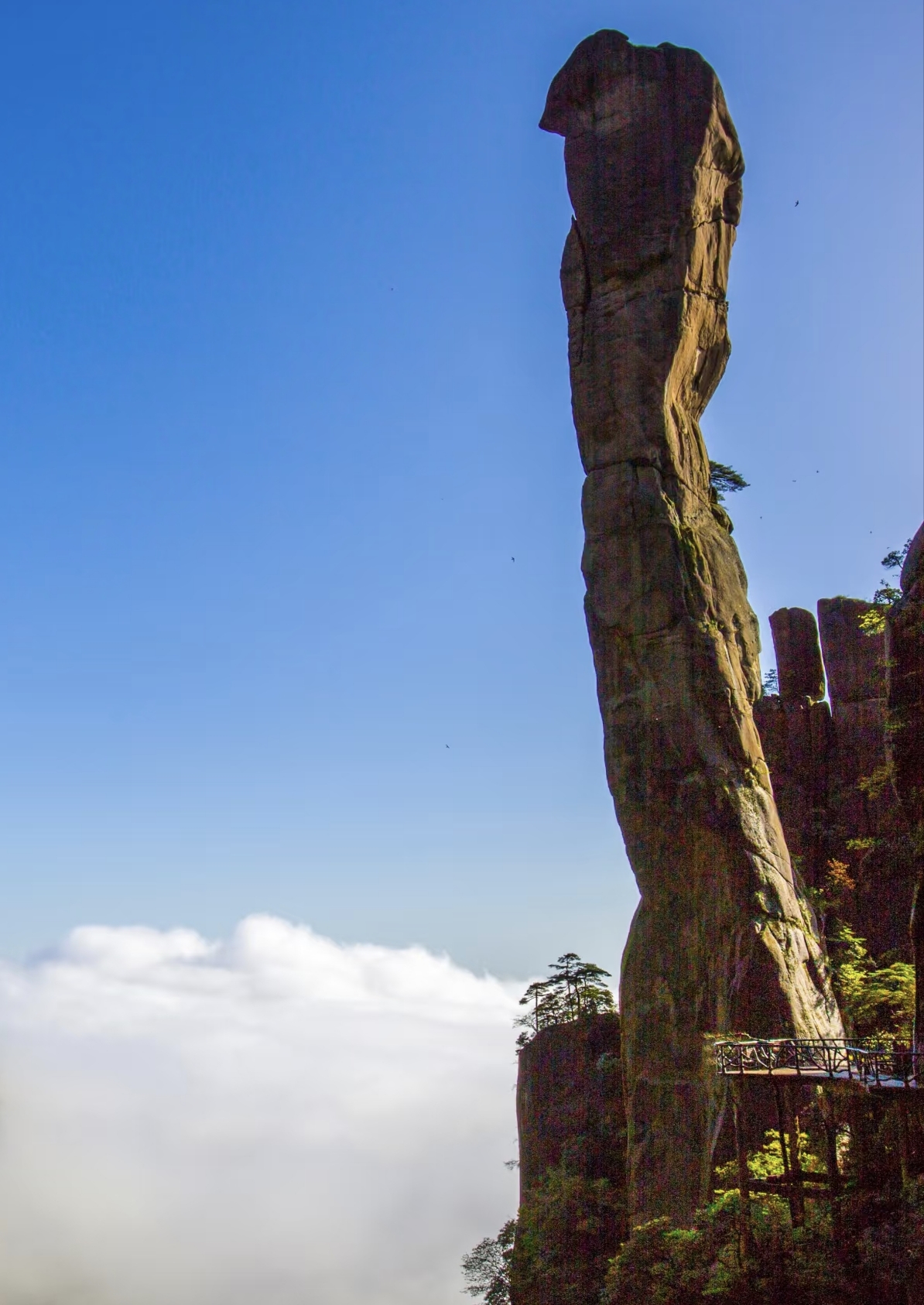
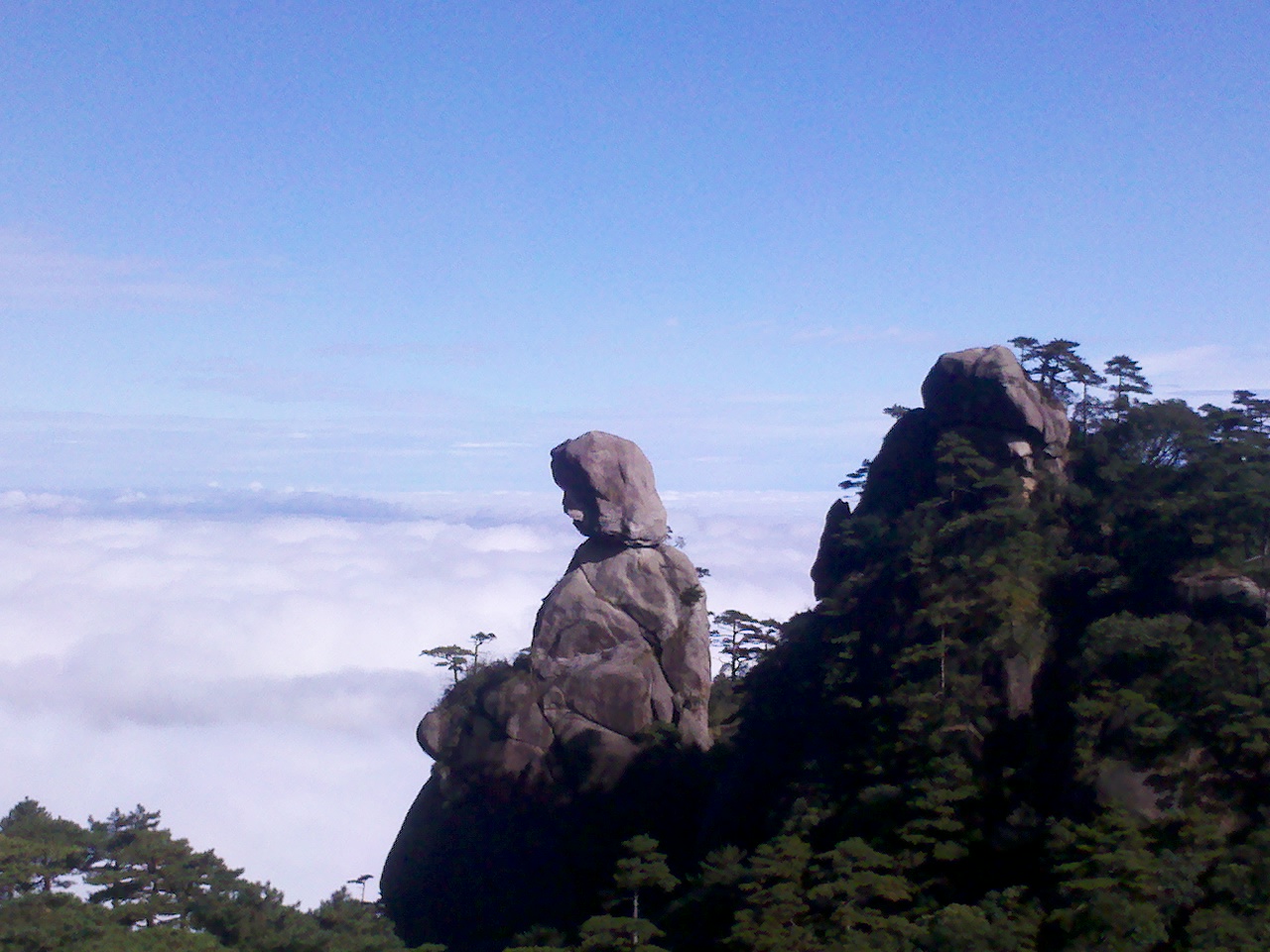
Some formations look almost deliberately sculpted. The famous Giant Python rises like a huge stone column, while the Oriental Goddess resembles a woman sitting quietly among the mountains.
Sanqingshan became a UNESCO World Natural Heritage Site in 2008, recognized for its extraordinary concentration of granite peaks and pillars. It is also a sacred Taoist mountain, with temples and historic sites scattered across its slopes.
Although often compared with Huangshan (Yellow Mountain), Sanqingshan has a character of its own. Its elevated cliffside walkways are among the highlights of the visit, and the mountain receives less international attention than many of China’s other World Heritage destinations.
Getting here takes a little planning, particularly if you do not speak Chinese. You will need to choose the right cable car, allow enough time for the mountain trails, and arrange transport from the nearest railway station.
This guide covers what you need to know before visiting Sanqingshan independently.
Prices are checked against published 2026 park information. Operating schedules, discounts and ticket conditions may change.
Why Visit Sanqingshan?
1. Granite peaks that look like sculptures
The mountain’s most famous attraction is its unusual granite landscape. Millions of years of geological activity, weathering and erosion have shaped the rock into tall columns, narrow ridges and surprisingly recognizable figures.
Two formations stand out:
Giant Python Emerging from the Mountain (巨蟒出山)
A towering, almost vertical granite pillar rises above the surrounding forest. Seen from the nearby walkway, its shape resembles a giant snake lifting its head from the mountain.
Oriental Goddess (东方女神)
Another distinctive rock formation resembles a seated woman in profile. It is one of Sanqingshan’s most photographed sights, especially when mist moves through the surrounding peaks.
Both are in the Nanqing Garden (南清园) scenic area, which is relatively convenient to reach from the eastern Jinsha Cable Car.
There are dozens of other named formations along the trails. Some require a little imagination, but the landscape is impressive even without knowing their names.
2. Walkways suspended along steep cliffs
Walking around Sanqingshan can feel very different from climbing a conventional mountain.
Rather than following the ridgelines all the way, some trails run horizontally across steep rock faces. Sturdy railings separate walkers from the drop, while the open mountain views stretch far beyond the paths.
The two most famous elevated routes are:
- West Coast (西海岸): A long cliffside walkway with expansive views of the granite mountains, particularly memorable when clouds fill the valleys below.
- Sunshine Coast (阳光海岸): Another high-altitude walkway offering different perspectives of the peaks, mountain forests and distant ridges.
Many sections are relatively level. However, getting between them can involve long flights of stone steps.
A visit can therefore be physically tiring even if you take a cable car to the upper mountain.
3. A sacred Taoist mountain
Sanqingshan’s name refers to the Three Pure Ones, the highest deities in Taoism.
The mountain has a long religious history, traditionally associated with the Taoist figure Ge Hong. Its main historic site is Sanqing Palace (三清宫), situated in the northern part of the upper mountain.
The temple complex is modest compared with some of China’s great religious monuments. Its appeal lies in its setting among old trees, rocks and mountain paths.
Visitors particularly interested in Chinese religion and mountain culture should allow extra time to explore this part of Sanqingshan.
4. Clouds, flowers and changing mountain scenery
Sanqingshan can look completely different from one day to the next.
On a clear morning, the granite pillars stand sharply against the sky. When low clouds arrive, only their upper sections may remain visible. After rain, mist can move quickly between the ridges.
Spring brings flowering azaleas, especially in May and early June at higher elevations. Autumn often offers comfortable hiking conditions and beautiful mountain views. Winter can cover the peaks with frost or snow, although icy paths may restrict access.
Visibility makes a considerable difference here. Try to leave some flexibility in your itinerary if the weather forecast is poor.
How Many Days Do You Need for Sanqingshan?
For most first-time visitors, one full day on the mountain is enough to see the main rock formations and walk part or all of the famous elevated trails.
However, that means a full day of sightseeing, not simply arriving in the afternoon.
| Time available | What you can do | Who it is for |
|---|---|---|
| 2-3 hours | Short walk around the major rock formations near Jinsha | Families and visitors with limited time |
| 4-5 hours | Explore much of Nanqing Garden | Casual hikers |
| 6-8 hours | Complete a longer circuit including West Coast and Sunshine Coast | Active visitors |
| 2 days | Explore at a slower pace, stay on the mountain, and possibly see sunrise or sunset | Photographers and mountain enthusiasts |
These are approximate walking and sightseeing times, excluding long waits for cable cars or transport from the railway station.
Our recommendation: If you are arriving from Shanghai, Hangzhou or another distant city, travel to Sanqingshan the previous day, sleep near the mountain entrance, and start hiking the next morning.
You will enjoy the mountain much more without rushing to catch an evening train.
Which Sanqingshan Cable Car Should You Take?
Sanqingshan has three cable car systems. Choosing your entrance is one of the most important decisions when planning a visit.
Jinsha Cable Car (金沙索道) - Best for First-Time Visitors
Jinsha is on the eastern side of the mountain and provides convenient access to the Nanqing Garden area.
It is particularly popular with visitors coming to see the Giant Python and Oriental Goddess.
Choose Jinsha if you:
- are visiting Sanqingshan for the first time;
- want to focus on the most famous rock formations;
- have only one day;
- prefer to return to the same entrance after hiking.
The main disadvantage is the crowd. Jinsha is a popular starting point for organized tour groups, and queues can be significant during holidays.
Waishuangxi Cable Car (外双溪索道) - Best for the Southern Entrance
Waishuangxi serves the southern side of Sanqingshan.
It is a useful starting point for hikers planning to explore the Rishang area and continue toward the West Coast walkway.
Choose Waishuangxi if you are staying near the southern entrance or following a route designed around that side of the mountain.
It can also make sense for a longer hike that finishes at a different entrance, provided you have arranged onward transport.
Gangshou Cable Car (港首索道) - A Third Option
Sanqingshan also has a third cable car, Gangshou, which began trial operations in 2025.
Its published 2026 adult fare is ¥150 round trip, with separate tickets priced at ¥85 uphill and ¥65 downhill.
Gangshou provides another way to access the mountain, particularly useful when following a route designed for its upper station or when one of the other cable cars is unusually busy.
For a conventional first visit focused on the Giant Python and Oriental Goddess, Jinsha remains the simpler starting point.
Sanqingshan Cable Car Prices
| Cable car | Uphill | Downhill | Round trip |
|---|---|---|---|
| Jinsha (East) | ¥70 | ¥55 | ¥125 |
| Waishuangxi (South) | ¥70 | ¥55 | ¥125 |
| Gangshou | ¥85 | ¥65 | ¥150 |
Adult published fares, 2026.
Can you go up one cable car and down another?
Yes, routes across the mountain can connect different cable car stations. But you should check the available ticket options and buy the correct journeys.
There is another practical consideration: the lower stations are in different locations.
If you leave luggage at a hotel near Jinsha and descend via Waishuangxi, you will need transport back to retrieve it. Similarly, a driver waiting at one entrance will not automatically be able to collect you from another.
For independent travelers, returning by the same cable car is usually the easiest arrangement.
Cable Car Operating Hours
Cable car schedules change with the season, weather, maintenance and visitor numbers.
Published operating hours have commonly been around 7:30 a.m. to 5:30 p.m., but do not treat these as guaranteed hours for your visit.
Check the latest schedule before setting out. Aim to reach your descent station comfortably before the final departure, especially on a busy day.
Strong winds, lightning or maintenance may interrupt service.
Sanqingshan Hiking Routes: Which One Should You Choose?
You do not need technical climbing experience to enjoy Sanqingshan. Most established sightseeing routes use maintained stone paths and elevated walkways.
The main challenge is the combination of distance, steps and changing weather.
Here are three useful route options.
Route 1: Short Scenic Walk - 2-3 Hours
Suggested route: Jinsha Cable Car -> Giant Python -> Oriental Goddess -> nearby Nanqing Garden viewpoints -> return to Jinsha.
This is the simplest way to experience Sanqingshan.
You will see the mountain’s two best-known rock formations without committing to the longer circuit. It works well for families, visitors who prefer shorter walks, or people with limited time.
Expect some steps and uneven walking even on the shorter route.
Route 2: Nanqing Garden Circuit - 4-5 Hours
Suggested route: Jinsha Cable Car -> Oriental Goddess -> Yutai -> One-Line Sky -> Rishang area -> additional Nanqing Garden viewpoints -> return toward Jinsha.
Nanqing Garden contains many of Sanqingshan’s most recognizable formations, as well as close-up views of the surrounding granite peaks.
This longer route takes you beyond the busiest viewing platforms and offers a more complete sense of the landscape.
One-Line Sky (一线天) includes a notably steep staircase, so pay attention to the route markers and choose an easier return if needed.
Route 3: Full Scenic Circuit - 6-8 Hours
Suggested route:
Jinsha Cable Car -> Oriental Goddess -> Yutai -> One-Line Sky -> Rishang -> West Coast -> Sunshine Coast -> Giant Python -> Jinsha Cable Car.
This is the route to consider if you want the full Sanqingshan experience.
You will move from close-up views of granite pillars to broad panoramas along the elevated cliffside paths, then return to the eastern cable car.
Allow approximately 6-8 hours for walking, photographs and breaks. Your actual route and duration will depend on the open trail connections, any detours and your fitness.
Sanqing Palace can be added to some extended circuits, but it increases the walking time. Do not try to include every attraction if you need to catch the last cable car.
An important hiking tip: The elevated walkways are often relatively gentle. The connecting staircases are what make the longer routes tiring. Save enough energy for the final return to your descent station.
Trail signs may use different English translations for the same attraction. The Chinese names are worth saving on your phone.
How to Get to Sanqingshan
Sanqingshan is in Shangrao, northeastern Jiangxi Province. It lies between several major travel regions, making it possible to include the mountain in a wider journey through eastern China.
High-speed rail is generally the most convenient way to reach the area.
Step 1: Take a Train to Yushan South or Shangrao
The two most useful railway stations are:
- Yushan South (玉山南站): A convenient gateway for reaching the mountain by road.
- Shangrao (上饶站): A larger transport hub with connections to more cities.
Approximate high-speed train journey times include:
| Departure city | Typical rail journey |
|---|---|
| Hangzhou | Around 2 hours |
| Shanghai | Around 2.5-3 hours |
| Huangshan | Around 1 hour |
| Nanjing | Around 3 hours |
Times depend on the train and destination station. Check the actual timetable rather than relying on these estimates when booking connections.
Foreign travelers can search and book Chinese train tickets through Trip.com or China’s official 12306 railway booking system.
Use the same passport for the booking and the train journey.
Step 2: Transfer from the Railway Station to Sanqingshan
The railway only gets you part of the way. The final journey to the mountain entrance is by road.
From Yushan South Station
Allow roughly 1-1.5 hours to reach the mountain, depending on which entrance you choose.
Tourist transfer services have been advertised from the station area, with shared fares around ¥30 per person. However, departures may depend on passenger numbers, and services can change.
A taxi or prearranged private car is a more predictable option if you have luggage or arrive late.
From Shangrao Station
The road journey generally takes around 1.5 hours or longer, depending on traffic and your destination.
You may find tourist buses, shared transfers or private cars. Confirm that the service goes to your chosen cable car entrance, not simply to a stop somewhere in the wider Sanqingshan area.
Getting Around Without Speaking Chinese
Save these names before your journey:
| English | Chinese |
|---|---|
| Sanqingshan | 三清山 |
| Jinsha Cable Car (East) | 金沙索道 |
| Waishuangxi Cable Car (South) | 外双溪索道 |
| Gangshou Cable Car | 港首索道 |
| Yushan South Railway Station | 玉山南站 |
| Shangrao Railway Station | 上饶站 |
For a taxi to the eastern entrance, you can show the driver:
请带我去三清山金沙索道。
Please take me to the Jinsha Cable Car at Sanqingshan.
A screenshot of the destination in Chinese is often more helpful than an English place name.
DiDi, China’s ride-hailing service, can also be useful, but vehicle availability around the mountain may be limited, particularly in the evening.
Sanqingshan Tickets: Prices and Booking for Foreign Visitors
How Much Does Sanqingshan Cost?
The published standard adult entrance fee for 2026 is ¥120.
Cable car travel is charged separately.
| Item | Adult price |
|---|---|
| Park entrance | ¥120 |
| Jinsha or Waishuangxi cable car, round trip | ¥125 |
| Gangshou cable car, round trip | ¥150 |
| Entrance + Jinsha/Waishuangxi round trip | ¥245 total |
| Entrance + Gangshou round trip | ¥270 total |
These totals exclude transport, food and accommodation. Third-party booking platforms may offer different packages or charge service fees.
The park also publishes concessions for eligible children, students and older visitors. Under its 2026 general policy, visitors aged 65 and above qualify for free entrance, while those aged 60-64 qualify for a reduced entrance ticket. Foreign visitors should confirm whether their passport or other documents are accepted for the relevant concession.
Entrance-fee discounts do not automatically apply to cable car tickets.
Ticket validity and re-entry rules should be checked when booking, particularly if you intend to leave the park and return on another day.
Can Foreigners Buy Sanqingshan Tickets Online?
Yes. International booking platforms such as Trip.com list Sanqingshan tickets and provide an English-language booking process.
Before completing payment:
- choose your visit date and verify that the ticket includes the services you need;
- enter each traveler’s details exactly as requested, using their passport information where supported;
- check whether you are buying entrance only, a cable car ticket, or a combined product;
- keep the confirmation available offline;
- bring the original passport used for booking.
Some Chinese-language ticketing channels are less convenient for foreign passport holders. If the online process is unclear, a platform with English-language customer support may be easier.
On arrival, follow the instructions on your confirmation and ask staff for assistance with passport verification if the automatic gate cannot process your document.
Can You Buy Tickets at the Entrance?
On-site ticket services may be available, but their availability and procedures can vary.
For foreign visitors, booking ahead is the safer option during busy periods. It also gives you time to resolve any passport or payment issue before reaching the mountain.
Best Time to Visit Sanqingshan
The best season depends on whether you are hoping for flowers, clear mountain views or winter scenery.
| Season | What to expect | Our view |
|---|---|---|
| Spring (March-May) | Mild weather, flowering plants and changing cloud cover | Excellent, especially in late spring |
| Summer (June-August) | Green forests, frequent rain and possible thunderstorms | Beautiful but less predictable |
| Autumn (September-November) | Comfortable hiking weather, seasonal color and impressive views | Excellent |
| Winter (December-February) | Frost, occasional snow and quieter trails | Rewarding with proper preparation |
Spring: Flowers and Mist
Late April to early June is particularly attractive for azaleas. Flowers tend to appear later at higher elevations.
Spring weather is changeable, so bring waterproof clothing even when the forecast looks promising.
Autumn: Comfortable Hiking
September through November is a good period for longer walks.
Conditions are often more comfortable than in midsummer, and the mixture of granite peaks, forest and moving clouds can be particularly striking.
Summer: Green Mountains and Rain
Summer brings lush vegetation, but also heavier rainfall, thunderstorms and more domestic holiday visitors.
The trails can become slippery, and some viewpoints may disappear behind low cloud.
Winter: Snow and Frost
Sanqingshan can be beautiful under a layer of snow or frost. However, icy steps and exposed paths demand considerably more care.
Traction aids may be necessary, and some trails or cable cars may close in severe weather. Never enter a closed section, even if other visitors appear to be using it.
Avoid China’s Major Public Holidays
Whatever season you choose, try to avoid:
- the National Day holiday around October 1-7;
- the early-May Labor Day holiday;
- other major Chinese holiday periods and particularly busy weekends.
For a quieter visit, a midweek date outside the holiday season is generally a better choice.
Where to Stay in Sanqingshan
Your accommodation choice should follow your hiking plan.
Stay Near Jinsha: Best for Most First-Time Visitors
The eastern entrance has hotels and guesthouses that make it convenient to start early.
This is our preferred base for a one-day visit focused on Nanqing Garden and the major rock formations.
Look for accommodation near Jinsha Service Area (金沙服务区) rather than assuming that every hotel listed under Sanqingshan is close to the cable car.
Stay Near Waishuangxi: Best for Southern Routes
The southern entrance has hotel options suited to travelers who prefer this side of the mountain.
It can be a comfortable choice if your hiking route starts from Waishuangxi or if you have arranged transport directly to the southern area.
Stay on the Mountain: Best for Sunrise and Sunset
A limited number of accommodation options are located in the upper mountain area, including properties around Nanqing Garden and Rishang.
Staying up here gives you more flexibility with photography and avoids having to reach the summit viewpoints from the valley early in the morning.
However, mountain accommodation is generally more expensive and offers fewer choices than hotels at the base.
Book well ahead if traveling during a popular season, and check the walking distance between your hotel and the cable car station.
For foreign travelers: Confirm that your accommodation can complete check-in using a foreign passport. Also ask about luggage storage, meals and the latest check-in arrangements.
Suggested Sanqingshan Itineraries
One Day: The Best Plan for First-Time Visitors
The night before
Arrive in the Sanqingshan area and stay near Jinsha. Prepare your tickets and check the next day’s weather and cable car schedule.
Morning
Take the Jinsha Cable Car early. Explore the Oriental Goddess, Giant Python and other Nanqing Garden viewpoints.
Late morning to early afternoon
If you have the energy and time, continue through the connecting mountain trails toward Rishang and the West Coast walkway.
Afternoon
Complete the planned circuit along the elevated paths, including Sunshine Coast if your route and the remaining time allow.
Return to Jinsha with a comfortable margin before the last cable car.
If you are walking more slowly than expected, shorten the route rather than rushing the final section.
Two Days: A Slower Mountain Experience
Day 1
Arrive at the mountain, take a cable car to the upper area, and explore nearby viewpoints. Stay overnight in mountain accommodation.
Use the late afternoon for quieter scenery and, if conditions and access permit, a suitable sunset viewpoint.
Day 2
Head out early for sunrise if the weather is favorable.
Spend the rest of the day exploring parts of the mountain you missed, such as West Coast, Sunshine Coast or the Sanqing Palace area.
Descend by your chosen cable car and continue to the railway station.
A two-day visit is particularly attractive for photographers, although sunrise and cloud seas are never guaranteed.
Watching Sunrise and Sunset at Sanqingshan
Yutai (玉台) is a popular sunrise viewpoint. Sunshine Coast and the higher mountain areas can also offer attractive morning scenery.
For sunset, West Coast is particularly well known for its wide mountain views.
Staying overnight on the mountain is the most practical way to experience sunrise. Regular cable car services generally begin too late to reach the upper viewpoints before dawn.
Sunset also requires careful planning. Do not plan to stay at a remote viewpoint until dusk and then rely on the last cable car unless the timing and route are explicitly confirmed.
Bring a headlamp if you expect to walk in low light, and check the weather before leaving your accommodation.
Clouds sometimes create dramatic scenes, but they can also hide the mountain completely. The best photographs often depend as much on patience as on the viewpoint itself.
Practical Tips for Foreign Travelers
Bring comfortable, grippy footwear
Most sightseeing trails are maintained, but wet stone steps can be slippery.
Ordinary athletic shoes with reliable grip may be adequate in dry conditions. Hiking shoes are preferable for longer routes, rain or cold weather.
Carry water and some food
Food and drinks are available at certain locations, but choices are more limited than in a city.
Carry drinking water and something to eat, especially if planning the full circuit. Visitors with food allergies or strict dietary requirements should bring suitable snacks rather than relying entirely on mountain restaurants.
Set up mobile payments before arriving
Alipay and WeChat Pay are widely used in China. Both support linking eligible international bank cards, subject to provider and bank restrictions.
Set up your preferred payment method before your trip. Carry some Chinese cash as a backup.
Download your maps
Mobile reception can vary around the mountain.
Save an offline map, your ticket confirmation and the Chinese names of important locations. At junctions, use the park’s current route signs and maps to confirm which path leads to your descent station.
Expect numerous staircases
Taking a cable car does not remove the need for substantial walking.
If you are visiting with young children, older relatives or anyone with limited mobility, choose a short route and be prepared to turn back.
Strollers are impractical on many sections, and the longer circuits are not generally suitable for wheelchair users.
Keep an eye on the weather
Mountain weather can change quickly. Rain, low cloud, wind and thunderstorms can affect both comfort and safety.
A lightweight rain jacket or poncho is more useful than a large umbrella on exposed paths.
Save some useful Chinese phrases
| Situation | Chinese phrase |
|---|---|
| Where is the cable car station? | 请问索道站在哪里? |
| What time is the last cable car? | 请问索道最晚几点运行? |
| How do I get to Jinsha Cable Car? | 请问怎么去金沙索道? |
| Where is the toilet? | 请问洗手间在哪里? |
| Please help me contact park staff. | 请帮我联系景区工作人员。 |
Sanqingshan vs Huangshan: Which Should You Visit?
Both are remarkable granite mountain landscapes in eastern China, but they offer different travel experiences.
Huangshan (Yellow Mountain) is more internationally famous and has more extensive visitor infrastructure. Its celebrated pine trees, dramatic peaks and sea of clouds have influenced Chinese landscape painting for centuries.
Sanqingshan is particularly appealing for its concentrated granite rock formations and lengthy elevated cliffside walkways. It also adds a distinctive Taoist cultural setting to the mountain scenery.
If this is your first mountain trip in China and you want the most famous destination, Huangshan is an obvious choice.
If the idea of walking along cliffs between oddly shaped stone towers appeals to you, Sanqingshan deserves serious consideration.
You can include both on a longer eastern China itinerary, but allow enough recovery time if you are planning demanding hikes on consecutive days.
Advertisement
Advertisement
FAQ
Is Sanqingshan worth visiting?
Yes, especially if you enjoy unusual rock formations, mountain photography and panoramic walking trails. Its distinctive granite landscape and elevated cliffside paths make it more than a smaller alternative to Huangshan.
Can you visit Sanqingshan in one day?
Yes. One full day is enough for the main highlights, provided you arrive early and choose a route that matches your fitness. If coming from a distant city, staying near the mountain the previous night makes the day much easier.
Do you need a guide at Sanqingshan?
Most visitors can explore the established sightseeing routes independently. Trail signs and maps are available, although English translations can vary. A guide may be helpful if you are especially interested in Taoist history or prefer assistance with transport and route planning.
Which Sanqingshan cable car is best?
Jinsha is generally the most convenient for first-time visitors focusing on the Giant Python and Oriental Goddess. Waishuangxi is useful for southern routes and the West Coast area. Gangshou offers a third access option.
How difficult is hiking at Sanqingshan?
Difficulty varies substantially. Short sightseeing walks are manageable for many casual visitors, while a full circuit can involve six to eight hours of walking and considerable stair climbing. Choose your route based on your own ability.
Can foreigners visit Sanqingshan without a Chinese ID card?
Yes. Foreign travelers can visit using their passports. Choose a booking channel that supports foreign documents, enter the requested passport information carefully, and carry the original passport for entry.
Can you see sunrise without staying on the mountain?
Ordinary morning cable car hours generally make it difficult to reach the upper viewpoints before sunrise. Staying overnight in the mountain area is the more practical choice.
Is Sanqingshan suitable for children?
Yes, particularly the shorter sightseeing routes near Jinsha. However, families should expect steps, exposed viewpoints and limited stroller access. Children need close supervision throughout the visit.
Image Credits
Related guides
Huangshan Travel Guide: Routes, Cable Cars, Sunrise and Where to Stay
A practical Huangshan travel guide for foreign visitors: best routes, cable cars, mountain hotels, West Sea Grand Canyon, tickets, transport from Huangshan North Station, and common mistakes.
Mount Hua / Huashan Travel Guide for Foreign Visitors
A practical Mount Hua travel guide for foreign visitors covering routes, cable cars, tickets, the Plank Walk, night hiking, difficulty, transport from Xi'an, and first-time planning advice.