Written and fact-checked by: Rocket Zheng
Last verified:
What is Qingcheng Mountain?
Qingcheng Mountain (青城山) is one of the most important Taoist sacred mountains in China.
It is part of the UNESCO World Heritage Site together with the Dujiangyan Irrigation System, one of the oldest water engineering systems in the world.
The name “Qingcheng” means “Green City Mountain”, referring to its dense evergreen forests and constant mist.
Unlike many Chinese mountains that are famous for peaks or cliffs, Qingcheng Mountain is defined by:
- deep forest coverage;
- ancient Taoist temples;
- quiet walking paths;
- soft, humid mountain atmosphere;
- philosophical and religious heritage.
It is strongly associated with Taoism (Daoism), China’s indigenous religion focused on harmony with nature.
The key idea is simple:
Qingcheng Mountain is not about climbing a peak. It is about walking through a living Taoist landscape.
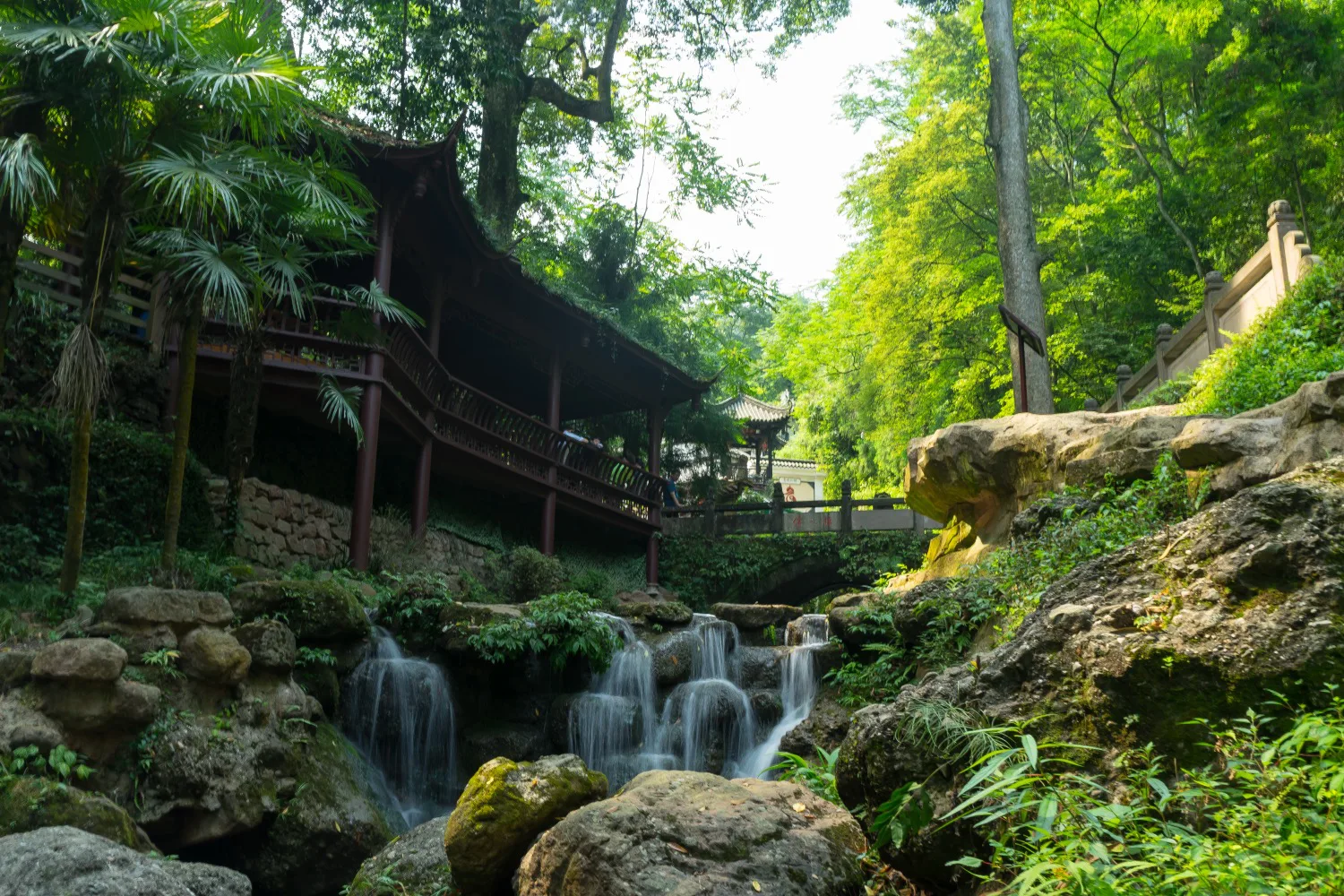
Qingcheng Mountain vs Other Famous Chinese Mountains
To understand Qingcheng Mountain, it helps to compare it with other major destinations.
| Mountain | Experience Type | Difficulty | Main Theme |
|---|---|---|---|
| Qingcheng Mountain | Cultural forest walk | Easy | Taoism and nature |
| Emei Mountain | Pilgrimage and hiking | Medium to hard | Buddhism and summit |
| Huangshan | Scenic granite peaks | Hard | Iconic landscapes |
| Wugong Mountain | Grassland ridge hike | Medium | Camping and hiking |
Qingcheng Mountain is the most relaxed and beginner-friendly among them.
Front Mountain vs Back Mountain
Qingcheng Mountain is divided into two completely separate scenic areas:
- Front Mountain (
Qianshan); - Back Mountain (
Houshan).
They are not connected by walking routes.
Front Mountain
This is the recommended area for all first-time visitors.
Front Mountain is a cultural and religious landscape centered around Taoist temples.
Key attractions include:
- Jianfu Palace, the main entrance complex surrounded by forest and traditional architecture;
- Yuecheng Lake, where visitors take a short boat ride before entering deeper mountain areas;
- Tianshi Cave, historically associated with Zhang Daoling, one of the central figures in early Taoism;
- Shangqing Palace, one of the most important temple complexes on the mountain;
- Laojun Pavilion, a higher viewpoint area near the upper section of the route.
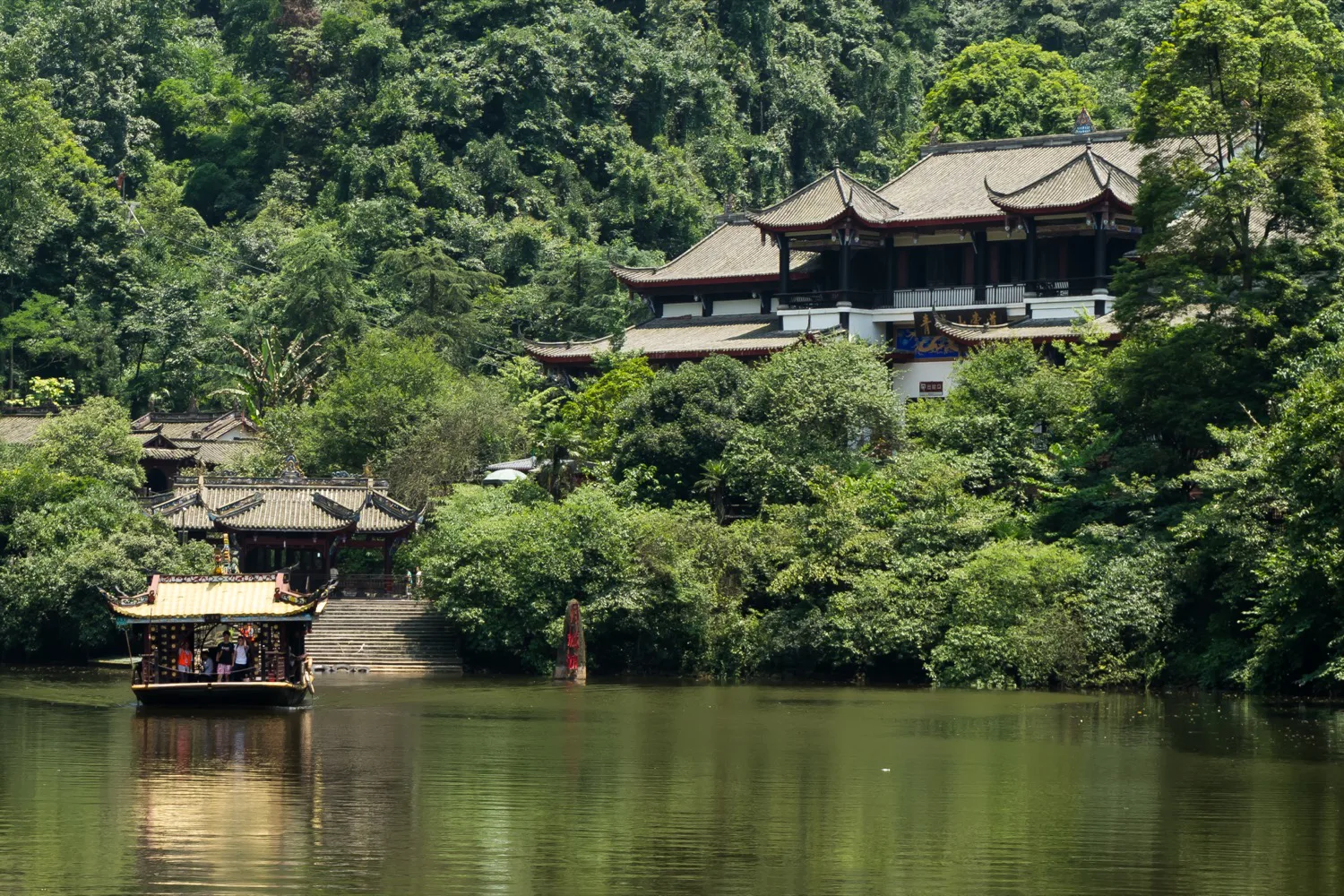
Front Mountain is:
- well developed;
- easy to navigate;
- filled with temples and forest paths;
- suitable for slow walking.
There are stone steps, but the physical difficulty is low to moderate.
A cable car is available and strongly recommended if you want to save time and energy.
Time needed: about 3-5 hours
Difficulty: easy
Best for: first-time visitors, families, cultural travelers
Back Mountain
Back Mountain is very different from Front Mountain.
It is more natural, less developed, and more focused on hiking and forest scenery.
Typical features include:
- bamboo forests;
- waterfalls;
- wooden bridges;
- narrower hiking trails;
- the small rural base area of Tai’an Ancient Town.
Unlike Front Mountain, this area feels more like a nature hiking zone than a cultural site.
Time needed: about 4-6 hours, or more on longer hiking routes
Difficulty: medium
Best for: hikers and repeat visitors
Not recommended for first-time short visits.
How to Get to Qingcheng Mountain from Chengdu
Qingcheng Mountain is one of the easiest mountains to access in China.
High-Speed Train
This is the most efficient option.
- Departure: Xipu Station (Chengdu Metro Line 2 or 6)
- Arrival: Qingchengshan Station
- Duration: about 25-40 minutes
- Price: around RMB 15
From Qingchengshan Station, take a shuttle bus or taxi for about 5-10 minutes to the entrance.
This is the standard route for independent travelers.
Taxi or Didi
- Duration: about 70-90 minutes
- Cost: around RMB 150-250
Best for:
- groups;
- travelers with luggage;
- anyone who wants direct door-to-door convenience.
From Chengdu Tianfu Airport
If arriving via Chengdu Tianfu Airport:
Airport -> Chengdu East or Xipu Station -> high-speed train -> Qingchengshan Station
Tickets and Entry Information
Prices may change slightly, but the typical structure is:
| Item | Typical Price |
|---|---|
| Front Mountain entrance ticket | Around RMB 80 |
| Back Mountain entrance ticket | Around RMB 20 |
| Cable car one-way | Around RMB 35 |
| Cable car round trip | Around RMB 60 |
| Yuecheng Lake boat | Around RMB 5 |
Tickets can usually be purchased:
- at the entrance gates with a passport;
- through Trip.com or Chinese travel apps.
Recommended Routes for Foreign Visitors
Below are the most practical and realistic route styles.
Route A: Half-Day Classic
This is the best first-time experience.
Typical flow:
- take the train from Chengdu;
- arrive at the Front Mountain entrance;
- walk to Jianfu Palace;
- cross Yuecheng Lake by boat;
- take the cable car up;
- visit Shangqing Palace;
- walk down through forest temples.
Total time: about 4-6 hours
Difficulty: easy
This route combines culture, nature, and convenience better than any other Qingcheng Mountain plan.
Route B: Slow Cultural Walk
This route focuses on atmosphere rather than speed.
Good approach:
- visit temples along both uphill and downhill paths;
- spend more time in forest sections;
- optionally use the cable car both ways;
- rest inside temple courtyards.
This is the right route if your priority is mood, quietness, and cultural immersion rather than covering distance.
Route C: Back Mountain Hiking Route
This route is best for nature lovers.
Typical flow:
- start from Tai’an Ancient Town;
- hike through bamboo forests and waterfalls;
- use cable car sections if needed;
- return to Chengdu in the evening.
Difficulty: medium
Time: 4-6 hours or more
What Qingcheng Mountain Actually Feels Like
Qingcheng Mountain is not about dramatic scenery or high peaks.
It is about atmosphere.
Visitors usually experience:
- quiet forest paths;
- ancient wooden temples;
- incense smoke in the air;
- light mist and humidity;
- a slow walking rhythm;
- soft mountain silence.
Even when it is busy, it rarely feels as chaotic as some other major Chinese mountain destinations.
The real value is calmness, not visual shock.
Best Time to Visit
Spring (April to May)
Usually the best weather, with fresh greenery and comfortable temperature.
Autumn (September to October)
Clearer skies and the best visibility.
Summer (June to August)
Very green, but also rainy and humid.
Winter (November to March)
Quieter, mistier, and less crowded.
The best overall seasons are spring and autumn.
Common Mistakes Foreign Travelers Make
- Accidentally choosing Back Mountain first.
- Underestimating travel time from Chengdu.
- Expecting dramatic mountain peaks.
- Ignoring rain and slippery stone steps.
- Not using the cable car when already tired.
- Trying to combine too many attractions in one day.
Qingcheng Mountain in Chinese Culture
Qingcheng Mountain is one of the birthplaces of Taoism.
Taoism is built around ideas such as:
- harmony with nature;
- simplicity;
- balance;
- minimal action, often described through the idea of Wu Wei.
That philosophy is reflected directly in the mountain itself: quiet forests, slow paths, and ancient temples integrated into nature.
Unlike Buddhist mountains, Qingcheng Mountain feels more inward and calm, rather than ceremonial or pilgrimage-driven.
Quick Travel Facts
| Item | Information |
|---|---|
| Location | Dujiangyan, Sichuan Province |
| Distance from Chengdu | About 68 km |
| UNESCO World Heritage | Yes |
| Main transport | High-speed train |
| Difficulty | Easy |
| Recommended duration | 3-6 hours |
| Best for | First-time visitors |
Final Recommendation
If you are visiting Chengdu for the first time, choose:
Front Mountain + cable car + Yuecheng Lake route
It is the easiest, most complete, and most representative Qingcheng Mountain experience.
Advertisement
Advertisement
FAQ
Is Qingcheng Mountain worth visiting?
Yes. It is one of the easiest famous mountains to visit from Chengdu and works especially well for travelers who want forest scenery and Taoist culture rather than a difficult climb.
Should I go to Front Mountain or Back Mountain?
Most first-time foreign visitors should choose Front Mountain. It is easier, more developed, and has the main Taoist temples.
Can I visit Qingcheng Mountain as a day trip from Chengdu?
Yes. That is the most common plan, especially if you use the high-speed train.
Is Qingcheng Mountain a real hike?
Not in the way Huangshan, Emei, or Wugong Mountain can be. Front Mountain is mainly a scenic forest-and-temple walk with stone steps and optional cable car use.
How long do I need at Qingcheng Mountain?
For Front Mountain, most visitors need around 3-5 hours, or 4-6 hours if they move slowly and include more temple stops.
Do I need the cable car?
No, but it is very helpful on Front Mountain if you want to save time and energy.
How do I get there from Chengdu?
The easiest route is high-speed train from Xipu Station to Qingchengshan Station, then a short shuttle or taxi ride to the entrance.
What is Qingcheng Mountain best known for?
It is best known for Taoism, deep green forest, quiet walking paths, old temples, and a calm atmosphere rather than dramatic peak views.
Image Credits
Mount Qingcheng 2017 by JianEn Yu, via Wikimedia Commons / Flickr, licensed under CC BY 2.0 . Resized to around 1500px on the long edge and converted to WebP.
Yuecheng Lake at Mount Qingcheng by JianEn Yu, via Wikimedia Commons / Flickr, licensed under CC BY 2.0 . Resized to around 1500px on the long edge and converted to WebP.